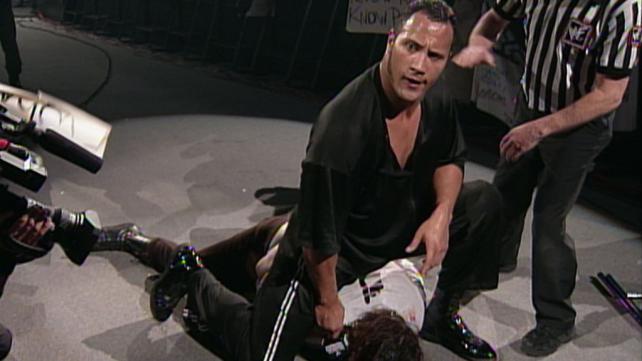
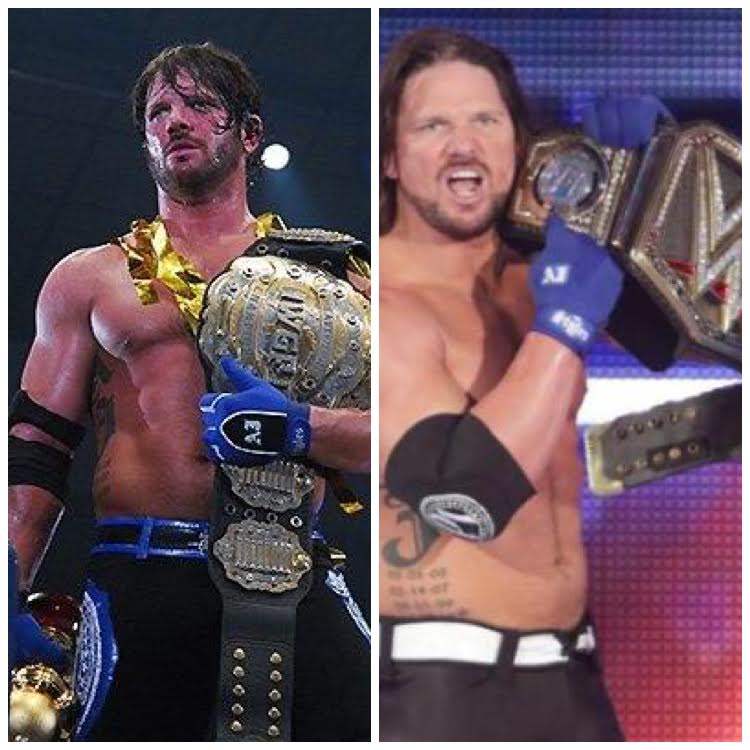
31. Mick Foley
32. Terry Funk
33. Jushin "Thunder" Liger
34. Brock Lesnar
35. Ultimate Warrior
36. Ted DiBiase
37. Bob Backlund
38. AJ Styles
39. Jake "The Snake" Roberts
40. Jimmy "Superfly" Snuka

31. Mick Foley: The Hardcore Legend. One of unique characters in the history of the business. There has never been anyone like Mick Foley before or ever since. His threshold of pain was beyond human. Foley was inspired by the likes of Jimmy "Superfly" Snuka, Abdullah The Butcher along with Bruiser Brody. When you put them all in one, you had one dangerously insane combination. Foley was ultimately inspired to pursue his career in wrestling after sitting front row at Madison Square Garden as an 18 year old fan to see Snuka nail Don Muraco with his Signature Superfly Splash from the top of a steel cage. Mick was trained by Dominic Denucci and started his career at that same time in 1983. While working for DeNucci, Foley, and several other young wrestlers worked as jobbers in squash matches on WWF TV tapings Prime Time Wrestling and Superstars of Wrestling. During this time, Mick used the names, Jack Foley and Nick Foley. The name Jack would ultimately give way to his Cactus Jack persona. On the very first episode of Superstars, Foley and fellow jobber Les Thornton wrestled the British Bulldogs (Davey Boy Smith and Dynamite Kid). During the match, Dynamite clotheslined Foley so hard that he could not eat solid food for several weeks. Mick would go on to wrestle other top level talents such as Hercules Hernandez. After spending time on the Independent Circuit, Foley received offers from various promotions, including the UWF (Universal Wrestling Federation). Mick signed with the Continental Wrestling Association (CWA), based out of Memphis. In CWA, Foley started using the name Cactus Jack, as he and Gary Young won the CWA Tag Team Championships in late 1988. In November of '88, Foley left CWA to sign with a larger promotion, the legendary Texas-based World Class Championship Wrestling (WCCW). In WCCW, Cactus Jack was billed as a major part of Skandor Akbar's stable. In WCCW, Foley added the name Manson to his persona. (Foley had a female stalker at the time named Mary Ann Manson; the name was also inspired by Charles Manson, who Mick resembled, which made him uncomfortable) During his time there, Foley won numerous titles, from the Tag Team to the Light Heavyweight Title before losing his last match in 9 seconds to Eric Embry. Then, Foley would leave to briefly compete in Alabama's Continental Wrestling Federation before a brief stint in World Championship Wrestling (WCW), which included a match with future WWE Hall of Famer Mil Mascaras at Clash of the Champions X: Texas Shootout. During this period, Foley was involved in a car accident where he lost his two front teeth, the look that he is famous for today. After his time with WCCW, Foley signed with UWF. While in UWF, Mick teamed with Bob Orton to feud with Don Muraco, Sunny Beach, and Brian Blair. Foley soon left for Tri-State Wrestling (forerunner for Extreme Championship Wrestling), where he and Eddie Gilbert competed in three matches in one night at Summer Sizzler '91: Falls Count Anywhere, Stretcher Match, and a Steel Cage Match. Cactus Jack won the first match, Gilbert won the second, with the last match being a double DQ. These matches caught the attention of WCW promoters. After a brief time with Global Wrestling Federation (GWF), Cactus Jack signed with WCW in the fall of 1991. This is where Foley's career would take off even further. Cactus Jack made his WCW Debut on September 5, 1991 as a heel when he attacked Sting. After feuds with Van Hammer and Abdullah The Butcher, Cactus focused on Sting, who was WCW Champion at the time as they battled in the classic Falls Count Anywhere Match at Beach Blast 1992. For a long time, Foley said that this was the best match that he has ever worked. After a year and a half as a heel, Cactus Jack would transform into a face, as he would soon grow in popularity. This led to his greatest feud during his WCW tenure, with Vader along with Paul Orndorff and Harley Race. Jack and Orndorff wrestled each other for a spot on newly crowned WCW Champion Vader's team at Clash of the Champions. After the match, Race and Orndorff attacked Cactus Jack. At Clash of the Champions, Cactus helped Sting's team win the match. After defeating Orndorff at SuperBrawl III, he then focused solely on Vader. Cactus Jack defeated Vader by count out on April 6, 1993 and received a severe beating in the process. In the rematch on April 24, 1993, both Vader, and Cactus executed a dangerous spot in order to sell a storyline injury. Vader removed the protective padding on the floor, and Powerbombed Jack onto the concrete, giving him a concussion as he also temporarily lost sensation in his left foot. The height of their heated rivalry took place in a Texas Death Match at Halloween Havoc. Vader won the match after Harley Race used a cattle prod to take down Cactus Jack. The level of violence was so high that WCW would never book another Cactus Jack vs. Vader match on Pay Per View ever again. On March 16, 1994 during a WCW European Tour, Foley, and Vader put on a match in Munich, Germany that is considered one of the most infamous matches in history. Foley used a hangman technique, a planned move where a wrestler's head is tangled between the ropes. Normally, the spot is painful but safe (oxymoron right?). However, in WCW the danger factor was slightly raised because they did not use real ropes, but elevator cables encased in rubber. Foley never knew this, but earlier 2 Cold Scorpio had complained that the ropes were too loose, causing the ring crew to tighten the ropes to the maximum. When Foley executed the move, he found himself trapped in a position where the ropes were constricting the blood to his brain. He realized that this would lead to cerebral anoxia (lack of oxygen to the brain), potential brain damage, and ultimately death. As Foley fought to free himself, he tore off two-thirds of his ear and underwent surgery later that day to reattach the cartilage from his ear to his head for a total reconstruction to be possible in the future. This is why Mick is missing part of his ear. After refusing to reattach his ear, Mick Foley teamed with Kevin Sullivan to win the Tag Team Titles at Slamboree that year. Foley started to grow frustrated with the direction of WCW. WCW shared a co-promotion with ECW during the time where Foley represented WCW on ECW TV as the WCW Tag Team Champion, facing Sabu at Hostile Showdown on June 24, 1994. During a promo, Foley spat on the tag team belt and threw it on the ground as the hardcore ECW fans cheered as they had disdain for mainstream promotions. Mick made it perfectly clear that he was finished with WCW and transitioned to ECW, a promotion that was custom made for him. During his time in ECW, Cactus Jack was at the height of his brutality as he battled the likes of Sabu, Terry Funk, Kevin Sullivan and The Sandman to name a few. The only championship that Foley won during his ECW tenure was the Tag Team Title with Mikey Whipwreck. He also battled in Death Matches in Japan against opponents like Terry Gordy, Shoji Nakamaki, as well as Terry Funk. The most infamous Death Match that he had was with Funk, where there was a barbed-wire rope, barbed-wire and C4 board, time bomb death match. Cactus won with the help of Tiger Jeet Singh. After the match, the C4 explosives detonated underneath the table as they severely burned both Foley and Funk. Foley also spent time in Raven's stable "Raven's Nest", which was the precursor to Raven's Flock in WCW. Cactus Jack's last ECW match was with Mikey Whipwreck before joining the largest promotion in the world, the World Wrestling Federation (WWF). In 1996, Foley signed a contract with the WWF, but this time he would be more than just enhancement talent. Upon his arrival, Foley was shown several different designs for a new character, one with a leather mask and chains. However, WWF considered it too dark and just left the mask. As a result, Mick Foley made his WWF debut with a new gimmick that many consider to be his most famous personality: Mankind. This character is a mentally deranged schizophrenic who constantly squealed, and screamed "Mommy!". He also had a pet rat named George, enjoyed pain and abused himself. He also wore a mask and lived in boiler rooms, which is why his specialty match was the Boiler Room Brawl. Foley made his WWF TV Debut as Mankind the day after WrestleMania XII (April Fool's Day; perfect timing). After defeating Bob Holly, Mankind moved on to feud with his greatest rival, The Undertaker. The feud continued into King of the Ring, Mankind's PPV debut. Mankind picked up the win, after Paul Bearer accidentally struck Undertaker with the urn, opening the door for Mankind to lock in the Mandible Claw. From that point on, they started to interfere in each other's matches, leading to their first Boiler Room Brawl Match (Mankind's Battleground). The goal was to escape the arena's boiler room to reach the ring to take the urn from Paul Bearer. The Undertaker appeared to be the winner, but Bearer refused to give him the urn, opening the door for Mankind to win. This signaled the end of the relationship between Taker and Bearer, as Paul joined forces with Mankind. Mankind would start calling him "Uncle Paul". Following this huge win, Mankind became the number one contender to face Shawn Michaels for the WWF Championship at WWF In Your House: Mind Games. Michaels won via disqualification thanks to interference from Vader and Undertaker. For years, Foley would say that this was the best match that he ever competed in. Many including myself can agree, because of who his opponent was. Foley credits a brutal cardiovascular training regimen to go with full-tilt for twenty-seven minutes with an athlete quicker, small, better than him by light years. The Mankind-Taker feud picked up and continued at Buried Alive: In Your House, in the first ever Buried Alive Match. Undertaker won the match, but Mankind, Paul Bearer, The Executioner (Terry Gordy) along with other heels attacked Taker and buried him alive. Undertaker defeated him in a rematch at Survivor Series, before moving on to defeat Sid at WrestleMania 13 for the WWF Title. The feud ended after one more match at In Your House: Revenge of the Taker where Undertaker defeated Mankind to hold on to his newly crowned WWF Championship. Bearer would take a leave of absence. Jim Ross would then start to conduct a series of interviews with Mankind. During the interviews, Ross would bring up the topic of Foley's home videos, featuring his hippie inspired character that he played, called Dude Love. Stone Cold and Shawn Michaels won the WWF Tag Team Championships by defeating Owen Hart and The British Bulldog. However, Shawn was injured, which meant he had to forfeit his belt. This left room for Austin to find a replacement. Mankind offered to help, but Austin said that he did not want to work with a freak. This is where Dude Love stepped in to fill Shawn's place. The following week in Halifax, Nova Scotia, Dude Love joined Stone Cold, and Mankind's archenemy The Undertaker to face Bret Hart, Owen Hart, and Davey Boy Smith (members of the anti-American Hart Foundation) in a United States vs. Canada flag match. The Hart Foundation would ultimately win, thanks to interference from Brian Pillman. Stone Cold and Dude Love would forfeit the tag titles after Austin legitimately suffered a career-threatening neck injury at Summerslam 1997 during his match with Owen Hart. Dude Love would move into a feud with 1997 KOTR Hunter Hearst Helmsley, as they competed in a Falls Count Anywhere Match. One of Foley's most memorable vignettes took place on RAW, when Dude Love and Mankind sat together (green screen technology) to discuss who should wrestle for the next match. Then, Mick's first character Cactus Jack made his WWF debut as Dude and Mankind "decided" that he would be Helmsley's next opponent. Cactus defeated Hunter with a piledriver through the table at the entrance ramp. Shortly after the debut of Cactus Jack, fellow ECW alum Terry Funk joined as "Chainsaw Charlie". At the 1998 Royal Rumble, Foley competed as all three characters. At WrestleMania XIV, Cactus and Chainsaw defeated The New Age Outlaws in a Dumpster Match to win the WWF Tag Team Championships. However, Vince McMahon would strip them of the titles the next night on RAW, as he scheduled a rematch. The Outlaws regained the titles in a steel cage match, with help from their new partners, D-Generation-X. The following week on April 6, Foley turned heel when he said that the fans did not want to see Cactus Jack anymore because he believed that they did not appreciate him anymore. His main focus was on Stone Cold Steve Austin. Dude Love made his return during the grudge match between Austin and McMahon on RAW when he interfered by giving Austin the Mandible Claw. This was the mystery opponent that Vince was referring to, as Stone Cold defended the WWF Title against Dude Love at Unforgiven. Dude won by disqualification, meaning that Austin kept the title. Dude Love had to prove to Vince McMahon that he deserved a shot at the championship. Vince then scheduled a number one contenders match between Dude Love and Terry Funk. Dude became the number one contender, as he would face Austin in a rematch for the WWF Championship at Over The Edge. McMahon appointed his subordinates "stooges" Gerald Brisco and Pat Patterson as the timekeeper and ring announcer. Vince himself was the special guest referee. However, The Undertaker came to ringside to make sure that this was a clean match. Austin won the match to retain his WWF Championship, as Dude Love was "fired". Foley would resurface as Mankind to reignite his feud with the Undertaker. The high point of their rivalry took place at the 1998 King Of The Ring, with their iconic "Hell In A Cell" Match, which was the second one in history. Terry Funk and Mick Foley talked about the first HIAC when Undertaker battled Shawn Michaels, as they brainstormed ideas about how to top that match. Funk suggested that Foley get thrown off, and Mick laughed as he agreed. In one of the most famous matches in the history of professional wrestling, Foley received multiple injuries and took two of the most highly influential bumps in history. The first bump took place when Mankind and Undertaker were battling at the Top of the Cell. Suddenly, Taker threw him off the top of the cell onto the Spanish announce table. The cage stood 16 feet (4.9 m); (22 ft. when you include the angle of the fall). This moment caused Jim Ross to famously shout, "Good God almighty! Good God almighty! That killed him! As God as my witness, he is broken in half!". Mick suffered a separated shoulder from the fall as Taker wrestled with a broken foot during the match. Foley remained unconscious, as Undertaker stood at the top of the cell staring down. As Undertaker stood at the top, the cage had to be raised in order for the medical staff to come with the stretcher to carry Foley out of the arena. Suddenly, Foley got up from the stretcher and continued the match by climbing to the top to battle Taker once more. Then, tragedy nearly took place. The next one came at the top of the cell as well. This time, Taker Chokeslammed him through the roof of the cell. Ross once again exclaimed, "Good God, Good God! Will somebody stop the damn match? Enough's enough!" Color Commentator Jerry Lawler added as he responded, "That's it. He's dead." Surprisingly, the cage was starting to give way, as Undertaker finished the match with a Tombstone Piledriver for the win. Taker and Funk later said that they thought Foley was dead. Mick says later that it was the best and worst chokeslam that he ever received. It looked bad, but things worked for him because he did not take the move properly. Had he taken the chokeslam properly, he likely would have died. Mick says that he did not remember much of what went on during the match. In his first book, he says that he considered retiring after hearing his wife cry during a conversation after the match. He even forgot that he used thumbtacks until Undertaker reminded him. The match won the PWI "Match of the Year" as it was the clear cut biggest highlight of the year overall. Following this match, crowds did not initially support Mankind. From this point, he added more of a comedy element to his character that fans now remember him for. After a brief run with Kane as Tag Team Champions, Mankind would implement a new dimension to his persona by putting a Sock on his hand when he gives the opponent the Mandible Claw. The sock would be named "Mr. Socko". Mankind joined Vince McMahon, as he saw him as a father figure. During this same time, McMahon would create the Hardcore Championship and reward him with it. With McMahon in his corner, Mankind would become a favorite to win the WWF Championship. This set up the Deadly Games Tournament for Survivor Series. Meanwhile, The Rock rising through the tournament with assistance from the Corporation. The Rock and Mankind would meet in the finals. During the end of the match, Vince pulled the biggest swerve when The Rock had Mankind locked in the Sharpshooter. McMahon called for the timekeeper to ring the bell, reminiscent of the Montreal Screwjob the year before. As a result, The Rock became the new WWF Champion as McMahon revealed that he was in The Rock's corner the whole time. This was the ultimate betrayal for Mankind, as he and The Rock kicked off their feud. After many weeks of going after the Corporation, Mankind finally received his shot on December 29, 1998 when he defeated The Rock on RAW to become the new WWF Champion with help from Stone Cold. The show was taped and broadcast on January 4, 1999 which is the date that WWE recognizes. However, the night was almost bittersweet when WCW commentator Tony Schiavone revealed live on Nitro that Foley (who was once an employee for the company as Cactus Jack) would win the WWF Title. Tony followed that up with the infamously sarcastic line, "That'll put a lot of butts in the seats." The plan backfired, as RAW's ratings skyrocketed in spite of Schiavone's comment. Foley believed that the comment was made by Tony from orders of bitter rival Eric Bischoff. Fans would soon come to live events with signs that said "Mick Foley put my butt in this seat". Mankind and Rock's feud would continue with classics including the "I Quit Match" at The Royal Rumble, where The Rock regained the title (1999 Match of the Year, as this match was highly documented on Beyond The Mat). Other matches included the Empty Arena Match during halftime of Super Bowl XXXII (Halftime Heat), where Mankind won the title back. He retained at St. Valentine's Day Massacre in a Last Man Standing Match. The feud concluded with a ladder match on RAW as the Rock regained the title to set up his match with Austin for WrestleMania XV. Mankind and The Rock would later become a tag team called "Rock-N-Sock Connection" as they were one of the most popular teams of the time. The team became 3-time Tag Team Champions. The "This is Your Life" segment for The Rock helped RAW receive an 8.4 rating, one of the highest ratings ever. Foley made his return from knee surgery as Mankind when he defeated Triple H and Stone Cold Steve Austin at Summerslam to win the WWF Championship for the third and final time. This ignited his feud with Triple H after The Game defeated him to win the WWF Title the next night on RAW. Foley soon shed his Mankind character, as he revealed his Cactus Jack T-Shirt, signaling his transition back to his most dangerous persona. This led to their Street Fight at Royal Rumble 2000 for the WWF Championship at Madison Square Garden. Triple H won after a brutal, classic fight when he pedigreed Cactus on a pile of thumbtacks. The feud culminated at No Way Out inside Hell In A Cell. If Foley lost, he would retire. During the match, Jack and Trips made their way to the top of the cell, much like Foley did with Taker. As Cactus prepared to piledrive Triple H on a flaming barbed wire 2x4, The Game reversed it with a back body drop sending Jack through the roof of the cell. As Foley crashed through the ceiling of the cell, he fell through the canvas. One Pedigree later, Mick would retire. Foley went away for a few weeks but returned at the request of Linda McMahon for another shot at the WWF Championship. At WrestleMania 2000, Mick Foley was involved in a Fatal Four Way Match for the WWF Title, with a McMahon in each corner (Triple H w/Stephanie, The Rock w/Vince, Big Show w/Shane, and Foley w/Linda). Triple H emerged as the winner, as Foley would move into a brief, but significant role as Commissioner. After taking time away in 2002, Mick returned in 2003 as he was honored with the newly retired Hardcore Championship. At WrestleMania XX, The Rock made his return reuniting with Foley as The Rock & Sock Connection in a Handicap Match with Evolution. Evolution won when Randy Orton pinned Foley, leading to a feud and the return of Cactus Jack. Cactus challenged Orton for the Intercontinental Championship in a Hardcore Match at Backlash. Randy remained champion after an intense match where he gave Cactus the RKO to barely pick up the win. In 2006, Foley engaged in his last major feud as he battled with Edge. The feud started after Foley refereed Edge's WWE Championship match with John Cena. Edge blamed Mick for his loss and attacked him after the match. The feud culminated in their Hardcore Match at WrestleMania 22, when Edge defeated Mick by spearing him through a flaming table. This would go on to become Mick's biggest WrestleMania moment. Foley would then turn heel and align himself with Edge and Lita to defeat Terry Funk, Tommy Dreamer, and Beulah McGillicutty at ECW One Night Stand. Foley would leave in 2008 for TNA to spin his wheels until he made his return to WWE in 2011. In 2013, Foley would be inducted into the WWE Hall of Fame. Foley's legacy includes his innovation of Hardcore matches, Deathmatches, and HIAC matches, being a multi-time world champion, best-selling author and ambassador of wrestling. Have A Nice Day!!
Accomplishments:
Championship Wrestling Association
•CWA Tag Team Championship (1 time) – with Gary Young[160]
Eastern Championship Wrestling / Extreme Championship Wrestling
Extreme Mid-South Wrestling
George Tragos/Lou Thesz Professional Wrestling Hall of Fame
•International Wrestling Association of Japan
◦King of the Deathmatch (International Wrestling Association of Japan#1995 King of the Death Match Tournament 1995)
•North American Wrestling ◦NAW Heavyweight Championship (1 time)
•National Wrestling League ◦NWL Heavyweight Championship (1 time)
•Ozark Mountain Wrestling ◦OMW North American Heavyweight Championship (1 time)
•Pro Wrestling Illustrated ◦PWI Match of the Year (1998) vs. The Undertaker in a Hell in a Cell match at King of the Ring
◦PWI Match of the Year (1999) vs. The Rock in an "I Quit" match at Royal Rumble
◦PWI Most Inspirational Wrestler of the Year (1993)
◦PWI ranked him #19 of the 500 best singles wrestlers of the year in the PWI 500 in 1999
◦PWI ranked him #46 of the 500 best singles wrestlers of the PWI Years in 2003
•Steel City Wrestling ◦SCW Tag Team Championship (1 time) – with The Blue Meanie
•Total Nonstop Action Wrestling ◦TNA World Heavyweight Championship (1 time)
◦TNA Legends Championship (1 time)
•World Championship Wrestling ◦WCW World Tag Team Championship (1 time) – with Kevin Sullivan
•World Class Wrestling Association ◦USWA World Tag Team Championship (1 time) – with Scott Braddock
◦WCWA World Light Heavyweight Championship (1 time)
◦WCWA World Tag Team Championship (2 times) – with Super Zodiak II (1) and Scott Braddock (1)
•World Wrestling Federation/WWE ◦WWF Championship (3 times)
WWF Hardcore Championship (1 time, inaugural)
WWF Tag Team Championship (8 times) – with Stone Cold Steve Austin (1), Chainsaw Charlie (1), Kane (2), The Rock (3) and Al Snow (1)
Slammy Award (1997) for Loose Screw
WWE Hall of Fame (Class of 2013)
•Wrestling Observer Newsletter awards ◦
Best Brawler (1991–2000)
◦Best on Interviews (1995, 2004, 2006)
◦Feud of the Year (2000) vs. Triple H
◦Best Pro Wrestling Book (2010) for "Countdown to Lockdown"
◦Wrestling Observer Newsletter Hall of Fame (Class of 2000)
In Wrestling: •Finishing moves ◦As Mankind / Mick Foley ■Double arm DDT
■Mandible claw / Mr. Socko
As Cactus Jack ■Cactus Elbow / Hipbuster (Diving elbow drop from the ring apron to the outside of the ring)
■Double arm DDT
■Stump Puller (Pulling piledriver) – 1991–1997; used rarely thereafter
As Dude Love
■Double arm DDT
■Love Handle (Mandible claw)
■Sweet Shin Music (Superkick to the opponent's shin) – parodied from Shawn Michaels
Signature moves
■Cactus clothesline – Innovated
■Cactus Jack Crack Smash / Nestea Plunge (Senton to the outside of the ring, usually from the ring apron)
■Running knee lift to the face of an opponent seated in the corner
■Running swinging neckbreaker
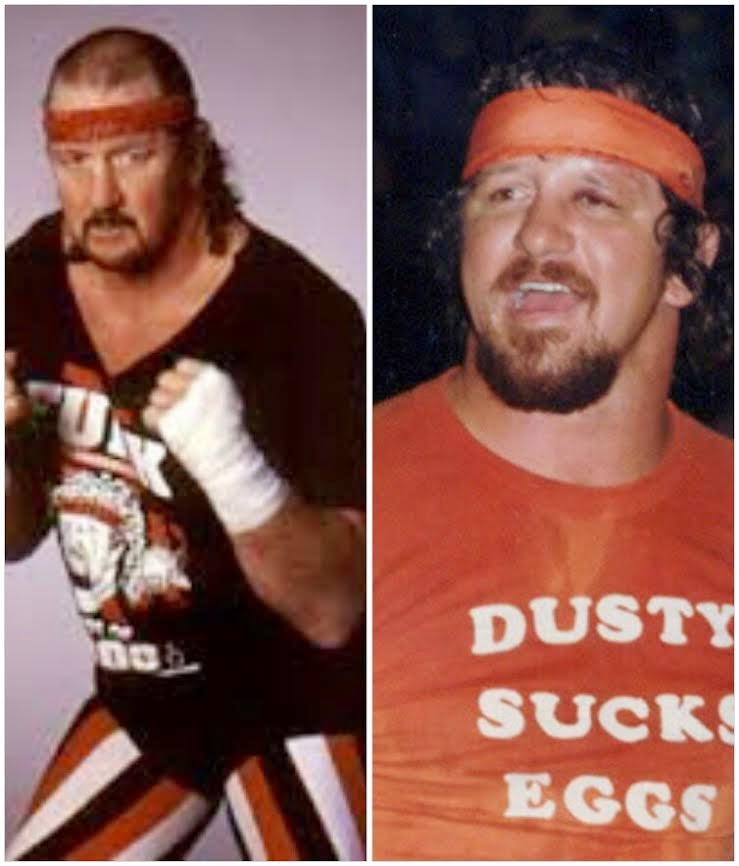
32. Terry Funk: Much like Ric Flair, this man is the ultimate definition of longevity. Terry Funk is the most recognizable member of the Funk Family, with his Brother Dory Funk, Jr. Terry got his start in 1965 wrestling for his father Dory Funk, Sr's NWA promotion in Amarillo, Texas. Both he and his brother Dory, Jr. rose up the ranks in the promotion, much like any other siblings who work for their father (The Harts in Stampede, Von Erichs in World Class). In 1975, Terry Funk defeated Jack Brisco to become NWA World Heavyweight Champion. Funk was champion for fourteen months. His run would end in Toronto, Ontario Canada to Harley Race, who became champion for the second time. Terry would take some time away from the world title, as he and his brother would travel across the country (mainly in Texas, Florida and Detroit). The Funks would make names for themselves in Japan as well. Terry Funk made his World Wrestling Federation debut in 1985. In his debut on Championship Wrestling, Funk not only beat Aldo Marino, but he also attacked the ring attendant. Funk was known for carrying a branding iron, and used it to "brand" his defeated opponents. Terry teamed with his older brother Dory, along with Jimmy Jack Funk as they were managed by Jimmy Hart. At the time, Terry had a heated rivalry with Junkyard Dog, which led to a match at WrestleMania 2. The match was Terry and Dory ("Hoss") Funk verses JYD and Tito Santana. In 1989, Terry Funk returned to the NWA as a member of a faction called the J-Tex Corporation. The faction was managed by Gary Hart, and featured Great Muta, Funk, Buzz Sawyer, Dick Slater and Dragonmaster. It was a combination of wrestlers from Japan and Texas. Funk would start his feud with Ric Flair, after Flair defeated Ricky Steamboat at WrestleWar. Terry served as the Color Commentator for this match. After Flair won, Funk attacked him and gave him a Piledriver through the announce table. Flair was out of action until The Great American Bash where he faced Funk. Ric defeated Terry with the small package, but was attacked shortly afterwards by Gary Hart and Great Muta. Sting would make the save on Flair's behalf, as The Stinger already had his feud with Muta running simultanenously. This would lead into a Tag Team Match with Flair & Sting vs. Funk & Muta at the first ever Halloween Havoc, as this was called the "Thunderdome Match". The match would end with Flair locking Funk in the Figure Four Leglock for him and Sting to pull out the victory. Although Funk was injured, he continued feuding with Nature Boy. Ric Flair would defeat Terry Funk at Clas of the Champions in an "I Quit" Match. Funk yelled "Yes I Quit" while he was locked in Flair's Figure-Four. Wrestling Observer gave this match a 5-Star Rating. One of the standout moments for this feud is when Funk put a plastic grocery store bag over Flair's head to suffocate him. This showed how much of a maniac Terry really was. He wasn't called "Middle Aged and Crazy" for nothing. Terry would shake Ric's hand after the match. After the handshake, Gary Hart's stable would attack Funk. Not only was Funk out of the stable, but the feud with Flair would ultimately end. Funk would briefly spend time as a color commentator. 1989 was a pivotal year for Terry Funk's career, as his feud with The Nature Boy would be named "Feud of the Year" by PWI. Later in his career, Terry would change his style from traditional southern style wrestling to more of a hardcore violent style. This is the stage of his legacy that he is most known for, and it would be a rennaissance for him. In 1994, Terry Funk promised to help the fledgling Eastern Championship Wrestling after they disbanded from the NWA by bringing notoriety. Eastern Championship Wrestling soon became Extreme Championship Wrestling. Terry became a staple of the history of ECW. His most notable feuds were with Cactus Jack, "The Franchise" Shane Douglas, Sandman, Sabu, and Tommy Dreamer. On August 20, 1995, IWA Japan held a King of the Death Match Tournament in Kawasaki Japan. Funk endured three extreme matches that included ladders, thumbacks and barbed-wires. In the finals, he lost to Cactus Jack in an exploding ring, C4 explosive, barbed wire match. This match goes down in history as one of the most legendary hardcore matches ever. I would say this the most extreme, next to Muta's Deathmatches that used the Muta Scale. Funk continued to elevate the profile of ECW as he headlined their first PPV called "Barely Legal"(4/13/1997). That night, Terry defeated Raven for the ECW Championship. Earlier that night, he defeated The Sandman and Stevie Richards in a Triple Threat Match to become the number one contender. Funk would later lose the title to Sabu in a Barbed Wire Match at ECW Born to be Wired. The match was so brutal, that both men had to be cut out of the barbed wire at the end of the match. Sabu's biceps were visibly torn open by the barbed wire, as the wound was taped for him to continue the match. In September 1997, a show was held in Amarillo Texas to honor Funk. The show was called "WrestleFest- 50 Years of Funk", as it was made to celebrate the careers of himself, his father and his brother. In the main event, Terry lost to then WWF Champion Bret Hart. However, before the match started, Paul Heyman presented Terry with a belt that was paid for through a collection taken up by the ECW roster. It was declared the Lifetime ECW World Heavyweight Championship to honor his contributions. This match was featured on "Beyond The Mat". In 1998, Funk returned to WWF as Chainsaw Charlie. Funk teamed up with Mick Foley "Cactus Jack" as they feuded with the New Age Outlaws. At WrestleMania XIV, Cactus and Chainsaw defeated the Outlaws in a Dumpster Match to win the World Tag Team Titles. The next night on RAW, the Outlaws regained the titles. Funk then lost to Foley in a Falls Count Anywhere Match on Raw. In late 1998, Terry Funk would return to ECW to feud with Tommy Dreamer going into early 1999. However, Terry fell ill before they could have an actual match as he "retired" once again in mid-1999. Terry Funk wrestled for WCW in 2000, as he became a three time Hardcore Champion (a failed attempt to duplicate the WWF Hardcore Title). Funk also became a two-time United States Champion (the first time was under the NWA banner) as WCW continued to sink. In 2006, Funk would return to WWE for part time appearances. This time, he would feud with longtime friend Mick Foley. At ECW One Night Stand 2006, the team of Terry Funk, Tommy Dreamer and Beulah lost to Foley, Edge and Lita. In 2009, Terry Funk would have his name etched in history as he was inducted into the WWE Hall of Fame in his homestate of Texas. Terry Funk is a true Texas Pioneer with a well versed career. Funk received his greatest exposure in his latter years, as he became a founding father of Hardcore Wrestling.
Accomplishments:
All Japan Pro Wrestling
- World's Strongest Tag Determination League (1977, 1979, 1982) – with Dory Funk, Jr.
- Cauliflower Alley Club
- Iron Mike Mazurki Award (2005)
- Championship Wrestling from Florida
- NWA Florida Heavyweight Championship (1 time)
- NWA Florida Tag Team Championship (1 time) – with Dory Funk, Jr.
- NWA Florida Television Championship (1 time)
- NWA North American Tag Team Championship (Florida version) (1 time) – with Dory Funk, Jr.
- NWA Southern Heavyweight Championship (Florida version) (2 times)
- NWA World Heavyweight Championship (1 time)
- Eastern Championship Wrestling / Extreme Championship Wrestling
- ECW Television Championship (1 time)
- ECW World Heavyweight Championship (2 times)
- Hardcore Hall of Fame (2005)
- George Tragos/Lou Thesz Professional Wrestling Hall of Fame
- Georgia Championship Wrestling
- NWA Georgia Tag Team Championship (1 time) – with Dory Funk, Jr.
- NWA Georgia Television Championship (1 time)
- International Wrestling Association of Japan
- IWA World Heavyweight Championship (2 times)
- Juggalo Championship Wrestling
- JCW Heavyweight Championship (1 time)
- Mid-Atlantic Championship Wrestling / World Championship Wrestling
- WCW Hardcore Championship (2 times)
- NWA (Mid-Atlantic)/WCW United States Heavyweight Championship (2 times)
- WCW Hall of Fame (Class of 1995)
- NWA Hollywood Wrestling
- NWA Americas Heavyweight Championship (1 time)
- NWA International Tag Team Championship (3 times) – with Dory Funk, Jr.
- NWA World Tag Team Championship (Los Angeles version) (1 time) – with Dory Funk, Jr.
- NWA Western States Sports
- NWA Brass Knuckles Championship (Amarillo version) (2 times)
- NWA International Tag Team Championship (2 times) – with Dory Funk, Jr.
- NWA Western States Heavyweight Championship (7 times)
- NWA Western States Tag Team Championship (2 times) – with Ricky Romero
- NWA World Tag Team Championship (Texas version) (2 times) – with Dory Funk, Jr.
- Pro-Pain Pro Wrestling
- 3PW World Heavyweight Championship (1 time)
- Pro Wrestling Illustrated
- PWI Feud of the Year (1989) vs. Ric Flair
- PWI Most Inspirational Wrestler of the Year (1997)[31]
- PWI Wrestler of the Year (1976)
- PWI ranked him #22 of the top 500 singles wrestlers in the PWI 500 in 1991[32]
- PWI ranked him #22 of the top 500 singles wrestlers of the "PWI Years" in 2003[33]
- PWI ranked him #9 of the top 100 tag teams of the "PWI Years" with Dory Funk, Jr. in 2003[33]
- Professional Wrestling Hall of Fame and Museum
- Southwest Championship Wrestling
- SCW Southwest Heavyweight Championship (1 time)
- SCW World Tag Team Championship (1 time) – with Dory Funk, Jr.
- St. Louis Wrestling Hall of Fame
- St. Louis Wrestling Club
- NWA Missouri Heavyweight Championship (1 time)
- Stampede Wrestling
- Stampede Wrestling Hall of Fame[34]
- Tokyo Sports
- Best Bout Award (1980) with Dory Funk, Jr. vs. Giant Baba and Jumbo Tsuruta on December 11[35]
- Popularity Prize (1979)[36]
- Special Service Award (1983)[35]
- United States Wrestling Association
- USWA Unified World Heavyweight Championship (1 time)
- World Wrestling Federation / World Wrestling Entertainment
- WWF World Tag Team Championship (1 time) – with Cactus Jack
- WWE Hall of Fame (Class of 2009)
- National Wrestling Alliance
- NWA Hall of Fame (Class of 2009)[37]
- Wrestling Observer Newsletter awards
- 5 Star Match (1984) with Dory Funk, Jr. vs. Bruiser Brody and Stan Hansen on December 8
- 5 Star Match (1989) vs. Ric Flair on November 15
- Best Brawler (1989)
- Best Heel (1989)
- Best on Interviews (1989)
- Feud of the Year (1989) vs. Ric Flair
- Wrestling Observer Newsletter Hall of Fame (Class of 1996)
In Wrestling:
Finishing moves
- Piledriver[1]
- Sleeper hold[1]
- Spinning toe hold[1][2][26]
- Signature moves
- Atomic drop[26]
- Brainbuster[26]
- Moonsault[1]
- Punching combination[26]
- Stunner[1]

33. Jushin "Thunder" Liger: One of Japan's most decorated and innovative wrestlers in history. Jushin "Thunder" Liger has been world renowned for the legend that he became in Japan for many years. Liger is one of the most influential and decorated Cruiserweights of the 90's besides the likes of Rey Mysterio, Eddie Guerrero, Ultimo Dragon to name a few. Liger competed in places like CMLL, Dragon Gate, New Japan Pro Wrestling, Wrestling Association R (WAR), as well as WCW. In NJPW, Jushin won multiple Junior Light Heavyweight and Junior Heavyweight Titles. Liger not only raised the bar, but he was the measuring stick for Cruiserweights and Japanese Wrestlers at that time. The only thing that kept him from winning the 1996 J-Crown Tournament was a brain tumor that he had removed. He would win two in 1995 and 2000. Besides that, Jushin Liger was a Pioneer in many ways. He has wrestled the likes of Brian Pillman, Ultimo Dragon, Rey Mysterio and others. Jushin Liger was an innovator with moves like the sit-out powerbomb, tilt-a-whirl backbreaker, suicide dive, top rope brainbuster and shooting star press. His most famous moves are the Liger Bomb and the Liger Plex. He would also wrestle the likes of the Pegasus Kid (Chris Benoit), "Macho Man" Randy Savage and future WWE Star Bryan Danielson (Daniel Bryan). When the time is right, a Hall of Fame Induction would be the perfect way to honor a trendsetter like Jushin "Thunder" Liger.
Accomplishments:
- All-Star Promotions
- World Heavy Middleweight Championship (2 times)
- Consejo Mundial de Lucha Libre
- CMLL Universal Championship (2010)[33]
- CMLL World Middleweight Championship (1 time)[31]
- CMLL World Tag Team Championship (1 time) – with Hiroshi Tanahashi[48]
- Dragon Gate
- Open the Dream Gate Championship (1 time)[1]
- Jersey All Pro Wrestling
- JAPW Light Heavyweight Championship (1 time)[52][74]
- Michinoku Pro Wrestling / North Eastern Wrestling
- British Commonwealth Junior Heavyweight Championship (2 times)[1]
- Super J-Cup (2000)[5]
- New Japan Pro Wrestling
- IWGP Junior Heavyweight Championship (11 times)[1][9]
- IWGP Junior Heavyweight Tag Team Championship (6 times) – with The Great Sasuke (1), El Samurai (1), Minoru Tanaka, (1), Koji Kanemoto (1), AKIRA (1), and Tiger Mask (1)[1]
- J-Crown (1 time)[75]
- NWA World Junior Heavyweight Championship (2 times)[1][76]
- NWA World Welterweight Championship (1 time)[1]
- UWA World Junior Light Heavyweight Championship (1 time)[1]
- WWA World Junior Light Heavyweight Championship (1 time)[1]
- WWF Light Heavyweight Championship (1 time)[1]1
- WAR International Junior Heavyweight Championship (1 time)[77]
- Top/Best of the Super Juniors (1992, 1994, 2001)[78]
- G1 Climax Junior Heavyweight Tag League (2001) – with El Samurai[79]
- Naeba Prince Hotel Cup Tag Tournament (2001) – with Yuji Nagata[80]
- Young Lion Cup (1986)[81]
- Outstanding Performance Award (2000)[82]
- Tag Team Best Bout (2003) with Koji Kanemoto vs. Kotaro Suzuki and Naomichi Marufuji on June 10[83]
- Osaka Pro Wrestling
- Osaka Pro Wrestling Tag Team Championship (1 time) – with Takehiro Murahama[1]
- Pro Wrestling Illustrated
- Ranked #8 of the top 500 singles wrestlers in the PWI 500 in 2000[5]
- Ranked #12 of the top 500 singles wrestlers of the "PWI Years" in 2003[6]
- Ranked #47 of the top 100 tag teams of the "PWI Years" with El Samurai in 2003
- Pro Wrestling Noah
- GHC Junior Heavyweight Championship (1 time)[7]
- GHC Junior Heavyweight Tag Team Championship (1 time) – Tiger Mask[84]
- NTV G+ Cup Junior Heavyweight Tag League (2013) – Tiger Mask[84]
- Tokyo Sports
- Best Newcomer Award (1985)[85]
- Outstanding Performance Award (1994)[86]
- Vendetta Pro Wrestling
- Vendetty Award: Special Guest Star of the Year (2015)[87]
- World Championship Wrestling
- Wrestle Association R
- Wrestling Observer Newsletter
In Wrestling:
- Finishing moves
- Signature moves

34. Brock Lesnar: The Next Big Thing. The Beast. The Conqueror. Brock Lesnar is truly a Once In a Lifetime Athletic Specimen. Brock is not even human. He looks like a mutant who came from the Weapon X Experiment. Lesnar is the Quintessential example of the term "Freak of Nature", and I mean that in a good way. Brock's size, strength, speed and athleticism are all of the tools that make others envious. Lesnar got his start as an Amateur Wrestler as he was North Dakota State University's Heavyweight Champion from 1997-1999. Brock would transfer to the University of Minnesota where he would shine even brighter. While at Minnesota, Lesnar was also recognized as an NCAA Division I Champion and Big Ten Conference Champion among other Collegiate Honors before making the jump to join WWE Developmental Territory Ohio Valley Wrestling (OVW) shortly after his graduation in 2000. While in OVW, Brock became friends with his future manager Paul Heyman. During his time there, Brock formed a tag team called "The Minnesota Stretching Crew" with former college roommate Shelton Benjamin. Brock and Shelton won the OVW Southern Tag Team Championships three times. Lesnar wrestled several dark matches between 2001 and 2002 before being called to the main roster. Brock made his official WWE main roster debut on March 18, 2002 the night after WrestleMania X8 (18). Lesnar came through the crowd to attack Al Snow, Maven and Spike Dudley during their match. Brock arrived with Heyman, who was giving him instructions. When the brand extension was first introduced, Lesnar was drafted to the RAW Brand. It was later confirmed that Heyman was Brock's agent, as Paul gave him the monicker of "The Next Big Thing". Brock's first feud was with the Hardy Boyz. Lesnar and Jeff Hardy wrestled each other at "Backlash" which was Brock's first televised match. Lesnar won in dominating fashion by Knockout after Jeff could not respond. The next night on RAW, Brock destroyed Jeff's brother Matt by KO as well. In June 2002, Lesnar would rise even further by winning the King of the Ring Tournament. In the finals, Brock defeated Rob Van Dam. After winning KOTR, Brock would also be crowned the number 1 contender to the WWE Undisputed Championship at Summerslam. On July 22, Brock Lesnar would join the Smackdown! Brand, where he would achieve his greatest success. After blowing through a returning Hulk Hogan, Lesnar transitioned into a feud with WWE Champion The Rock. At Summerslam, Brock Lesnar made history by defeating The Rock to become the youngest WWE Champion at age 25 (breaking the record held by Rocky himself). Rock was going to Hollywood, so it made sense for the transition and passing of the torch. At this time, the WWE Championship was defended on both brands, as RAW General Manager Eric Bischoff expected Brock to return to RAW the next night. However, plans changed as Lesnar became the exclusive WWE Champion for the Smackdown! Brand. This caused Eric to bring back the World Heavyweight Championship for RAW. The Undisputed Title would go back to being simply called the WWE Championship. Brock was on a meteoric rise like a Supernova, as he would battle head to head with The Undertaker. This led to a match at Unforgiven, that ended in double DQ. Lesnar retained the title. This led to a rematch for the Title at No Mercy in October. Brock defeated Undertaker at No Mercy in a gruesome Hell In A Cell Match. You could say that this was the first time that Brock "conquered" The Deadman. Heading into the match, Brock broke Taker's hand with a propane tank. During the match, Taker wore a cast on his hand. Heyman begged McMahon to not let him use the cast during the match, but his request was denied. The match ended with Brock reversing a Tombstone Piledriver into an F-5 for the victory to retain his WWE Championship. Six days after his HIAC match, Brock successfully defended his WWE Title with Heyman at Rebellion against Edge. Brock's next opponent was Big Show. Heyman was more convinced than anyone else that Brock could not defeat The Big Show, as he tried to talk him out of defending the title. Lesnar refused and would defend his title against Show at Madison Square Garden for Survivor Series. By the end of the match, Brock nailed Big Show with an F-5 and went for the pinfall. However, Paul betrayed him by pulling the referee out of the ring. Big Show capitalized and chokeslammed Brock on a steel chair to win the WWE Championship. This was Brock's first official loss via pinfall. From this moment, Lesnar turned face. After Survivor Series, Heyman made it clear that Brock would not get a rematch for the title, as he snuck a special clause into the contract. Brock interfered in Big Show's WWE Championship defense against Kurt Angle at Armageddon. With the interference, Angle became the new WWE Champion. It was later revealed that Paul Heyman was also Angle's manager (Kurt Angle was also a Paul Heyman guy). Overall, Brock had a flagship year, as PWI awarded him the "Most Improved Wrestler" and "Wrestler of the Year" for the first time in his career. Wrestling Observer called The F-5 the "Best Wrestling Maneuver" for the year. This was the jump start of a great rivalry between two outstanding amateur stars, with great mat experience. Brock would go on to win the 2003 Royal Rumble, becoming the number 1 contender. Lesnar chose to challenge Kurt Angle for the WWE Championship at WrestleMania XIX. This match was one of the many standout matches on an otherwise stacked WrestleMania Card. Brock's only flaw (and most famous one) was where he botched a shooting star press. Thankfully, he recovered to give Kurt the F-5 to become a 2-time WWE Champion. This was the start of a trilogy between the two over the WWE Crown, as Kurt would win in an amazing match at Summerslam before Brock would reclaim the Gold in a 60-minute Ironman Match on Smackdown on September 16, 2003. That Ironman match on Smackdown won the "Match of the Year" Award from PWI and their rivalry won "Feud of the Year" from PWI and Wrestling Observer. Brock became a 3-time WWE Champion, and Royal Rumble Winner by the age of 26. Brock would close out the last WWE Title run of his first WWE tenure with a thrilling match at No Way Out against Eddie Guerrero. Eddie would defeat Brock with the help of Bill Goldberg, as Lesnar would transition into a full-time feud with the man that was his WCW equivalent 5 to 6 years earlier. However, the dream match became a nightmare because of the news of Brock and Goldberg both making departures. At WrestleMania XX, the fans booed Lesnar and Goldberg out of not only MSG, but New York overall. Goldberg went on to win, as Special Referee Stone Cold Steve Austin sent them both out of WWE with two Stone Cold Stunners. Austin's involvement was the only redeeming quality of the whole match. Lesnar was out of the door and on his way to the NFL to play for the Minnesota Vikings. Unfortunately, Brock was cut from the Vikings and did not even make the final roster. Then, Lesnar made his transition into New Japan Pro Wrestling. During his time in NJPW, Lesnar won the IWGP Heavyweight Championship under the name "Bork Laser". Brock was relatively quiet in NJPW, and was there until making the jump to MMA (Mixed Martial Arts) in 2008. Lesnar received his greatest Mainstream attention with UFC, as he was named "Rookie of the Year" and "Biggest Draw" by Inside Fights (MMA Publication) in 2008. Sports Illustrated also named him the "Top Newcomer of the Year". Brock also won the UFC Championship, and was the Cover Athlete for UFC Undisputed in 2010. Brock's name recognition elevated to another level. Wrestling Observer even recognized his success in UFC, as he was named the Best Box Office Draw from 2008-2010, and the MMA Most Valuable Fighter during that same time. Unfortunately, his UFC Career would wind down after suffering from Diverticulitis. Lesnar would make his long awaited WWE return the night after WrestleMania 28 on RAW, when he drilled John Cena with an F5. It is only fitting that Brock made his return the night after WrestleMania, since he made his debut the night after WM X8, ten years earlier. After his crushing loss to The Rock, John Cena would move into a storyline with Brock Lesnar that would culminate at Extreme Rules. During the match, Brock beat John from left to right, to the point where Cena was busted open. Lesnar dominated throughout the match. Sadly, Cena would emerge as the winner after nailing Brock with the chain right before finishing with The Attitude Adjustment. After a months worth of heavy buildup and anticipation, Lesnar's return starts on a sour note with this loss. This loss hurt Lesnar's mystique coming back from UFC, and gave a nasty blow to MMA. Brock would then move into a feud with Triple H during the Summer of 2012. During the storyline, Brock would come after everyone close to The Game, so that he could have a match with him at Summerslam. Trips agreed after Lesnar broke his arm, and gave Shawn Michaels the F5 before breaking his arm as well. Brock defeated Trips at Summerslam. However, The Cerebral Assassin would get his revenge by defeating The Beast at WrestleMania. At this point, Lesnar was 1-2 in PPV matches since his return. In between, Lesnar would manhandle the likes of Big Show and Mark Henry. During the Summer of 2013, Brock Lesnar would go into an intense rivalry with CM Punk. This was "The Best vs. The Beast", as Punk proclaimed to be "The Best In The World" as Lesnar was "The Beast". Paul Heyman would betray CM Punk and align himself with the man who he was originally the manager of, Brock himself. The feud drew parallels of The Incredible Hulk vs. Wolverine. At Summerslam, CM Punk even wore Wolverine's colors during the match. Lesnar vs. Punk was for many including myself, the match of the night. It was the most thrilling story. Brock would win with an F-5 on the chair. Cena vs. Bryan won "Match of the Year", but Punk vs. Brock was my choice for the best Match of the Year. After his feud with Punk blew off, Brock would reemerge as he would challenge The Undertaker's Streak at WrestleMania XXX. There wasn't much buildup leading into Mania, but the aftermath is what REALLY made Headlines. Even though the match was subpar to mediocre at best, Brock Lesnar surprised the entire world when he did what 21 others failed to do: He BROKE THE STREAK!! Brock Lesnar made history by Ending The Undertaker's WrestleMania Streak after three F-5's. Taker suffered a concussion during the match, and was rushed to the Hospital afterwards with Vince McMahon by his side. The fans and even Heyman himself were in utter silence as Lesnar conquered The Phenom. I remember watching and was silent as well. The next day, it made headlines all over the internet, on Magazines, etc. No one knew the outcome, but Vince, Taker, Brock and Heyman for the most part. It was ultimately Vince's call. There were mixed reactions about the decision. Fans and veterans like Stone Cold, Shawn Michaels, Triple H and others were not big fans of the idea. Guys like Edge and Jericho also were not very supportive, but they understood. As Edge said, Brock should not have lost to Cena and Triple H. Those losses put WWE against a wall, and they had to find a way to make up for them the best way that they could by ending the Streak. Jericho also understood that if Brock suffered another big loss, that would hurt his box office value. Both sides make great points. Either way, Vince dropped a Bombshell on the 30th Anniversary of WrestleMania. His mission was to create mainstream attention, and he accomplished it. By that point, it was set in stone that Brock would go after the WWE Title. By June 2014, John Cena won the WWE/WHC as the stage was set for Brock to challenge the man that beat him in his return match in 2012. At Summerslam 2014, Brock Lesnar annihilated John Cena. Cena looked like a life-sized toy as he was thrown from left to right without even putting on much of a fight himself. Brock assassinated John Cena that night to win the WWE World Heavyweight Championship. This match pretty much made people forget about the Extreme Rules Match two years prior. Brock Lesnar returned to the Top of the Mountain with those two landmark victories in one year. PWI named Lesnar "Wrestler of the Year". Even with his limited schedule, Brock Lesnar left a giant mark on the landscape of wrestling.
Accomplishments:
Collegiate wrestling
- Big Ten Conference
- Big Ten Conference Champion (1999, 2000)
- National Collegiate Athletic Association
- NCAA Division I Champion (2000)
- NCAA Division I Runner-up (1999)
- National Junior College Athletic Association
- NJCAA All-American (1997, 1998)
- NJCAA National Champion (1998)
- North Dakota State University's annual Bison tournament
- Heavyweight Champion (1997–1999)
Mixed martial arts
- Inside Fights
- Biggest Draw (2008)
- Rookie of the Year (2008)
- Sherdog Awards
- Beatdown of the Year (2009)
- Sports Illustrated
- Top Newcomer of the Year (2008)
- Ultimate Fighting Championship
- UFC Heavyweight Championship (One time)
- Knockout of the Night (One time)
- Submission of the Night (One time)
- Tied (Cain Velasquez, Randy Couture, Andrei Arlovski and Tim Sylvia) for most consecutive UFC Heavyweight Championship defenses (Two)
- Cover Athlete for UFC Undisputed 2010
- World MMA Awards
- Breakthrough Fighter of the Year (2009)
- Wrestling Observer Newsletter awards
- Best Box Office Draw (2008–2010)[190]
- MMA Most Valuable Fighter (2008–2010)
Professional wrestling
- New Japan Pro Wrestling/Inoki Genome Federation
- IWGP Heavyweight Championship (1 time)
- Ohio Valley Wrestling
- OVW Southern Tag Team Championship (3 times) – with Shelton Benjamin
- Pro Wrestling Illustrated
- PWI Feud of the Year (2003) vs. Kurt Angle
- PWI Match of the Year (2003) vs. Kurt Angle – Iron Man match on September 16[192]
- PWI Most Improved Wrestler of the Year (2002)[193]
- PWI Wrestler of the Year (2002, 2014)
- PWI ranked him #1 of the 500 best singles wrestlers in the PWI 500 in 2003[196]
- Wrestling Observer Newsletter awards
- Best Brawler (2003)[197]
- Best Wrestling Maneuver (2002) F-5
- Feud of the Year (2003) vs. Kurt Angle[198]
- Most Improved Wrestler (2002, 2003)[199]
- World Wrestling Entertainment/WWE
- WWE Championship/WWE World Heavyweight Championship (4 times)
- King of the Ring (2002)
- Guinness World Record: Youngest person to win the World Wrestling Entertainment Championship (August 2002)
- Royal Rumble (2003)
- Slammy Award for The OMG Shocking Moment of the Year (2014) - Defeating The Undertaker's WrestleMania streak at WrestleMania XXX
In Wrestling:
Finishing moves
- F-5 (WWE/OVW) / Verdict (NJPW/IGF) (Spin-out fireman's carry facebuster)[1]
- Kimura lock – 2012–present
Signature moves
- Backbreaker
- Brock Lock (Side bearhug / Over-the-shoulder single leg Boston crab) – 2002–2004
- Double or a triple non-release powerbomb
- Fireman's carry sitout powerslam – OVW
- Knee lift to the opponent's midsection
- Multiple suplex variations
- Belly-to-back
- Dragon
- German[178][179][181][182]
- Overhead belly-to-belly[1]
- Snap
- Super
- Multiple turnbuckle thrusts
- Powerslam
- Rear naked choke
- Running corner shoulder block
- Shooting star press
- Standing double leg takedown followed by mounted punches or forearms

35. Ultimate Warrior: This man is an enigma all to himself. He came to wrestling like a SuperNova and burned brightly during his brief time. A wildly colorful figure that was the perfect fit for Vince McMahon's Cartoonish, larger than life WWF of the Golden 80's. Warrior's intense persona, shredded physique, heavy metal hair, and multi-color face paint made him look like a life size cartoon character from a show like Thundercats. Jim Hellwig got his start in wrestling in 1985, as a member of the BladeRunners Tag Team with future WCW Centerpiece Steve Borden (Sting) in UWF. By 1986, Warrior would go to World Class Championship Wrestling (WCCW) while Sting would go into a different direction. While in WCCW, Warrior would meet future WWF rival, Ravishing Rick Rude. This was a sign of great things to come when both men jumped into a larger spotlight. In 1987, Warrior joined the World Wrestling Federation as The Dingo Warrior. By 1988, Warrior's dominance would help him escalate even further to more exposure. At WrestleMania IV, he defeated Hercules Hernandez. At Summerslam, Warrior was rewarded for his impact as a draw when he defeated The Honky Tonk Man in record time to win his first WWF Intercontinental Championship. Honky held the title for 450 days, and Warrior made him look like a nameless jobber. This would transition Ultimate Warrior into a feud with a very familiar face, Ravishing Rick Rude. This time, Rude joined the Heenan Family as Bobby Heenan became his manager. At WrestleMania V, Rude defeated Warrior to become the new WWF Intercontinental Champion. Heenan held Warrior's foot down as Rude scored the pinfall. The feud would continue into Summerslam, as The Warrior regained the title from the Ravishing One. Warrior's rivalry with Rude would be put on hold, as he would go into an intense war with WWF Champion Hulk Hogan. This was the first time that the two most popular babyfaces (heroes) would headline WrestleMania. The feud started at the Royal Rumble and culminated at WrestleMania VI. This was known as "The Ultimate Challenge" at The Skydome in Toronto, Ontario Canada. Warrior was the IC Champion, while Hogan was the WWF Champion, in a Title vs. Title match. That night, The Ultimate Warrior captured his greatest win as he defeated The Hulkster to become a double champion. This was the defining moment and event of the Warrior's career as he defeated the biggest star in wrestling not only then, but possibly ever. This was symbolized as the "Passing of the Torch" as PWI named this "Match of the Year". Ultimate Warrior signified a change of the times. He would then be placed as the Top Star of the Company as Hogan took a break from that spot. However, Warrior's run did not translate into the success that others envisioned. Warrior would enter into a feud with "Macho King" Randy Savage, as Sherri begged Warrior on Savage's behalf for a title shot. Warrior defiantly said "NO!". At the Royal Rumble, Ultimate Warrior would put the WWF Title on the line against Iraqi Supporter Sgt. Slaughter. During the match, Savage hit Warrior with his sceptre to help Slaughter win the title. The feud between Warrior and "Macho King" would escalate, as they agreed to put their Careers on the Line at WrestleMania VII. This match was the one that overshadowed everything else, including Hogan vs. Slaughter. Warrior defeated Savage in a very special match, causing Macho Man to "retire". Warrior would then have simultaneous feuds with the likes of Jake "The Snake" Roberts and rising new star The Undertaker. As those feuds would dissolve, Ultimate Warrior teamed with Hulk Hogan to defeat the Triangle of Terror (Sgt. Slaughter, Col. Mustafa, Gen. Adnan) at Summerslam. This would be the last appearance of the Ultimate Warrior for nearly a year, as he and Vince McMahon would have a falling out regarding a financial issue. Ultimate Warrior would make his surprise return at WrestleMania VIII, when he came to Hogan's rescue against Sid and Papa Shango. Warrior would then go into a feud with Shango where he had a curse that caused him to throw up. This was not Warrior's biggest feud but got Papa over. Warrior would then challenge Macho Man for his newly crowned WWF Championship. Ric Flair would get involved and stir things between Warrior and Savage. Savage and Warrior had a terrific match at Summerslam, nearly close to what they did at WM VII. It did not end in the same fashion, as Flair and Perfect interfered. Ultimate Warrior and Macho Man formed a brief team called "The Macho Maniacs" as they were set to face Flair and Razor Ramon at Survivor Series. However, those plans changed when Ultimate Warrior was soon fired after having tested positive for steroids along with Davey Boy Smith, Jim The Anvil Neidhart and others that year. Instead, Mr. Perfect became his replacement. Warrior's return was named "Comeback of the Year" by PWI. Warrior left a huge void when he was away from the ring from 93-96. During that time, the climate of wrestling drastically changed as he made his return in 1996. During his time away, WWF and WCW ran smear campaigns claiming that he was "dead". WCW created an imposter version of him called "The Renegade" in 1995. The REAL Warrior returned to WWF in 1996, as he was involved in a storyline with Jerry Lawler that fell flat. Warrior's run in 1996 saw him as a shell of who he once was. By this time, he was no longer the attraction that he was in his prime a decade earlier. He vanished once again before making another lackluster comeback in 1998. In 1998, Ultimate Warrior joined WCW to restart his feud with a familiar foe, Hulk Hogan. This time, Hogan was a villain as he was Hollywood Hogan, leader of the NWO. Warrior reminded Hollywood of their showdown at WrestleMania VI, and in typical WCW fashion, they replayed a rivalry that was out of date. WCW milked the nostalgia yet again with Hogan, as they did for his feuds with Piper and Savage. At Halloween Havoc, Warrior and Hogan were not the same as they were eight years earlier at the Skydome at WM VI. In the end, Hogan got his "revenge" as he defeated Warrior. The match was horrible, as was the rest of the story. However, Warrior still got to reunite with Sting. Warrior would leave again shortly after, as he remained under the radar for a very long time. Sadly, WWE would slander the Ultimate Warrior's name and legacy in their WORST DVD Documentary in History: The Self-Destruction of the Ultimate Warrior. The entire documentary was mean-spirited, as Vince McMahon, Hulk Hogan, Bobby Heenan, Sgt. Slaughter and others threw piles of dirt on Warrior's career. Stars like Chris Jericho, Batista and Edge were only doing what they were told. The biggest problems came from Warrior's peers such as Hogan and DiBiase to name a few. Warrior was painted as the biggest villain in wrestling history, as there was nothing positive said about him whatsoever. It was completely one-sided. For a decade, Warrior stayed away from the WWE. In his time away from wrestling, Warrior would be involved in various political issues. Finally, at the end of 2013, The Ultimate Warrior made peace with WWE as he agreed to sponsor WWE 2k14. This was a bright day for fans all over the world because it was a sign of greater things to come. Warrior signed a very lucrative legends contract that included being a part of the 2k14 video game, Hall of Fame induction and finally, the DVD that told HIS side of the story. Warrior agreed to these terms under one condition: If he could tell his story. WWE agreed, and at the start of 2014, Ultimate Warrior was the first name announced for the Hall of Fame Class of 2014. Like Bret and Bruno, this was a very special homecoming. Ultimate Warrior was welcomed back with open arms and treated like royalty. As a result, WWE REMOVED the Self-Destruction DVD from the market and replaced it with the new story. The story covered every step of Warrior's return. Warrior made amends with Vince, Hogan, Triple H, and others. WrestleMania weekend was Warrior's farewell tour as we would now realize. Ultimate Warrior made his final appearance on RAW the night after Mania, as he gave what would be an ominous speech. On the way to the ring, he did not look well to begin with. Sadly, Ultimate Warrior passed away from a heart attack the day after RAW. I give props to WWE for writing the wrong that they made in 2004-2005 with that disgraceful Self-Destruction DVD and telling the right story of Warrior's legacy. Warrior had a short and sporadic career, which is what keeps him from being ranked much higher. However, his career was like a SuperNova. When it burned, it burned brightly and that is the perfect way to describe. The Ultimate Legend lives on.
Accomplishments:
Nu-Wrestling Evolution
- NWE World Heavyweight Championship (1 time)
- Pro Wrestling Illustrated
- Comeback of the Year (1992)
- Feud of the Year (1991) vs. The Undertaker
- Match of the Year (1990) vs. Hulk Hogan at WrestleMania VI
- PWI ranked him No. 9 of the top 500 singles wrestlers in the PWI 500 in 1992
- PWI ranked him No. 101 of the top 500 singles wrestlers of the "PWI Years" in 2003
- World Class Wrestling Association
- WCWA Texas Heavyweight Championship (1 time)
- WCWA World Tag Team Championship (1 time) – with Lance Von Erich
- World Wrestling Federation / WWE
- WWF Championship (1 time)
- WWF Intercontinental Championship (2 times)
- WWE Hall of Fame (Class of 2014)
- Slammy Award for Surprise Return of the Year (2014)
In Wrestling:
Finishing moves
- Ultimate Splash (Running splash, most of the time, to a face down opponent)
- Signature moves
- Atomic drop
- Gorilla press drop
- Leaping shoulder block
- Multiple clotheslines

36. Ted DiBiase: Everybody has a price. This man's price was very valuable, as Ted DiBiase was one of the premiere heels of his generation. During the course of his storied career, Ted has held numerous titles across different promotions during the Territory Era of Wrestling. His cutting-edge villain promos with his trademark laugh are what garnered him his greatest mainstream success as "The Million Dollar Man". He has always had a reputation of being technically sound in the ring, and his peers will agree. DiBiase was trained by Terry Funk and Dory Funk, Jr. However, he made his debut in professional wrestling as a referee in June 1974 with the Amarillo territory that was owned by the Funks themselves. In 1975, Ted went to the Mid-South territory that was run by Bill Watts where he wrestled for four years. His first match in Mid-South was a loss to Danny Hodge. In February of 1978, DiBiase would defeat Dick Murdoch to become the Missouri State Champion. Only a few weeks later, he lost the title back to Murdoch on television. In 1979, Ted had his first taste of working up North when he had a short stint with the World Wrestling Federation under the direction of Vince McMahon, Sr. Ted was awarded the short-lived North American Heavyweight Championship, becoming the first champion to hold that title. On June 19, 1979, he would lose the North American Championship to Pat Patterson, who unified the "South American Championship" to become the first Intercontinental Champion in history. Just imagine if Ted won that match. His career could have been seen differently. He was Hulk Hogan's first opponent in Hogan's first match at Madison Square Garden. At this time, Ted was the babyface while Hogan was the heel. DiBiase would also spend time in the Georgia region, where he had an early run as a face by teaming with Tommy "Wildfire" Rich. DiBiase and Rich would later feud, resulting in a "Loser Leave Town" match that Ted would win. Instead of leaving the area, Rich would wear a mask and call himself "Mister R". Their feud finally culminated in a match between Mister R and DiBiase, where Tommy Rich appeared from backstage to distracted Ted. Mister R rolled up DiBiase for the win, as he later revealed himself to be Brad Armstrong. DiBiase and Rich would leave the territory shortly afterwards. Between the early to mid-80's, Ted would be a part of various angles in different territories against the likes of Bob Roop, Paul Orndorff, Dick Murdoch, Ric Flair, The Fabulous Freebirds and One Man Gang to name a few. DiBiase would explore the heel side of his persona when he betrayed the Junkyard Dog. During his time in Mid-South, DiBiase would form a group called "The Rat Pack" with Jim Duggan (Hacksaw in WWF) and Matt Borne (Doink) as they ran the territory for months. As he aligned with Skandar Akbar, Ted caused a riff within the group namely with Duggan. The two would feud until Duggan beat DiBiase in a loser leave town match. Ted would hold various championships in Mid-South. During this time, Ted would make his first tour of All-Japan Pro Wrestling. On October 14, 1983, DiBiase won a tournament for the NWA United National Championship by defeating Jerry Lawler through forfeit. On January 28, 1984, DiBiase lost the title to Michael Hayes. DiBiase would also start wrestling with a loaded black glove that he would use to "knock out" his opponents to end the match while the referee was not looking. In August 1985, DiBiase formed a tag team with AJPW mainstay Stan Hansen as they would capture the PWF Tag Team Championships. Stan wanted Ted to be his partner after Bruiser Brody left for New Japan Pro Wrestling. Later that year, DiBiase and Hansen entered the 1985 World's Strongest Tag Determination League as they would emerge victorious finishing in first place with 7 points. On July 3, 1987, DiBiase and Hansen would lose the PWF Tag Team Titles to Jumbo Tsuruta and Tiger Mask, ending their two year reign as champions. Eight days later, DiBiase and Hansen would regain the titles. However, they would later be stripped of the titles because Ted would leave All Japan to join the WWF. At this same time, he was also receiving offers from NWA after Jim Crockett acquired UWF. In the end, Vince McMahon's deal would win out as DiBiase would return to the North and work for the World Wrestling Federation under the ownership of Vince McMahon, Jr. At first, Ted did not know what gimmick that he was going to have upon his return. Ted DiBiase made his return to the WWF as "The Million Dollar Man", a millionaire who wore a gold-studded, dollar sign covered suit, and later on, a diamond-encrusted self awarded "Million Dollar Championship Belt". The Millon Dollar Belt would become one of the most popular championships ever. The Million Dollar Man character was based off of the type of wrestler that Vince McMahon envisioned himself to be. DiBiase was paired with a bodyguard named Virgil (Michael Jones). The name Virgil was based on the real name of then NWA booker, Dusty Rhodes (Virgil Runnels, Jr.). DiBiase's finishing move, the Million Dollar Dream (Cobra Clutch), was another form of insult towards Rhodes whose nickname was the "American Dream". Vince was firing some real cheap shots at the time. Upon his arrival, DiBiase would claim that "Everybody has a price" as he demonstrated that power in his vignettes, such as bribing a manager of a pool to close it off so that he could have it to himself. Another vignette showed Ted going to the honeymoon suite of a hotel, as he would tell the manager to throw out the couple that was already there. Other vignettes showed him riding in limousines, giving $100 tips to waiters, and even using $100 just to buy small purchases such as chewing gum. In reality, DiBiase's road travel was deliberately booked for first-class airplane flights and five star hotel accommodations, as the WWF Offices gave him a stipend of petty cash for him to "throw the money around" in public to make it more realistic. Most notably, DiBiase invited fans (including a young Rob Van Dam) to get into the ring to do humiliating things such as kiss his feet for money. During one skit, a young boy came to the stage to bounce a basketball 15 times for $500. On the 14th bounce, DiBiase kicked the ball out of his hands sending him home without pay. (However, according to Ted's autobiography, everyone who wasn't paid on-camera was paid off-camera) After a match, he would frequently stuff a $100 bill in his opponents mouth after winning with the Million Dollar Dream. More often than not, Virgil would take the dollar out of the opponent's mouth. DiBiase's first big in-ring storyline came in late 1987 on an episode of Superstars of Wrestling, when he announced that he would buy the WWF Championship from Hulk Hogan. Hogan refused, as he said that DiBiase would have to defeat him to win the belt. The Hulkster got the upper hand in a number of matches, until Ted got frustrated and hired Andre The Giant to win the belt for him. The Million Dollar Man was at the height of controversy as a heel at this time. On The Main Event (February 5, 1988 live on NBC), Andre defeated Hogan in questionable fashion to win the WWF Championship. Referee Dave Hebner was detained backstage as he was replaced with a referee that DiBiase paid to have plastic surgery (it was really Dave's twin Earl). Earl counted the pin for Andre despite Hogan's shoulder being up at the count of one. It was one of the shadiest outcomes in wrestling history. The show drew a 15.2 Neilsen Rating with 33 million viewers, both records at the time. The match was named "Match of the Year" by PWI, because of the drama surrounding the finish. Andre then announced that he would surrender the belt to DiBiase. For three house shows, The Million Dollar Man was in fact billed as the WWF Champion, defending the belt one time against Bam Bam Bigelow. However, WWF President Jack Tunney later refused to acknowledge The Million Dollar Man as champion (since titles could not be handed to someone else) as the title would later be declared vacant (the belt was not given back to Hogan, because the match was official; Andre handing the belt to DiBiase was considered a surrender). Tunney declared the belt vacant a few years later after the Hogan-Undertaker matches ended in controversial fashion, leading to Ric Flair winning at the Royal Rumble. Andre's title win would still be recognized in the history books, as it was considered to be the shortest reign in WWF history (Until Yokozuna defeated Bret Hart at WrestleMania IX, only to lose it to Hogan moments later). This angle was an amplified version of a similar angle in Georgia Championship Wrestling, where Larry Zbysko paid Killer Tom Brooks $25,000 for his NWA National Heavyweight Championship in 1983. As a result of the tainted title change, a tournament was announced for WrestleMania IV to crown the new WWF Champion. DiBiase defeated Hacksaw Jim Duggan in the first round and Don Muraco in the quarterfinal, before receiving a bye in the semi-finals to move to the finals. In the finals of the tournament, "The Million Dollar Man" Ted DiBiase was defeated by "The Macho Man" Randy Savage. Throughout the match, Andre would repeatedly interfere in some kind of way. Finally, as DiBiase had Savage in the Million Dollar Dream, Hulk Hogan blasted Ted with a chair while the ref was not looking. Macho Man finished with the Flying Elbow Drop for the win. DiBiase continued his feud with Savage for the title during the summer of 1988. The feud would culminate in a tag team match at the Innaugural Summerslam 1988, The Mega Bucks (DiBiase & Andre) vs The Mega Powers (Savage & Hogan). The Mega Powers would ultimately win the match, ending the feud. On top of that, Hogan's biggest critic Jesse Ventura was the special referee. Ventura was very fair, even when he made the count as Hogan pinned DiBiase for the victory. I believe that the Million Dollar Man had his strongest boost of momentum during this time, because he was deeply in the main event as the villain doing everything he could to take the championship including trying to buy the title. DiBiase defeated Brutus Beefcake, Ken Patera, Ron Bass and Randy Savage himself to win the 1988 King of the Ring Tournament (it was untelevised at the time). This was DiBiase's first taste of WWF success. Bobby "The Brain" Heenan sold Hercules Hernandes' contract to Ted DiBiase for his services as his personal slave. DiBiase claimed that Hercules was his slave, but started feuding with him when Hercules turned face. He eliminated Hercules from the main event of Survivor Series. At the 1989 Royal Rumble, DiBiase purchased the #30 spot from Akeem to become the final entrant of the match. Big John Studd and DiBiase were the final entrants of the Rumble. DiBiase offered Studd a bribe to eliminate himself. Instead, Studd eliminated DiBiase to win the Royal Rumble. DiBiase continued his feud with Hercules in a series of matches, including a match where Ted defeated him on the Main Event (February 3). He defeated The Blue Blazer on Saturday Night's Main Event (March 11). After the match, DiBiase added another level to his character by unveiling the Million Dollar Championship. This was his own championship that was not officially recognized by the WWF. He created this custom made belt, because of his failure to win or buy the WWF Championship from Hulk Hogan. At WrestleMania V, DiBiase fought Brutus Beefcake to a double countout. DiBiase's next big feud was against Jake "The Snake" Roberts. A few weeks following WrestleMania, DiBiase attacked Roberts on an episode of WWF Superstars of Wrestling after Jake defeated Virgil. The MDM (Million Dollar Man) put Jake out of action for several months with a neck injury. (Jake was really getting back surgery after a guitar match with Honky Tonk Man a year earlier) As Roberts recovered, DiBiase defeated Jimmy "Superfly" Snuka at Summerslam by countout. At Saturday Night's Main Event (October 14), MDM faced Hulk Hogan for the WWF Championship. Zeus was DiBiase's bodyguard. MDM lost the match after he accidentally hit Zeus, as Hogan would pin him with the small package. At Survivor Series, MDM captained a team called "The Million $ Team" that consisted of himself, Powers of Pain (Warlord and Barbarian), and Zeus against "The Hulkamaniacs". The team was led by Hogan, as it featured Jake Roberts, and Demolition (Ax and Smash). DiBiase pinned Roberts with the help of Virgil before being pinned himself by Hogan. In 1990, he was punished for buying the #30 spot in the Royal Rumble from the previous year. As punishment, DiBiase entered as the #1 entrant for the 1990 Royal Rumble. Despite the punishment, Ted lasted 45 minutes after being entered as #1. He eliminated two opponents before being eliminated by the Ultimate Warrior. DiBiase continued his feud with Roberts into WrestleMania VI, after Jake stole the Million Dollar Belt from him. Roberts was counted out. Ted transitioned into a short feud with The Big Bossman, which dated back to when DiBiase tried to bribe Bossman into retrieving the Million $ Belt back from Roberts. Bossman refused the bribe and gave the belt back to Roberts. At Summerslam, DiBiase bought the services of Sapphire, who managed Dusty Rhodes at the time. This led to a feud between MDM and Dusty from the end of 1990 into early 1991. On Saturday Night's Main Event (October 30), DiBiase attacked Dusty's son Dustin Rhodes while Dusty had his match with Randy Savage. DiBiase and Rhodes captained rival teams at Survivor Series, where The Million Dollar Man revealed his ultimate mystery partner, The Undertaker. Ted ended up eliminating both members of the Hart Foundation, as he would become the sole survivor. Later that night, he would lose to Hogan in the main event. Years later in an interview, DiBiase talked about introducing Undertaker: "nobody knew him, at the time if you know how this works they were using my celebrity and me introducing The Undertaker was helping him get over. He wasn't 'The Phenom' then he was just a new kid on the card, this new character The Undertaker and of course he grew in to be one of the greatest attractions the WWE has ever had. At the time it wasn't a big deal to me, I was just doing my job." At the 1991 Royal Rumble, DiBiase and Virgil defeated Dusty and Dustin Rhodes in a Tag Team Match. Following the match, DiBiase ordered Virgil to put the Million $ Championship around his waist. Instead, Virgil hit him with it, turning face. DiBiase's feud with Virgil lasted from WrestleMania VII into Survivor Series. At WM VII, Virgil defeated DiBiase by countout with the help of "Rowdy" Roddy Piper. MDM replaced Virgil with Sensational Sherri as she became his valet following her split from Randy Savage. Ted DiBiase defeated a newly single Bret Hart by countout at SNME (April 27). MDM lost the Million $ Title to Virgil at Summerslam, after having his head smashed into an exposed turnbuckle. On Prime Time Wrestling (November 11, billed as "Survivor Series Showdown"), DiBiase regained the Million Dollar Championship from Virgil with the help from The Repo Man. At Survivor Series, Ted was eliminated. At This Tuesday in Texas, DiBiase and Repo Man defeated Virgil and Tito Santana, ending the feud. In early 1992, MDM and Sherri parted ways, as she would manage Shawn Michaels, who went solo after breaking up The Rockers. DiBiase officially formed a tag team called "Money Incorporated" with Irwin R. Schyster (IRS). Money Inc. (managed mostly by Jimmy Hart), won the WWF World Tag Team Championships three times from February 1992 to June 1993. During their run, they feuded with Legion of Doom, Natural Disasters, as well as the Steiner Brothers. Ted DiBiase's last run as an active wrestler came in August of 1993, after an angle where Razor Ramon turned face and the debut of the 1-2-3 Kid. The Kid scored an upset pinfall victory over the cocky Razor. DiBiase would later mock Ramon, and said that he would show him how it is done. DiBiase would later lose to the Kid himself. At Summerslam, DiBiase would lose his last match to Razor Ramon. Ted would make a short run in AJPW, where he had been a star prior to his WWF success. When DiBiase made his return to WWF, he quietly announced his retirement from wrestling. In 1994, Ted DiBiase returned at the Royal Rumble as a commentator. Later in 1994, he would form the Million Dollar Corporation (Bam Bam Bigelow, Nikolai Volkoff, Kama, King Kong Bundy, Psycho Sid, 123 Kid, and in a swerve Tatanka). Ted would start a feud with the man that he helped to introduce to the WWF, The Undertaker, after Taker's return. DiBiase claimed that since he introduced the Deadman four years earlier, he could reintroduce him. Instead, he introduced a counterfeit Undertaker (Brian Lee) to feud with the Real Undertaker. At Summerslam, The Original Undertaker defeated the imitation. During his run as a manager, DiBiase also introduced "The Ringmaster" in January 1996. "The Ringmaster" would later transform into Stone Cold Steve Austin. Ted's last WWF appearance was at In Your House 2: Beware of the Dog. In storyline, he was forced to leave after Steve Austin lost to Savio Vega. In reality, he was leaving for rival World Championship Wrestling (WCW). In WCW, DiBiase played a very quiet, managerial role after he was introduced as the fourth member of the NWO on August 26, 1996. Staying true to his Million Dollar Man gimmick, DiBiase announced that he was financing the group. Ted would quit the NWO after Spring Stampede. A few months later, he made a face turn to manage Scott Steiner, before Scott turned heel to join the NWO. DiBiase also managed one-time WWF rival Ray Traylor (Big Bossman) before stepping down as a manager altogether. He would become a road agent until his departure in 1999. After his return to WWE as a member of the creative team, Ted DiBiase would induct Sensational Sherri into the WWE Hall of Fame in 2006. In 2010, DiBiase himself would enter the Hall of Fame. Ted DiBiase has found a new life as an Evangelist/Christian Minister. He is the Author of the part-autobiography, part-testimony titled "Every man has a price". Ted's legacy continues to live on in video games, from the Original "Legends of Wrestling" franchise, Legends of WrestleMania (WWE Version) along with being an unlockable character in Smackdown Here Comes the Pain, Smackdown vs. Raw 2006, WWE Smackdown vs Raw 2010, and WWE 2k14. Ted has enjoyed a very well-rounded career, with a gimmick that has left an unforgettable impression for years and years. The Million Dollar Man always gets his way.
Championships and accomplishments:
- All Japan Pro Wrestling
- NWA United National Championship (1 time)
- PWF World Tag Team Championship (2 times) – with Stan Hansen
- World Tag Team Championship (1 time) – with Stan Hansen
- World's Strongest Tag Determination League (1985) – with Stan Hansen
- Central States Wrestling
- NWA Central States Heavyweight Championship (2 times)
- Dutch Pro Wrestling
- Dutch Heavyweight Championship (1 time)
- Georgia Championship Wrestling
- NWA National Heavyweight Championship (2 times)
- NWA National Tag Team Championship (2 times) – with Stan Frazier (1), and Steve Olsonoski (1)
- NWA Tri-State/Mid-South Wrestling Association
- Mid-South North American Heavyweight Championship (4 times)
- Mid-South Tag Team Championship (5 times) – with Matt Borne (1), Jerry Stubbs (1), Hercules Hernandez (1), and Steve Williams (2)
- NWA North American Heavyweight Championship (Tri-State version) (1 time)
- NWA United States Tag Team Championship (Tri-State version) (1 time) – with Dick Murdoch
- NWA Western States Sports
- NWA Western States Tag Team Championship (1 time) – with Tito Santana
- Pro Wrestling Illustrated
- PWI Most Hated Wrestler of the Year (1982)
- PWI ranked him #17 of the top 500 singles wrestlers of the year in the PWI 500 in 1991
- PWI ranked him #32 of the top 500 singles wrestlers of the "PWI Years" in 2003
- PWI ranked him #20 of the Top 100 Tag Teams of the "PWI Years" with Steve Williams in 2003
- Professional Wrestling Hall of Fame
- St. Louis Wrestling Club
- NWA Missouri Heavyweight Championship (2 times)
- St. Louis Wrestling Hall of Fame
- Texas All-Star Wrestling
- TASW Heavyweight Championship (1 time)
- World Wrestling Federation/World Wrestling Entertainment
- Million Dollar Championship (2 times)
- WWF North American Heavyweight Championship (1 time)
- WWF World Tag Team Championship (3 times) – with Irwin R. Schyster
- King of the Ring (1988)
- Slammy Award for Humanitarian of the Year (1987)
- WWE Hall of Fame (Class of 2010)
- Wrestling Observer Newsletter
- Best Gimmick (1987)
- Best Heel (1987, 1988)
- Best Technical Wrestler (1981)
- Feud of the Year (1982) vs. Junkyard Dog
- Feud of the Year (1985) vs. Jim Duggan
- Wrestling Observer Newsletter Hall of Fame (Class of 1996)
In Wrestling:
Finishing moves
- Diving back elbow drop
- Figure four leglock
- Million Dollar Dream (Cobra clutch)
- Signature moves
- Backbreaker
- Back elbow
- Clothesline
- Delayed fist drop
- Elbow drop
- Jumping stomp to the opponent's face
- Multiple suplex variations
- Belly to back
- Gutwrench
- Vertical
- Piledriver
- Scoop powerslam
- Sleeper hold
- Spinning toe hold

37. Bob Backlund: This man is one of the most legendary technical wrestlers because of his highly accomplished background as an amateur wrestler. He is the innovator of the Crossface Chickenwing. On the other hand, he is also one of the most eccentric and bland personalities in wrestling history, as it has been hard to really figure him out as a character. After his success as an NCAA Champion in Amateur Wrestling as a graduate of North Dakota University, Bob Backlund made his debut in wrestling back in 1973 with the American Wrestling Association (AWA). Backlund was trained by Eddie Sharkey. His clean cut All-American look and technical prowess mad him very popular with the fans because of the way the business was at the time. In his early career, Bob would travel through numerous NWA promotions like Championship Wrestling in Florida, Georgia Championship Wrestling and even in Amarillo with the Funks. During this time, Bob would win a number of championships before making his move to the Northeast and wrestle for Vincent J. McMahon's World Wide Wrestling Federation in early 1977. Upon his arrival, Backlund was called the "Golden Boy" by future manager Arnold Skaaland. Within his first four months, Bob received his first shot at the WWWF Heavyweight Championship held by "Superstar" Billy Graham. Backlund was unsuccessful in his initial attempts to win the title. He would only defeat Graham by countout (titles only change hands via pinfall or submission). Soon, Backlund made a handshake agreement with Vince McMahon, Sr. as he would become the new face WWWF Champion to represent the company after the end of the Bruno Sammartino Era. Backlund's shining moment took place on February 20, 1978 when he defeated Billy Graham to win the WWWF Heavyweight Championship. This was the end of Graham's 296 day reign as Champion (longest reign for a heel in WWE History). Backlund's win would also launch a five year reign as champion. The match was named "Match of the Year" by PWI. Backlund won by pinfall, despite Graham's foot being on the ropes during the count. Backlund's early challengers were Spiros Arion, Mr. Fuji, Ivan Koloff, George "The Animal" Steele, and Ken Patera. Bob would also have high-profile matches with Antonio Inoki in Japan. He also won a series of rematches against Billy Graham. Shortly after his win, Backlund would start a tradition by clashing with World Champions of other promotions. His first match was with NWA World Heavyweight Champion Harley Race in a rare "WWWF vs. NWA" title match. Both titles were on the line, but neither changed hands as they wrestled to a 60-minute draw. Backlund would also wrestle AWA Champion Nick Bockwinkel and future NWA World Champion Ric Flair. He also defeated Florida Champion Don Muraco. Early in his run, Backlund teamed with Peter Maivia to challenge for the WWF World Tag Team Championships. The team was short-lived as Maivia turned on Backlund. Bob was enraged and displayed a different side of his character. This is when he first became the raving, ranting maniac when angered enough. In the post match interview, Backlund screamed at Interviewer Vince McMahon, Jr that he was going to "kill that son of a *****!" (You know the rest). Backlund won a series of matches against Maivia, including a steel cage match in January 1979 in Madison Square Garden. On August 9, 1980, Bob Backlund and Pedro Morales won the WWF World Tag Team Titles. However, they had to vacate the titles because at the time wrestlers were not allowed to hold two titles. That rule has since been extinct. Backlund had more tag team success when he teamed with Inoki to win the "1980 MSG Tag Team League Tournament" when they defeated Hulk Hogan and Stan Hansen in the finals on December 10 in Osaka, Japan. Backlund and Inoki finished the tournament with seven wins and two double-countout decisions. Also that year, Backlund and Hogan met in a series of matches. Even though he was able to score several countout victories, Backlund was never able to score a decisive pinfall over the young challenger. Hogan would show flashes of future brilliance and prove to be Backlund's toughest challenge at that point. That year, Backlund would also start his feud with Sgt. Slaughter. By the end of the year, Bob was named "Wrestler of the Year" by PWI, and "Best Technical Wrestler" by Wrestling Observer. It has been claimed by some that Bob Backlund's WWF Title was held up after a match in MSG against Greg Valentine on October 19, 1981 because the referee was dazed and "accidentally" gave the belt to Valentine (storyline). This caused an interruption in Backlund's title reign. However, he was still billed as the WWF Champion in other cities after the controversy. WWE still acknowledges this time period as part of his first reign as champion. On November 23, Backlund pinned Valentine for the "Vacant in New York City" WWF Title. He would defeat Valentine in a rematch inside of a steel cage. During 1982 and 1983, Backlund would face a wide variety of contenders from Sgt. Slaughter, Jimmy Snuka, Adrian Adonis, "Cowboy" Bob Orton, Big John Studd, Ivan Koloff and Magnificent Muraco. Backlund's steel cage match with Snuka was named "Match of the Year" by PWI, as he was named "Wrestler of the Year" for the second time. After years of popularity, Backlund decided to change his image. He cut his moppish hair into a crewcut, wore amateur wrestling singlets and loss muscle mass and definition. Naturally, fans grew tired of his "Howdy Doody" character (as Grand Wizard called him). He really did look like Howdy Doody, as his appearance was too much of a throwback to the 50's. After years of being the WWF Champion, Backlund wore out his welcome as he became stale among the fans. Wrestling Observer named him the Most Overrated Wrestler of 1983. Vincent K. McMahon, Jr. (who purchased the company from his Father) wanted to make the muscular, more charismatic young star Hulk Hogan his new WWF Champion. As part of that change, Vince, Jr wanted Backlund to turn heel. Instead, he refused. VKM was forced to call an audible by making Iron Sheik the transitional champion that he needed to usher in the change in wrestling that he envisioned. On December 26, 1983 Vince and the fans got their Christmas present the night after as Backlund dropped the WWF Title to the Iron Sheik in MSG. It would have been a great present for me as well. Backlund refused to lose to Hogan, because Hulk did not have an amateur background. Bob would lose to Sheik in a series of rematches. In the end, Iron Sheik became the transitional champion Hogan needed to defeat to launch the Rock & Wrestling Era. Backlund would soon leave the WWF after losing the title. Backlund's legacy took a serious blow, because he missed the massive success that the WWF would generate with Hogan as the kingpin of wrestling. Instead, Backlund would wrestle in the AWA and keep a very low profile for the rest of the decade before making his return in 1992. During his absence, the WWF expanded into a global promotion and a wrestling phenomenon in large part due to the colorful cartoonish stars of the "Rock & Wrestling" Connection spearheaded by Hulk Hogan himself. Backlund was still the Howdy Doody Character from his heyday, as he was completely out of touch with the rapidly changing times of the WWF. He made his WrestleMania debut at WrestleMania IX. That is right. His DEBUT!! Fans had no clue of who he was. Others did not even remember him anymore, as he lost to Razor Ramon that day. Backlund would then wrestle the new face of WWF, Bret Hart in an "Old Generation vs. New Generation" match on July 30, 1994 for Bret's WWF Championship. Bret won the match, and tried to shake his hand after the match in an act of sportsmanship. Instead, Backlund attacked Bret like a sore loser and started to scream in rage because he lost. The worst decision that the WWF made at this time was to give Backlund the WWF Championship as he defeated Bret at Survivor Series. Owen Hart was in Backlund's corner. The match ended when Owen threw the towel in the ring, the same way that Backlund lost the title to the Iron Sheik in 1983. (Bob claims that it was the same towel Arnold Skaaland used to end the match) He had no business at all winning the WWF Championship again at this stage of his career. It was one of the most questionable moves that they made, which says a lot considering some of the other mistakes going on. Thankfully, Backlund's lame duck reign as champion would end when Diesel squashed him in eight seconds. Bret would gain his revenge on Backlund by defeating him at WrestleMania XI with Bob's own submission the crossface chickenwing. Somebody must have been on drugs to make Backlund the champion again. He was still the During this time, Bob's character was "running for President of the United States". Honestly, I don't even want to go any further with this pathetic debacle during his career. I wish it was just a dream and not reality. Talk about a nightmare. In the end, Bob Backlund was inducted into the WWE Hall of Fame in 2013. Even though he was a great mat wrestler, Backlund's character was constantly out of touch with the times. He never evolved while the world around him did. His title reign had the misfortune of following Bruno Sammartino and coming before the reign of Hulk Hogan. He certainly lacked the charisma of Superstar Billy Graham as well as Hulk Hogan. Ironically, they were both inducted into the Hall of Fame in the same year. Bob Backlund did what he could to represent WWF as a polished champion to represent the times that society was living in. He traveled across territories to wrestle the best of the best. In the end, Bob Backlund is still considered to be a legend of wrestling.
Championships and Accomplishments:
Championship Wrestling from Florida
- NWA Florida Tag Team Championship (1 time) – with Steve Keirn
- Georgia Championship Wrestling
- NWA Georgia Tag Team Championship (1 time) – with Jerry Brisco
- NWA Western States Sports
- NWA Western States Heavyweight Championship (3 times)
- New Japan Pro Wrestling
- NJPW MSG Tag League (1980) with Antonio Inoki
- Northeast Wrestling Federation
- NEWF Heavyweight Championship (1 time, first)
- Pro Wrestling Illustrated
- PWI Match of the Year (1978) vs. Superstar Billy Graham on February 20
- PWI Match of the Year (1982) vs. Jimmy Snuka in a cage match on June 28
- PWI Most Hated Wrestler of the Year (1994)
- PWI Most Inspirational Wrestler of the Year (1977, 1981)
- PWI Rookie of the Year (1976)
- PWI Wrestler of the Year (1980, 1982)
- PWI ranked him # 7 of the 500 best singles wrestlers of the "PWI Years" in 2003.
- Professional Wrestling Hall of Fame and Museum
- Modern Era (Class of 2008)
- St. Louis Wrestling Club
- NWA Missouri Heavyweight Championship (1 time)
- World Wide Wrestling Federation/World Wrestling Federation/WWE
- WWF (World) Tag Team Championship (1 time) – with Pedro Morales
- WWWF/WWF (World Heavyweight) Championship (2 time)
- Slammy Award for Most Eccentric (1994)
- WWE Hall of Fame (Class of 2013)
- Wrestle Association R
- WAR World Six-Man Tag Team Championship (1 time) – with Scott Putski and The Warlord
- Wrestling Observer Newsletter
- Best Technical Wrestler (1980)
- Match of the Year (1980) vs. Ken Patera in a Texas Death match on May 19 in New York City, New York
- Wrestling Observer Newsletter Hall of Fame (Class of 2004)
In Wrestling:
Finishing moves
- Atomic Knee Drop (Diving knee drop) – 1973–1978
- Crossface chickenwing
- Signature moves
- Atomic drop
- Belly to back suplex

38. AJ Styles: "The Phenomenal One" AJ Styles has truly lived up to his moniker, because his performances in the ring are nothing short of Phenomenal. Styles actually got his start in the Independent Circuit where he competed in All-Pro Wrestling's "King of the Indies" Tournament. It was there where AJ crossed paths with fellow long time TNA Star Christopher Daniels for the first time. Styles would have a very brief cup of coffee in WCW during their last year of existence. He would also wrestle in dark matches for WWE in early 2002 before first making a name for himself in Ring of Honor (ROH). Styles would later join TNA, where he would become the Cornerstone of the Promotion. AJ would become a 3-time NWA World Heavyweight Champion, 6-time X-Division Champion and 2-time TNA World Heavyweight Champion among many other accolades. AJ carried the brand as he danced with the likes of Samoa Joe, Christopher Daniels, Kurt Angle and others just to name a few. Styles would be named X Division Star of the Year in 2004. He was also named "Mr. TNA" from 2003-2005. In 2005, AJ Styles vs Christopher Daniels was the "Feud of the Year" for TNA. AJ's Triple Threat match vs. Daniels, and Samoa Joe at Unforgettable that year won the 5 Star Match Award from Wrestling Observer Newsletter (WON). WON also named AJ the Best Highflyer. 2005 was certainly a banner year for Styles in TNA. That was also the first year that I took notice of Styles. AJ also won TNA Match of the Year against opponents from Hernandez & Homicide to the legendary Sting. While AJ continued to rack up honor after honor and deliver great match after great match, TNA continued to struggle. Styles did his best to keep the ship running even though water was leaking on every side. From poor management to bad storylines, it was only a matter of time before The Phenomenal One took his greatness elsewhere. AJ Styles went from being the Cornerstone of the Company and one of the Building Blocks to becoming Marginalized. However, AJ did manage to rank #1 on the PWI Top 500 Singles Wrestlers list in 2010. Styles would then go to New Japan Pro Wrestling where he would experience a resurgence. Originally, TNA formed a partnership with NJPW in 2008. However, AJ would leave TNA and not return. He had spent some time there before for a cup of coffee. In NJPW, The Phenomenal One won the IWGP Heavyweight Title twice. Styles enjoyed some of the greatest success of his career in Japan as he was named Most Outstanding Wrestler by WON in 2014 and 2015. AJ Styles would return to NJPW on April 6, 2014 at Invasion Attack where he attacked IWGP Heavyweight Champion Kazuchika Okada and laid him out with the Styles Clash. AJ revealed himself as the newest member of the Bullet Club, replacing Prince Devitt (Finn Balor). On May 3, Styles defeated Okada to become the new IWGP Champion. With the victory, AJ became only the sixth gaijin (non-Japanese) champion in history and the first American champion since Brock Lesnar in 2005. On May 17, Styles made his first successful title defense vs. Okada and Michael Elgin in a Triple Threat at at War of the Worlds in New York City. Styles defeated Okada in a singles match at Back to the Yokohama Arena on May 25. AJ suffered his first loss in NJPW in the 2014 G1 Climax Tournament to none other than Okada himself. On October 13, Styles would lose the IWGP Championship to Hiroshi Tanahashi. After defeating Naito at Wrestle Kingdom 9, Styles would reinsert himself in the IWGP World Title picture. On February 11, 2015, AJ Styles defeated Tanahashi to win the IWGP Heavyweight Crown for the second time. After the match, he celebrated with the rest of the Bullet Club. The Bullet Club dominated NJPW with Styles as IWGP Champion with Karl Anderson and Doc Gallows as Tag Team Champions. His reign would end on July 5 at the hands of Okada. His match with Minoru Suzuki on August 1 won Wrestling Observer Match of the Year. In November, AJ entered the IWGP Intercontinental Title picture by challenging Shinsuke Nakamura to a match. However, AJ had to pull out of the World Tag League after suffering a back injury. Styles returned to action at Wrestle Kingdom 10 where he was defeated by Nakamura. In his final appearance for NJPW, the Bullet Club turned on AJ Styles. The newest member revealed was Kenny Omega. In January, AJ Styles made his debut at the Royal Rumble. This would start his friendship turned feud with Chris Jericho. First, AJ defeated Jericho at Fastlane. This would lead to them briefly becoming a Tag Team called Y2AJ, where they would challenge New Day for the Tag Team Titles. After New Day won, Jericho turned on Styles. They would soon agree to have a match at WrestleMania 32, where Jericho would win. On the post WrestleMania episode of RAW, AJ Styles defeated Y2J, Kevin Owens, and Cesaro in a Fatal Four Way to become the number 1 contender for the WWE Championship against Roman Reigns. AJ would have two great WWE Title matches as he would lose both to Reigns (Payback, Extreme Rules). On Memorial Day, AJ Styles would welcome back John Cena as Anderson and Gallows would challenge Cena. When John turned back around, Styles punched him in the face and proceeded to attack him. This would lead to their feud during the summer. The Phenomenal One vs The Face that Runs the Place would finally square off. The Best of WWE vs the Best of TNA (WWE never acknowledges that part). Their first match would take place at Money In the Bank where Styles would defeat Cena with help from the Club. Cena teamed with Cass and Enzo to defeat The Club at BattleGround. AJ would complete the trilogy by defeating Cena at Summerslam with no help from Anderson and Gallows. This would propel him to the WWE Title picture. After going through Dolph Ziggler, Styles had his sights clearly set on Dean Ambrose and the WWE Title. At Backlash, AJ Styles defeated Dean Ambrose to become the new WWE Champion. Styles has now become a Champion in ROH, NJPW, TNA and now WWE. AJ has continued to improve in WWE as he furthers his legacy.
Championships and Accomplishments:
- All Access Wrestling
- AAW Heavyweight Championship (1 time)[4]
- Ballpark Brawl
- Natural Heavyweight Championship (3 times)[381]
- Christian Wrestling Federation/Entertainment
- CWF/E Heavyweight Championship (1 time)[4][382]
- Family Wrestling Entertainment
- FWE Heavyweight Championship (1 time)[383]
- Independent Professional Wrestling (Florida)
- IPW Heavyweight Championship (4 times)[384]
- Independent Wrestling Association Mid-South
- IWA Mid-South Heavyweight Championship (1 time)[8]
- Ted Petty Invitational (2004)[8]
- International Wrestling Cartel
- IWC Super Indies Championship (4 times)[385][386][387]
- Independent Wrestling Revolution
- IWR King of The Indies Championship (1 time)[388]
- Maximum Pro Wrestling
- Max-Pro Cruiserweight Championship (1 time)[8]
- Midwest Pro Wrestling
- MPW Universal Heavyweight Championship (1 time)[4]
- New Japan Pro Wrestling
- IWGP Heavyweight Championship (2 times)[219][240]
- New Korea Pro Wrestling Association
- NKPWA Junior Heavyweight Championship (1 time)[4]
- NWA Wildside
- NWA Wildside Heavyweight Championship (1 time)[389]
- NWA Wildside Television Championship (3 times)[390]
- Pennsylvania Premiere Wrestling
- PPW Tag Team Championship (1 time) - with Tommy Suede[391]
- Pro Wrestling Guerrilla
- PWG Championship (1 time)[392]
- Pro Wrestling Illustrated
- Tag Team of the Year (2006)[393] with Christopher Daniels
- PWI ranked him #1 of the 500 best singles wrestlers of the year in the PWI 500 in 2010[394]
- Revolution Pro Wrestling
- RPW British Heavyweight Championship (1 time)[395]
- Ring of Honor
- ROH Pure Championship (1 time)[396]
- ROH World Tag Team Championship (1 time) – with Amazing Red[27]
- ROH Pure Wrestling Championship Tournament (2004)
- Total Nonstop Action Wrestling
- NWA World Heavyweight Championship (3 times)[397]
- NWA World Tag Team Championship (4 times) – with Jerry Lynn (1), Abyss (1), and Christopher Daniels (2)[398]
- TNA World Heavyweight Championship (2 times)[399]
- TNA Legends/Global/Television Championship (2 times)[4]
- TNA World Tag Team Championship (2 times) – with Tomko (1) and Kurt Angle (1)[400]
- TNA X Division Championship (6 times)[401]
- Bound For Glory Series (2013)
- Gauntlet for the Gold (2007 – Tag Team) – with Tomko[402]
- First TNA Triple Crown Champion (5 times)
- First TNA Grand Slam Champion (2 times)
- Feud of the Year (2005) vs. Christopher Daniels[403]
- Finisher of the Year (2003) Styles Clash[404]
- Match of the Year (2006) with Christopher Daniels vs. Homicide and Hernandez at No Surrender, September 24, 2006[405]
- Match of the Year (2009) vs. Sting at Bound for Glory, October 18, 2009[334]
- Mr. TNA (2003–2005)[8]
- Tag Team of the Year (2006) with Christopher Daniels[405]
- X Division Star of the Year (2004)[404]
- World Wrestling All-Stars
- WWA International Cruiserweight Championship (1 time)[406]
- Wrestling Observer Newsletter
- WWE
In Wrestling:
- Finishing moves
- Signature moves
- With Air Paris
- Double-team signature moves
- With Christopher Daniels
- Double-team finishing moves
- With Tomko
- Double-team finishing moves

39. Jake "The Snake" Roberts: One of the most calculating personalities in the history of wrestling. His promos were compelling without him ever having to raise his voice. He had all of the characteristics of a snake. When he would say "Trust Me", you really could not. Jake "The Snake" Roberts is one of the most recognizable figures during the Hogan-Era of wrestling in the 80's. Jake got his start in wrestling 1974 as a referee and wrestler as he made his name in various territories from Mid South Wrestling, Mid-Atlantic Championship Wrestling and Georgia Championship Wrestling. Roberts struggled with developing his character, so he spent some time in Stampede Wrestling, where he was managed by J.R. Foley. In Stampede, Roberts feuded with future Mid-South and WWF Star The Junkyard Dog. When Jake joined The National Wrestling Alliance in 1983, he was part of the original version of Paul Ellering's Legion of Doom Stable along with Hawk & Animal. In the NWA, Jake feuded with Ron Garvin over the NWA Television Championship until 1984. In 1984, Roberts joined World Class Championship Wrestling, as he teamed with "Gentleman" Chris Adams and Gino Hernandez to feud with the Von Erichs. Roberts was a WCCW TV Champion and a 6-man tag champion with Adams and Hernandez. Jake returned to Mid-South in 1985, and ended his run in February 1986 with a feud against Dick Slater. Jake Roberts made his debut in the World Wrestling Federation in March 1986. Roberts made his pay per view debut by defeating George Wells at WrestleMania 2. His first major feud was with Ricky "The Dragon" Steamboat. The feud started on an episode of Saturday Night's Main Event in May 1986. Roberts was already on a roll in his arrival. Jake executed a DDT on Steamboat on the exposed concrete floor in front of Rick's wife Bonnie. Roberts pointed to her right before he smashed Steamboat's head with the finisher. He proceeded to lay his snake Damien on top of a prone Steamboat. Roberts went too far by actually placing the snake inside of Steamboat's mouth. Jake was initially against it, because of the fear that he might injure or kill Steamboat. While Vince McMahon and booker George Scott were adamant about the angle, Jake refused until Steamboat told him that he would be adequately able to protect himself from the injury. Jake's fears came true as Ricky was not able to protect his head from hitting the concrete as he sustained a concussion. After his recovery, Steamboat waged war on Roberts by bringing his own "Komodo Dragon" to make things even. Steamboat won most of the matches in their feud, including a "Snake Pit" match at The Big Event in Toronto, and a rematch on Saturday Night's Main Event in October 1986. After his feud with Steamboat ended, Jake and Ricky would gain mutual respect for each other. Roberts has said: "Steamboat was a great wrestler, but an even better man." Jake would start his own Interview segment called "The Snake Pit" similar to Roddy Piper's show "Piper's Pit". In November 1986, Jake challenged Intercontinental Champion "Macho Man" Randy Savage. Before the match, announcer Vince McMahon said that the fans would probably cheer for Savage against the disliked Roberts. He and fellow broadcaster Jesse Ventura were very wrong, as the fans loudly cheered Jake during the match. The match ended in a double disqualification. Around this time, WWF was trying to start a feud between Jake and Hulk Hogan. However, plans changed when Roberts gave Hogan the DDT on The Snake Pit because too many people started chanting for the DDT instead of Hogan. The DDT created a life of its own, and Jake became an Innovator. Roberts officially turned face when he feuded with The Honky Tonk Man (an Elvis Presley Impersonator). Honky had attacked Jake with a guitar, and legitimately broke his neck with the hit. Although Honky denies legitimately injuring Roberts, Jimmy Hart says otherwise on Jake's DVD "Pick Your Poison". This led to their match at WrestleMania III, where Roberts had Detroit native and Rock Legend Alice Cooper in his corner. Cooper is a real fan of snakes, so it was a great connection. However, HTM won the match. Jake challenged him for the Intercontiental Title throughout 1987, but was unsuccessful. The original idea was for Jake to win the IC Championship after Honky defeated Ricky Steamboat. Unfortunately, Jake's neck injury was too much of a concern to put the title on him. Jake "The Snake" would transition into his next great feud with "Ravishing" Rick Rude. This is very well considered to be Jake's best known feud. Rude would start a gimmick where he would select women from the crowd to kiss after his matches. This was known as "The Rude Awakening" which was also the name of his finishing maneuver. On Superstars of Wrestling (April 23, 1988), Rude crossed the line when he chose Jake's real-life wife Cheryl for a kiss. She would refuse, as this easily angered Roberts. Rick and Jake would feud throughout the summer of 1988. The feud would escalate when Rude wore a pair of tights with an image of Jake's wife airbrushed on them. Following the feud with Ravishing Rick, Jake moved into a feud with Andre The Giant. In the storyline, Jake had Andre tangled into the ropes during a match. This left room for him to pull his Snake Damien out of the bag to frighten Andre, as he believed that he could give the Giant a heart attack. The feud culminated at WrestleMania V when Jake won by DQ after Andre attacked Special Referee Big John Studd. Following his feud with Andre, Jake moved into a feud with The Million Dollar Man Ted DiBiase. The Original plan was for them to battle over The Intercontinental Championship, but the plan fell flat following Jake's injury. Instead, they feuded over The Million Dollar Championship. At this time, Jake's problems with his back were publicly acknowledged when DiBiase attacked him after he defeated Virgil on WWF Superstars of Wrestling. The feud culminated at WrestleMania VI, where DiBiase won with a count-out victory, thus regaining the non-sanctioned title. After the match, Roberts attacked Ted and Virgil, as he started to give away DiBiase's money. After a brief feud with Bad News Brown in the summer of 1990, Jake turned his attention to Rick Martel. Rick attacked Jake and blinded him by spraying cologne in his eyes. After several months, the feud culminated in a blindfold match at WrestleMania VII. Roberts won when he beat Martel with the DDT. After the story with Martel was over, Jake would move into a feud with Earthquake. On an episode of Superstars of Wrestling, Earthquake "squashed" Jake's pet snake Damien with a pair of Earthquake Splashes during their match on April 27 (taped March 26). In reality, Jake's snake was not in the bag. Instead, he had hamburgers stuffed in pantyhose with a motor to create movement. The feud escalated at Prime Time Wrestling, when Earthquake offered Vince McMahon, Bobby Heenan, and Lord Alfred Hayes "Quakeburgers". They were supposed to be made from the carcass of Damien. Roberts appeared on The Barber Shop and revealed a new snake that he called Lucifer (Damien's older brother). In the summer of 1991, Jake would start a feud with The Ultimate Warrior. The feud would start following a series of vignettes where Warrior turned to Roberts for help in his feud with The Undertaker. In the set-up, Roberts said that Warrior would have to pass three tests in order to have the "knowledge of the dark-side" to defeat Undertaker. The segments would include Warrior being locked inside of a coffin, along with being "buried alive" in dirt as well as being bit by a King Cobra (a rubber prop). However, Jake would reveal his true colors, as he closed the segment by telling Warrior "never trust a snake". A series of matches were planned, but were cancelled after Ultimate Warrior was fired by the WWF on the night of Summerslam. After Summerslam, Jake would enter into a feud with Randy Savage. During the post-Summerslam wedding reception, Jake and Undertaker crashed the party by bringing a snake inside of a gift package. Roberts and Taker attacked Savage, until Sid Justice ran them off. This infuriated The Macho Man. Roberts started to berate Macho Man in a series of promos, aware that Savage was unable to exact revenge after his loss to the Warrior. On Superstars of Wrestling (October 21), Roberts goaded Savage into the ring and brutally attacked him. Jake would tie Randy's arms to the ropes so that he could get the King Cobra snake (who was devenomized) to bite Savage. The segment went longer than expected as blood was visibly coming from Randy's arm. WWF President Jack Tunney reinstated Randy Savage just in time for a match at Tuesday In Texas, where he defeated Roberts. The feud would continue after Jake slapped Elizabeth. Savage eliminated Jake at the Royal Rumble, as the feud would end with Savage defeating him at Saturday Night's Main Event. Roberts was enraged, as he reached for a steel chair to attack either Savage or Elizabeth. However, his plan was stopped when The Undertaker grabbed the chair before Jake could bring it back down. This led to Taker's face turn. Roberts appeared on The Funeral Parlor to demand answers as to why The Undertaker stopped him from attacking Elizabeth. Dissatisfied with the answers, Jake proceeded to DDT Paul Bearer and slam the casket on Undertaker's hand. This left Taker vulnerable to Jake's chair shot. This would be Jake's last big feud during his first WWF tenure, as it would culminate at WrestleMania VIII. The Undertaker defeated Jake with the Tombstone, making him the second victim of the Streak. Jake would depart from the WWF after a falling out with Vince McMahon. He would briefly reemerge in WCW as he would feud with Sting before wrestling in Japan, Mexico and Smoky Mountain Wrestling. Jake made his return in 1996 at the 1996 Royal Rumble as a Born Again Christian, babyface. To go along with the new gimmick, Jake's python was named "Revelations". The gimmick mirrored Jake's real-life change as he was really born again. The highlight of Jake's second run in WWF was when he was pushed as the "Cinderella" story by facing "Stone Cold" Steve Austin in the finals of the King of the Ring tournament. Austin defeated him in easy fashion, which led to his career defining speech known as "Austin 3:16". During his speech, Austin would mock Jake and everything that he stood for by mocking John 3:16. The catchphrase elevated Austin into stardom and ultimately superstardom, as he would be the greatest star of the Attitude Era. Roberts was eliminated by Stone Cold at the 1997 Royal Rumble. Jake would be fired in February 1997. After his career had come to an end, Jake Roberts had fallen into a downward spiral of destruction. It was officially evident in the Documentary Beyond The Mat. For the last few years, people have wondered when Jake would eventually die, because of his wreckless lifestyle. However, he has cleaned himself up with help from Diamond Dallas Page. In 2014, Jake "The Snake" Roberts was inducted into the WWE Hall of Fame. Jake's legacy continues to live on through the DDT, with virtually every wrestler to follow him has implemented the move into their arsenal. Jake was a pioneer in his own way. Roberts was a master of ring psychology and verbal psychology. There will never be another like Jake Roberts. Trust me.
Championships and Accomplishments:
All-Star Wrestling Network (Georgia)
- AWN World Heavyweight Champion (1 time)
- Americas Wrestling Federation
- AWF Puerto Rico Heavyweight Championship (1 time)
- Bad Boys of Wrestling
- BBOW Heavyweight Championship (1 time)
- Georgia Championship Wrestling
- NWA National Television Championship (1 time)
- NWA World Television Championship (Georgia version) (2 times)
- Legends Pro Wrestling
- Inducted into the LPW Hall of Fame (11/27/10)
- Mid-South Wrestling Association
- Mid-South Louisiana Heavyweight Championship (1 time)
- Mid-South North American Heavyweight Championship (2 times)
- Mid-South Television Championship (1 time)
- Pro Wrestling Illustrated
- PWI Most Inspirational Wrestler of the Year (1996)
- PWI ranked him #100 of the top 500 singles wrestlers of the "PWI Years" in 2003
- Smoky Mountain Wrestling
- SMW Heavyweight Championship (1 time)
- Stampede Wrestling
- Stampede North American Heavyweight Championship (1 time)
- World Class Championship Wrestling
- NWA World Six-Man Tag Team Championship (Texas version) (1 time) – with Chris Adams and Gino Hernandez
- WCCW Television Championship (1 time)
- World Wrestling Entertainment
- Credited as inventor of the DDT
- WWE Hall of Fame (Class of 2014)
In Wrestling:
Finishing moves
- Signature moves
- Arm wrench short-arm clothesline
- Gutbuster
- Sleeper hold
- Swinging knee lift
- Swinging knee lift off the second turnbuckle
- Back body drop

40. Jimmy "Superfly" Snuka: Super, Super, Superfly. If Shawn Michaels is Michael Jordan, Randy Savage is Julius Erving, then Jimmy Snuka would be the Elgin Baylor of high-flyers in Wrestling History. Snuka was truly the first of his kind. Born James Reiher in Fiji, Jimmy was an active amateur bodybuilder in the 1960's before getting into wrestling. By 1970, Reiher was uncertain about his future in bodybuilding, as he made his transition to the squared circle. He would make his debut in Hawaii. He later moved to America to wrestle for Don Owen's NWA Pacific Northwest territory where he was the Heavyweight Champion of that region six times. Jimmy first won the title when he defeated Bull Ramos on November 16, 1973. In the Pacific Northwest, James Reiher transformed into Jimmy "Superfly" Snuka. Snuka also held the NWA Pacific Northwest Tag Titles with Dutch Savage. During his time in that territory, Snuka had a two year feud with a young Jesse "The Body" Ventura. Jimmy also wrestled in other various NWA regions, including Texas. In 1977, Snuka won both the Texas Heavyweight Title and the Tag Team Titles. He would then leave for the Mid-Atlantic to form a tag team with Paul Orndorff. In their first televised match, Snuka and Orndorff defeated NWA World Tag Team Champions Jack and Jerry Brisco in a non-title match. Orndorff and Snuka would defeat Baron Von Raschke and Greg Valentine to win the tag team titles in 1979. On September 1, 1979, Jimmy Snuka defeated Ricky Steamboat to become the NWA United States Championship. Jimmy would move on to have tag team success with Ray Stevens, as they would be named the Pro Wrestling Illustrated "Tag Team of the Year" in 1980. By 1981, Snuka would move to Georgia, where he teamed with Terry Gordy to win the NWA World Tag Team Championships by defeating Ted DiBiase and Steve Olsonoski. Wrestling Observer would recognize Snuka and Gordy as "Tag Team of the Year" in 1981. In January 1982, Jimmy Snuka joined the World Wrestling Federation. This would be the most noteworthy tenure of his career. Originally, Snuka was a heel as he feuded with WWF Champion Bob Backlund. On June 28, 1982, Snuka wrestled Bob Backlund in a steel cage match for the WWF Championship. For the first time in his career, Superfly jumped from the top of the cage to execute his trademark finishing maneuver, The Superfly Splash. Backlund would go on to win the match and retain the title. PWI would declare this as the "Match of the Year" as Superfly's name would grow from that point on. Even though he was a villain, Jimmy started to gain a large amount of popularity from fans in the Northeast because of his athleticism. In an episode of Buddy Rogers' Victory Corner, a storyline was built in where Capt. Lou Albano was financially ripping off Snuka. With the help of "Classy" Freddie Blassie's new arrival Ray Stevens (Snuka's former partner), Albano attacked Superfly. The attack solidified Jimmy as a fan favorite seeking revenge. Snuka and Stevens would wrestle each other across the region. In 1983, Snuka would feud with Intercontinental Champion "Magnificent" Don Muraco. The feud started when Snuka entered the ring for a preliminary match while Muraco was being interviewed. Don was enraged by the perceived lack of respect, as he confronted Snuka, leading to a brawl. This feud led to a steel cage match for Muraco's Intercontinental Title on October 17, 1983 in Madison Square Garden. The defining moment of Snuka's legacy took place after the match was over. Superfly lost, but dragged Muraco to the ring for The Superfly Splash. This moment put high flying on the map, as it inspired future generations of wrestlers. Future ECW Stars such as Mick Foley, Tommy Dreamer, The Sandman and Bubba Ray Dudley were all in attendance that night, as they point to this key moment as their motivation and inspiration to aggressively pursue professional wrestling. Years later, Snuka would wrestle in ECW when it was "Eastern Championship Wrestling". Very ironic. Snuka was named the 1983 "Wrestler of the Year" by Victory Magazine (later WWF Magazine). He would also win the 1983 "Most Popular Wrestler of the Year" Award by PWI. The Superfly Splash won the "Best Wrestling Maneuver" Award for Wrestling Observer. Snuka received plenty of critical acclaim, because of that moment. In June 1984, Jimmy would become embroiled in the most intense feud of his career. His rival was the top heel of the WWF, "Rowdy" Roddy Piper. In a segment of Piper's Pit, Piper brought bananas, coconuts, and pineapples to the set. In typical heel fashion, Piper wanted to make Snuka "feel more at home" but said he did not get a tree for Snuka to "climb down like a monkey". Piper proceeded to smash his head with a coconut, creating one of the most infamous moments in the history of Piper's Pit. Throughout the summer of 1984, Piper and Snuka battled all across the US. The remainder of Snuka's initial WWF run involved him feuding with Piper in one way or another. At The War To Settle The Score, Snuka defeated Piper's bodyguard "Cowboy" Bob Orton, Jr., as he put Orton's arm in a cast for over a year (In real life, Orton's arm healed). The feud played a small part in the Main Event the first WrestleMania on March 31, 1985, when Snuka played cornerman for Hulk Hogan & Mr. T when they defeated Piper & Paul Orndorff. In August 1985, Jimmy Snuka quietly vanished from the WWF. He was still featured in Hulk Hogan's Rock & Wrestling Cartoon Series. From 1986-1987, Snuka appeared in the AWA and made tours in Japan. Jimmy Snuka resurfaced in the WWF at WrestleMania V. Snuka made his televised return on SNME (5/27/1989) when he defeated Boris Zhukov. He would transition into a feud with Ted DiBiase, whene he made his PPV debut at Summerslam '89. Snuka lost the match by countout, because of interference from Virgil. In true Superfly fashion like with Backlund, Snuka gained his revenge after the match by knocking DiBiase to the floor so that he could hit Virgil with the Superfly Splash. By the latter part of 1989 (twilight years), Snuka was used to elevate younger talent. At Survivor Series, Snuka and Hennig were both the final members of their teams as Mr. Perfect pinned Snuka to win for the team. Snuka lasted 17 minutes in the Royal Rumble before facing elimination. At WrestleMania VI, Rick Rude defeated Jimmy Snuka. When the Intercontinental Championship was vacated after WrestleMania, Snuka entered the tournament. In the first round, he was defeated by the future champion, Mr. Perfect. At WrestleMania VII, Jimmy Snuka was the first opponent to be defeated in The Undertaker's Undefeated Streak. In the 1992 Royal Rumble, Snuka only lasted 3 minutes before being eliminated by none other than The Undertaker himself. Snuka's last match in the WWF was on February 8, 1992 when he lost to another future star, Shawn Michaels. After leaving the WWF in March 1992, Jimmy played an important role in the formation of Tod Gordon's Eastern Championship Wrestling. Joining Snuka were Don Muraco, and Terry Funk. Snuka was the first ECW Champion in history. By 1994, Paul Heyman would take over the promotion to rename it Extreme Championship Wrestling. In 1996, Jimmy Snuka was honored with an induction into the WWF Hall of Fame along with former manager/rival Captain Lou Albano. Years later, Snuka would make appearances with other legends like Roddy Piper, Sgt. Slaughter, Dusty Rhodes, Billy Graham, etc for different "Old School" specials like WWE Homecoming. On March 2, 2009, Jimmy Snuka was attacked by Chris Jericho in a parody of Piper's Pit. This was part of a storyline where Jericho was disrespecting the legends. Two weeks later, Roddy Piper, Ric Flair and Ricky Steamboat each attacked Jericho. It was later announced that for WrestleMania XXV, Snuka would team with Piper and Steamboat in a 3-on-1 Handicap Match versus Chris Jericho. For the 25th Anniversary of WM, the legends team had to consist of three legends who were part of the first WrestleMania. Steamboat, Piper and Snuka each fit the criteria. Snuka was the first to be eliminated, as Jericho would win the match. Jimmy Snuka's contributions as an originator of the high-flying style of wrestling are to be recognized and respected. There will only be one Superfly.
Championships and Accomplishments:
All Japan Pro Wrestling
- World's Strongest Tag Determination League (1981) – with Bruiser Brody
- Catch Wrestling Association
- CWA British Commonwealth Championship (1 time)
- Continental Wrestling Association
- CWA International Tag Team Championship (1 time) – with JT Southern
- East Coast Pro Wrestling
- ECPW Heavyweight Championship (1 time)
- Eastern Championship Wrestling
- NWA ECW Heavyweight Championship (2 times)
- NWA ECW Television Championship (1 time)
- Georgia Championship Wrestling
- NWA National Tag Team Championship (1 time) – with Terry Gordy
- International Wrestling Superstars
- IWS United States Championship (1 time)
- Mid-Atlantic Championship Wrestling
- NWA United States Heavyweight Championship (Mid-Atlantic version) (1 time)
- NWA World Tag Team Championship (Mid-Atlantic version) (2 times) – with Paul Orndorff (1) and Ray Stevens (1)
- National Championship Wrestling
- NCW Tag Team Championship (1 time) - with Johnny Gunn
- National Wrestling Federation
- NWF Heavyweight Championship (1 time, last)
- National Wrestling League
- NWL Heavyweight Championship (1 time)
- Northeast Wrestling
- NEW Heavyweight Championship (1 time)
- NWA All-Star Wrestling
- NWA Canadian Tag Team Championship (Vancouver version) (1 time) – with Don Leo Jonathan
- NWA Big Time Wrestling
- NWA Texas Heavyweight Championship (1 time)
- NWA Texas Tag Team Championship (1 time) – with Gino Hernandez
- New England Pro Wrestling Hall of Fame
- Pacific Northwest Wrestling
- NWA Pacific Northwest Heavyweight Championship (5 times)
- NWA Pacific Northwest Tag Team Championship (6 times) – with Dutch Savage
- Pro Wrestling Illustrated
- PWI Match of the Year (1982) vs. Bob Backlund in a cage match on June 28
- PWI Most Popular Wrestler of the Year (1983)
- PWI Tag Team of the Year (1980) with Ray Stevens
- PWI ranked him #29 of the 500 best singles wrestlers during the "PWI Years" in 2003.
- Professional Wrestling Hall of Fame
- Tri-States Wrestling
- Tri-State Heavyweight Championship (1 time)
- Universal Superstars of America
- USA Heavyweight Championship (2 times)
- USA Pro Wrestling
- USA Pro Heavyweight Championship (1 time)
- World Wide Wrestling Alliance
- WWWA Heavyweight Championship (1 time)
- WWWA Intercontinental Championship (1 time)
- World Wrestling Federation
- WWE Hall of Fame (Class of 1996)
- Wrestling Observer Newsletter awards
- Tag Team of the Year (1981) with Terry Gordy
- Best Flying Wrestler (1981)
- Best Wrestling Maneuver (1981, 1983) Superfly Splash
- Other titles
- SXA United States of America Championship (1 time)
In Wrestling:
Finishing moves
- Superfly Splash / Superfly Special (Diving splash)
- Signature moves
- Backbreaker
- Diving crossbody
- Diving headbutt
- Dropkick
- Jumping headbutt
- Knee drop
- Various knife–edged chops
- Scoop slam
Paintings Courtesy of: Rob Schamberger (Twitter: @RobSchamberger)