Showing posts with label the dream. Show all posts

Thursday, July 2, 2015

What Could have been: Bulls vs Rockets in NBA Finals


There are always events or situations in history where we look back and wonder "What Could have been?". Whether it was a great team that could not win a championship ('90s Orlando Magic), or a great match that never happened (ex: Shawn Michaels vs The Rock). There are also dream matchups that never manifest (Hogan vs Flair at WrestleMania VIII, Austin vs. Hogan at WM X8). In this case, I would like to look at what would have been the ultimate dream series (pun intended) between the two best players of their respective era. In this case, I would like to examine what could have been the premiere Finals series between Michael Jordan's Chicago Bulls and Hakeem Olajuwon's Houston Rockets. If only Mike did not put the Basketball down to pickup the Baseball bat. We would have the best Finals series of that decade in my view.

People always like to run with this idea that the Chicago Bulls would have won eight straight championships if Michael never left for baseball. First and foremost, Michael Jordan is the greatest player to ever pick up a basketball. He is to Basketball what Hulk Hogan and Stone Cold Steve Austin are to Wrestling and what Jerry Rice is to Football. I just wanted to clear that point. However, I would like to take a quick flashback to the year 1984. There was a young man from the University of Houston by way of Lagos, Nigeria who was drafted two spots ahead of Michael as the 1st Overall Draft pick. His name was Akeem Olajuwon (later Hakeem). MJ was incredible in North Carolina, but Dream was very close in his own way as he carried the U of H on his back. For the record, I knew nothing about the University of Houston until I found out that Hakeem Olajuwon played there. Plain and simple, this man put that school on the map. Hakeem was not some nameless scrub player. He did not have to carry the regret of being the player that his team passed over Michael Jordan to draft (Sam Bowie). The Dream had a remarkable career in his own right.

In fact, I would like to fast forward to 1986. That season, Jordan was injured for most of that season. As we all know, Michael torched the 1986 Celtics Empire for a Playoff Record 63 points. Unfortunately, the Bulls were swept in that series. Meanwhile, Olajuwon led the Houston Rockets to the NBA Finals against that same Boston Celtics team led by NBA MVP Larry Bird. Boston would capture their 16th Title in that series. Remember, the Dream led his team to the Finals five years before Jordan would conquer Magic Johnson's Lakers for his first championship. What makes this fantasy series even more special is that Olajuwon was THE Dominant Center of his Era/Generation in a time where you had at least four other Hall of Fame (future Hall of Fame) Centers in their prime or entering their prime. You name the player, Hakeem has given him a lesson at some point. Out of that era, he was the most versatile. He had the quickness and handles that wing players envied, along with a presence that traditional pivotmen were not able to match.

Whenever this topic is brought up, everybody wants to put an asterisk next to Houston's two championships as if they meant nothing. At least Hakeem stepped to the plate to become a champion, instead of becoming another ringless statistic like Patrick Ewing, Charles Barkley or Karl Malone. None of them took advantage of that window of opportunity, and their legacies have suffered because of that. It is hard to argue against Michael going undefeated in the Finals (6-for-6). On his path to the Championship, Jordan went through some giants such as the Celtics led by Larry Bird, Kevin McHale, and Robert Parish, the Bad Boy Detroit Pistons as well as Magic's Showtime Lakers.


Jordan's first three-peat was his most statistically dominating run as the Bulls defeated the Lakers, Blazers and Suns (his numbers speak for themselves). However, there is one common denominator in each series. None of those teams had a dominant Center like Hakeem Olajuwon in Houston. The Dream would give Chicago matchup nightmares in the Finals. Chicago's defense would be faced with threats that they never had to face in the first or second three-peat. Kareem was retired by the time the Bulls played the Lakers. Hakeem's post moves and footwork would have Bill Cartwright and Horace Grant pretty much dumbfounded. The Sonics and Jazz did not have Centers that created major threats either. Next to Michael Jordan, I would say that Hakeem was the 2nd best player of the 90's. These two titans dominated in what is considered by many to be the "Golden Era" as it was a time where every team across the league seemed to be loaded with Hall of Fame talent.


On one hand, I won't say that the Bulls would have had a run of eight straight championships. The Rockets have proven that they can give Chicago matchup issues in the regular season. On the other hand, I will not say that Houston would have won two straight over Chicago. You could go with either season, and Houston would have walked away with at least one trophy. The Rockets are the one team that has a career winning record against Michael Jordan. From 91-93, Jordan went 1-4 against the Rockets.


Figuring out a defensive scheme against Olajuwon would have been much harder than creating a defensive scheme against Karl Malone or Charles Barkley.

Just like Jordan in 1988, Hakeem won both MVP and DPOY during the 1994 Season. However, Dream won Finals MVP in that same season where he picked up the other two awards. That 1994 team defeated Chicago's rival New York Knicks in seven games during their first championship run. New York was led by Hakeem's rival Patrick Ewing. For the 1995 campaign, Houston managed to win their second title as a 6th seed with under 50 wins (47-35). They were called "Road Warriors" for a reason as they never had home court advantage during their playoff run. Along the way, Houston defeated the No. 3 seed Utah Jazz (60-22), No. 2 seed Phoenix Suns (59-23) and the No. 1 seed San Antonio Spurs (62-20). Those teams featured very decorated players: Karl Malone and John Stockton (both 1st Team All-NBA), Charles Barkley (2nd Team All-NBA) and David Robinson (1st Team All-NBA, MVP). In the finals, they would squash a young Orlando Magic Team (57-25) led by Shaquille O'Neal (2nd Team All-NBA, Scoring Champion) and Penny Hardaway (1st Team All-NBA). Houston conquered the top teams and stars of the league during that two-year window. During the second run, the second biggest factor next to Hakeem was Clyde Drexler.


Clyde was acquired by The Rockets during a trade midway through the 1995 Season as the Blazers traded him in exchange for Otis Thorpe. Despite the rough start, Drexler was able to play a key role in Houston's second title chase. Clyde was looking to redeem his image after Michael Jordan demoralized him in the 1992 NBA Finals. If Houston plays Chicago, Drexler would be looking to seek revenge. Drexler's legacy was revived once he reunited with his former College Teammate Hakeem Olajuwon. Clyde needed Hakeem more than Hakeem needed Clyde. Drexler's window was closing to win a championship as he was in the twilight of his prime.


If I had to lean to any one of those Rockets teams to defeat Chicago, I might lean towards the 1995 Team slightly. Michael Jordan was the main player who demanded double teams, because of the damage that he can do on the offense. Scottie Pippen did a great job in Michael's absence, but he only averaged 16.7 ppg while Jordan was gone. That would not fly when you are trying to establish yourself as a leader away from His Airness. Scottie was not a player who screamed "Double Team". Meanwhile, Olajuwon and Drexler each demanded double teams as they could create problems in their own way.


As for the series outcome, Houston wins in a 7-game series as Olajuwon wins Finals MVP. It would have been great to see this happen. All we can do is fantasize about what could have been.

Saturday, June 29, 2013

Top 10 Centers in NBA History

1. Kareem Abdul-Jabbar
2. Wilt Chamberlain
3. Bill Russell
4. Shaquille O'Neal
5. Hakeem Olajuwon
6. Moses Malone
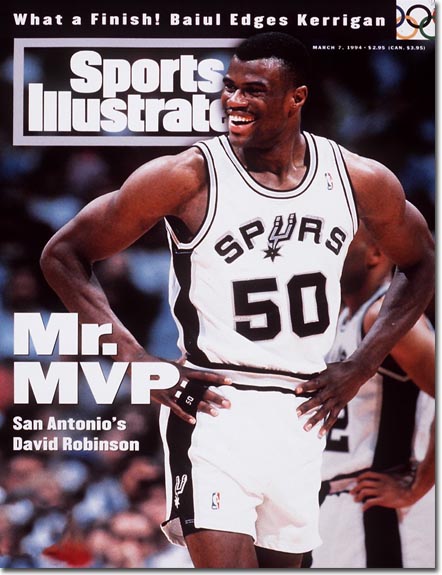
7. David Robinson
8. George Mikan
9. Patrick Ewing
10. Willis Reed


1. Kareem Abdul-Jabbar (20 NBA Seasons, 1969-1989)


Regular Season:
Games: 1,560
PPG: 24.6
RPG: 11.2
APG: 3.6
SPG: 0.9
BPG: 2.7
FG%: 56%
FT%: 72%


Playoffs:
Games: 237
PPG: 24.3
RPG: 10.5
APG: 3.2
SPG: 1.0
BPG: 2.4
FG%: 53.3 %
FT%: 74.0%

Achievements:
All-Star Selections: 19
Rookie of the Year (1970)
MVP Awards: 6 (1971, '72, '74, '76, '77, '80)
Top 2 in MVP Voting: 7 times ('71, '72, '73, '74, '76, '77, '80)
Top 3 in MVP Voting: 9 times ('70, '71, '72, '73, '74, '76, '77, '80, '81)
Top 5 in MVP Voting: 15 times ('70, '71, '72, '73, '74, '75, '76, '77, '78, '79, '80, '81, '84, '85, '86)
Top 10 in MVP Voting: 17 times ('70-'86)
NBA Championships: 6 (1971, '80, '82, '85, '87, '88)
Finals MVP Awards: 2 ('71, '85)
NBA All-Time Leading Scorer: (38,387)
4th All-Time in Rebounds: (17,440)
1st All-Time in Minutes (57,446)
2nd All-Time in Games Played (1,560)
Career-High Scoring Average: 34.8 (1972)
2x Leader in Scoring: ('71, '72)
Rebounding Leader: 1
Blocks Leader: 4
All-NBA 1st Teams: 10
All-NBA 2nd Teams: 5
All-Defensive 1st Teams: 5
All-Defensive 2nd Teams: 6
Hall of Fame: Class of 1995


2. Wilt Chamberlain (14 NBA Seasons, 1959-1973)


Regular Season:
Games: 1,045
PPG: 30.1
RPG: 22.9
APG: 4.4
FG%: 54%
FT%: 51%

Playoffs:
Games: 160
PPG: 22.5
RPG: 24.5
APG: 4.2
FG%: 52.2%
FT%: 46.5%

Achievements:
All-Star Selections: 13
Rookie of the Year: (1960)
NBA All-Star Game MVP: (1960)
MVP Awards: 4 (1960, '66-'68)
Top 2 in MVP Voting: 6 times ('60, '62, '64, '66, '67, '68)
Top 3 in MVP Voting: 7 times ('60, '62, '64, '66, '67, '68, '72)
Top 5 in MVP Voting: 10 times ('60, '61, '62, '64, '65, '66, '67, '68, '72, '73)
NBA Championships: 2 (1967, '72)
Finals MVP Awards: 1 (1972)
5th All-Time Leader in Scoring: (31,419)
1st All-Time in Rebounding: (23,924)
All-NBA 1st Teams: 7
All-NBA 2nd Teams: 3
All-Defensive 1st Teams: 2
Scoring Titles: 7 ('60-'66)
League Leader in Field Goal Percentage: 9 times ('61, '63, '65-'69, '72, '73)
Rebounding Titles: 11 ('60-'63, '66-'73)
Highest Scoring Average for a Rookie: (37.6 ppg- 1960)
Most Points for a Rookie: (2,707- 1960)
Highest Scoring Average in a Season: (50.4 ppg- 1962)
Most Points in a Single Game: (100- vs. Knicks 3/2/1962)
Most Points in a Season (4,029- 1962)
Most Rebounds in a Single Game (55)
Hall of Fame: Class of 1979


3. Bill Russell (13 NBA Seasons, 1956-1969)


Regular Season:
Games: 963
PPG: 15.1
RPG: 22.5
APG: 4.3
FG%: 44%
FT%: 56.1%

Playoffs:
Games: 165
PPG: 16.2
RPG: 24.9
APG: 4.7
FG%: 43%
FT%: 60.3%'

Achievements:
All-Star Selections: 12
NBA MVP Awards: 5 (1958, '61, '62, '63, '65)
Top 2 in MVP Voting: 7 times ('58-'63, '65)
Top 3 in MVP Voting: 9 times ('58-'65, '67)
Top 5 in MVP Voting: 11 times ('58-'67, '69)
Top 10 in MVP Voting: 12 times ('57-'67, '69)
NBA Championships: 11
NBA All-Star Game MVP (1963)
All-NBA 1st Teams: 3
All-NBA 2nd Teams: 8
All-Defensive 1st Teams: 1
Leader in Rebounding: 5 times
2nd All-Time in Total Rebounds (21,620)
2nd All-Time in Rebounds Per Game (22.5)
Hall of Fame: Class of 1975


4. Shaquille O'Neal (19 NBA Seasons, 1992-2011)


Regular Season:
Games: 1,207
PPG: 23.7
RPG: 10.9
APG: 2.5
SPG: 0.6
BPG: 2.3
FG%: 58.2%
FT%: 52.7%
Playoffs:
Games: 216
PPG: 24.3
RPG: 11.6
APG: 2.7
SPG: 0.5
BPG: 2.1
FG%: 56.3%
FT%: 50.4%
Achievements:
All-Star Selections: 15
Rookie of the Year (1993)
NBA MVP Awards: 1 (2000)
Top 2 in MVP Voting: 3 times ('95, 2000, '05)
Top 3 in MVP Voting: 5 times ('95, '00, '01, '02, '05)
Top 5 in MVP Voting: 8 times ('94, '95, '98, '00, '01, '02, '03, '05)
Top 10 in MVP Voting: 13 times ('93-'05)
NBA Finals MVP Awards: 3 (2000-2002)
NBA Championships: 4 (2000-2002, 2006)
3x All-Star Game MVP: (2000, 2004, 2009)
All-NBA 1st Teams: 8
All-NBA 2nd Teams: 1
All-NBA 3rd Teams: 4
2x Leader in Scoring: (1995, 2000)

Shaq's Dominance in Orlando:


Shaq's Reign with the Lakers:


5. Hakeem Olajuwon (18 NBA Seasons, 1984-2002)


Regular Season:
Games: 1,238
PPG: 21.8
RPG: 11.1
APG: 2.5
SPG: 1.7
BPG: 3.1
FG%: 51.2%
FT%: 71.2%

Playoffs:
Games: 145
PPG: 25.9
RPG: 11.2
APG: 3.2
SPG: 1.7
BPG: 3.3
FG% 52.8%
FT%: 71.9%

Achievements:
All-Star Selections: 12
NBA MVP Awards: 1 (1994)
Top 2 in MVP Voting: 2 times (1993, 1994)
Top 3 in MVP Voting: 2 times ('93, '94)
Top 5 in MVP Voting: 6 times ('86, '89, '93, '94, '95, '96)
Top 10 in MVP Voting: 10 times ('86, '87, '88, '89, '90, '93, '94, '95, '96, '97)
NBA Finals MVP Awards: 2 (1994, 1995)
NBA Championships: 2 (1994, 1995)
Defensive Player of the Year Awards: 2 (1993, 1994)
All-NBA 1st Teams: 6
All-NBA 2nd Teams: 3
All-NBA 3rd Teams: 3
All-Defensive 1st Teams: 5
All-Defensive 2nd Teams: 4
2x League Leader in Rebounds: ('90, '91)
3x League Leader in Blocks: ('90, '91, '93)
NBA All-Time Leader in Blocks: (3,830)
Top 10 All-Time in Steals: (2,162)
11th All-Time in Total Points: (26,946)
13th All-Time in Rebounds: (13,748)
Hall of Fame: Class of 2008


6. Moses Malone (21 Seasons: 2 ABA/19 NBA, 1974-1995)


Regular Season:
Games: 1,455
PPG: 20.3
RPG: 12.3
APG: 1.3
SPG: 0.8
BPG: 1.3
FG%: 49.5%
FT%: 76.0%

Playoffs:
Games: 100
PPG: 22.1
RPG: 14.0
APG: 1.5
SPG: 0.8
BPG: 1.6
FG%: 48.7%
FT%: 75.6%

Achievements:
All-Star Selections: 12
NBA MVP Awards: 3 (1979, '82, '83)
Top 5 in MVP Voting: 5 times ('79, '81, '82, '83, '85)
NBA Finals MVP: 1 (1983)
NBA Championships: 1 (1983)
7th All-Time in Points: (29,580)
3rd All-Time in Rebounds: (17,834)
1st All-Time in Offensive Rebounds: (7,382)
5th All-Time in Games Played: (1,455)
6x Leader in Rebounding: ('79, '81, '82, '83, '84, '85)
All-NBA 1st Teams: 4
All-NBA 2nd Teams: 4
All-Defensive 1st Teams: 1
All-Defensive 2nd Teams: 1
Hall of Fame: Class of 2001


7. David Robinson (14 NBA Seasons, 1989-2003):


Regular Season:
Games: 987
PPG: 21.1
RPG: 10.6
APG: 2.5
SPG: 1.4
BPG: 3.0
FG%: 51.8%
FT%: 73.6%

Playoffs:
Games: 123
PPG: 18.1
RPG: 10.6
APG: 2.3
SPG: 1.2
BPG: 2.5
FG%: 47.9%
FT%: 70.8%

Achievements:
All-Star Selections: 10
NBA Rookie of the Year (1990)
NBA MVP Awards: 1 (1995)
Top 2 in MVP Voting: 3 times ('94, '95, '96)
Top 3-5 in MVP Voting: 5 times ('91, '92, '94, '95, '96)
Top 10 in MVP Voting: 9 times ('90-'96, '98, 2001)
League Leader in Rebounding: (1991)
League Leader in Blocks: (1992)
Defensive Player of the Year: (1992)
League Leader in Scoring: (1994)
NBA Championships: 2 (1999, 2003)
All-NBA 1st Teams: 4
All-NBA 2nd Teams: 2
All-NBA 3rd Teams: 4
All-Defensive 1st Teams: 4
All-Defensive 2nd Teams: 4
Hall of Fame: Class of 2009


8. George Mikan (9 Seasons, NBL/BAA/NBA)

Regular Season:
PPG: 23.1
RPG: 13.4
APG: 2.8
FG%: 40.4%
FT%: 78.2%

Playoffs:
PPG: 24.0
RPG: 13.9
APG: 2.2
FG%: 40.4%
FT%: 78.6%

Achievements:
All-Star Selections: 4
All-NBA 1st Teams: 5
All-BAA 1st Teams: 1
NBA All-Star Game MVP: (1953)
BAA Championships: 1
NBA Championships: 4
3-time Scoring Champion: (1949, 1950, 1951)


9. Patrick Ewing (17 NBA Seasons)


Regular Season:
PPG: 21.0
RPG: 9.8
APG: 1.9
SPG: 1.0
BPG: 2.4
FG%: 50.4%
FT%: 74.0%

Playoffs:
PPG: 20.2
RPG: 10.3
APG: 2.0
SPG: 0.9
BPG: 2.2
FG%: 46.9%
FT%: 71.8%

Achievements:
All-Star Selections: 11
NBA Rookie of they Year (1986)
All-NBA 1st Teams: 1
All-NBA 2nd Teams: 6
All-Defensive Teams: 3
Top 5 in MVP Voting: 6 times ('89, '90, '92, '93, '94, '95)
Top 10 in MVP Voting: 7 times ('89, '90, '92, '93, '94, '95, '97)
Hall of Fame: Class of 2008


10. Willis Reed (10 NBA Seasons)


Regular Season:
PPG: 18.7
RPG: 12.9
APG: 1.8
SPG: 0.6
BPG: 1.1
FG%: 47.6%
FT%: 74.7%

Playoffs:
PPG: 17.4
RPG: 10.3
APG: 1.9
SPG: 0.2
FG%: 47.4%
FT%: 76.5%

Achievements:
All-Star Selections: 7
NBA Rookie of the Year (1965)
NBA All-Star Game MVP (1970)
NBA MVP (1970)
Top 2 in MVP Voting: 2 times (1969, 1970)
Top 5 in MVP Voting: 3 times (1969, 1970, 1971)
NBA Finals MVP (1970, 1973)
NBA Champion: (1970, 1973)


Monday, January 21, 2013

Hakeem The Dream at 50


Today, I would like to take the time to wish a happy 50th birthday to NBA legend Hakeem "The Dream" Olajuwon. After playing soccer & handball in Nigeria, Hakeem caught on to the game of basketball at 16. The world class balance, and footwork from those sports helped him even more when he made the transition to basketball. Olajuwon was certainly a world class athlete. After taking the game by storm in his home country, University of Houston coach Guy Lewis flew to Nigeria to watch Hakeem play, and to recruit him. When coming to America (no relation to the movie), Hakeem was able to quickly adapt to the style of the United States. During his freshman year, he would lead the Houston Cougars to the Final Four, only to fall to the eventual champion North Carolina Tar Heels. During the summer, Olajuwon would improve his offensive post game at the Houston Recreational Center. The perfect mentor/opponent to push him to the next level, was reigning NBA MVP Moses Malone. Malone's relentless, physical style strengthened Olajuwon and fueled his drive to become the best that he could be. During the final session of the summer, Hakeem took his lessons, and applied them against his mentor. Soon afterwards, Hakeem would take his brand new skills and put the NCAA on notice. His offensive game progressed to match his defensive game, which made him a one-man machine. As the anchor of the team on both ends, Hakeem led the Cougars to 22 straight wins. With their stylish, in your face, above the rim style, the Cougars were named "Phi Slama Jama". One of Olajuwon's teammates would be fellow Hall of Famer Clyde Drexler. Hakeem's blocks would lead to tremendous fastbreaks. Houston would later reach the Finals of the NCAA Tournament, only to fall to the North Carolina State Wolfpack. After the bitter upset, Drexler would turn pro. The Cougars would regroup for the next season, as Hakeem carried them to another NCAA Finals Appearance. This time, they would fall to the Georgetown Hoyas, led by Patrick Ewing. After the loss, Olajuwon would announce his decision to enter the NBA Draft. After tanking the 1983 season to draft Ralph Sampson 1st overall, the Houston Rockets would bomb the 1984 season as well. After those disappointing seasons, the Rockets would draft hometown hero Hakeem Olajuwon as the 1st overall pick of the 1984 NBA Draft. The rest as they say, is history. In his rookie season, Olajuwon's impact was felt immediately. In his rookie season, he made his 1st All-Star appearance. That season, he averaged 20.6 ppg, 11.9 rpg, and 2.7 bpg, which earned him 1st Team All-Rookie Honors. During this season, he shot a career high field goal percentage of 54%. He finished 2nd for NBA Rookie of the Year, behind Michael Jordan. The following season, Hakeem would average (23.5 ppg/11.5 rpg/3.4 bpg) leading the Rockets to the NBA Finals. After a monumental upset of the defending champion Los Angeles Lakers, the Rockets would face the legendary 1986 Celtics, led by MVP Larry Bird, along with McHale, Parrish, etc. Boston would eventually capture their 16th title in that series, but it was a great lesson for Olajuwon. In 1986-87, Hakeem would make his 1st appearance on the All-NBA 1st Team (23.4/11.4/3.4). That would be his second season averaging 3 blocks per game. In 1987-88, Olajuwon averaged 22.8/12.1/2.7. In the 1988-89 season, Olajuwon averaged at that time a career high 24.8/13.5/3.4. That was the first of two straight seasons leading the league in rebounds. He also recorded a career-high 213 steals, along with 282 blocks, which made him the first player in NBA history to record 200 blocks and steals each. In 1989-90, Hakeem surpassed his career-high in rebounds, averaging 14 rpg, to match his 24.3 ppg/4.6 rpg. (career-high) '91-'92 would be two of the most down years for Olajuwon in his prime. However, he still managed to lead in blocks (3.9 in '91). If he had become a U.S. Citizen sooner, he would have made the 1992 Dream Team, without question. Going into the '92-'93 season, Hakeem would enter the best 3-year run of his career. In '93, he averaged 26.1/13.0/4.2, earning him his first of two straight Defensive Player of the Year Awards. Olajuwon also finished 2nd in MVP Voting to Phoenix Suns Star Charles Barkley. In the playoffs, he would lead the Rockets to the Western Conference Semis, to fall short to the Sonics in Seven Games. In 1993-94, Hakeem would finally put the icing on his cake of his 10-year career. Olajuwon averaged 27.3/11.9/3.7, which earned him both NBA MVP & DPOY. After leading the Rockets to their first of two straight championships, Olajuwon was named Finals MVP. The following season, Hakeem led the 6th seeded Rockets back to the title, becoming one of the lowest seeded teams in history to achieve that goal. Mid-way through the season, Houston traded Otis Thorpe to Portland for Hakeem's college teammate, Clyde Drexler. As Hakeem added to his legacy, he helped to reshape Drexler's along the way. Dream's dominance against the premier Centers of his time (Robinson, Shaq, Ewing) further cemented his place among the all-time greats. In '96, Hakeem would stay relevant, averaging 26.9/10.9/3.4, while finally winning an Olympic Gold Medal in the 1996 Olympics in Atlanta. Unfortunately, Hakeem does not receive the proper credit & recognition that he deserves for being the first International star in NBA history, because of his later citizenship. If it were not for players like him and Patrick Ewing (Jamaica), there would be no Arvydas Sabonis, Drazen Petrovic, Dirk Nowitzki, etc. Now, Olajuwon is mentoring others on their post game, the same way that Moses Malone mentored him.(minus the brutal physicality) Just ask Kobe, LeBron, Dwight and now Amare. Kobe's low post game improved to help lead the Lakers to back-to-back titles. LeBron's training with Hakeem was incredible. His field goal percentage increased (53%), as he became much more of a low post presence. LeBron's new arsenal would help him lead the Heat to an NBA title, while winning his first ring and Finals MVP. Hakeem is now 10th in Career Total Points (26,946), 12th in Total Rebounds (13,748), 1st in Blocks (3,830), and 9th in Steals (2,162). During the time of his retirement, he was among the Top 10 in all four categories. He is also the only big man ranked in the top 10 in steals. His amazing hand speed, coordination and guard like footwork helped him reach these feats. If it were not for Michael Air Jordan's monstrous dominance devouring the NBA, Olajuwon would have been the defining player of his era. He was already the best Center of that time. During the playoffs, he raised his level of play to greater heights, averaging 25.9/11.2/3.2, FG% (52%). The Dream is one of only three players to reach this feat, along with Pettit, and Nowitzki. Hakeem Olajuwon's legacy is often overlooked, but can never be duplicated, especially by today's players. He was a nightmare to his opponents, but when looking at what he did was beautiful to watch. As Biggie would say "It was all a Dream". Long live the Dr34m.


I had to add this. Sorry Admiral, lol: