My latest reports on the world of sports. Welcome to Vaughn's World Sports Network. Here, you will receive nothing but pure, absolute, unbiased facts and opinions on the world of sports. I was inspired to create this, because of my undying passion for sports, and love of history. For those who desire a healthy combination of history with modern facts, this is the place for you. Follow me on Twitter: @301kingvaughnjr
With the NBA Finals behind us, I would like to present my All-Time Starting Lineup. Recently, CBS Sports also released their list of the 50 Greatest Players of all-time. In order for this team to be where they need to be, these players need to be the best versions of themselves. I will have mine coming soon, but for now, here are my Starting Five:
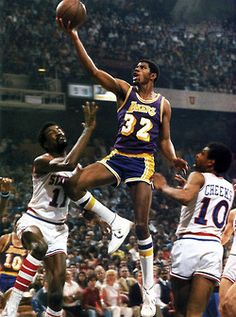
The Quintessential Point Guard. Magic Johnson is the standard that all Point Guards are measured by. At 6'9", Magic was a walking mismatch with his size, athleticism, and ball-handling skills to drive to the hoop or dish out a no-look pass. Magic opened up the world of scoring opportunities for his teammates. His IQ was at Genius Level. If you need someone to control the pace and tempo of the game, Magic is the Point Guard and Leader that you need.
Shooting Guard: Michael Jordan
Seasons: 15
Championships: 6
Finals MVPs: 6
MVPs: 5
All-Star Appearances: 14
All-Star MVPs: 3
Defensive Player of the Year: 1
All-NBA 1st Team: 10
All-NBA 2nd Team: 1
All-Defensive 1st Team: 9
All-Rookie Team: 1985
Rookie of the Year: 1985
NBA Scoring Titles: 10
Who else would you choose as your Starting Two Guard? The Greatest Basketball Player that the world has ever seen. Michael Jordan's main assignments would be his greatest strengths: Scoring and Defending. That is the scariest thing to think about considering who he is surrounded by. This team needs players that can change the pace of the game, and Michael can do that in the blink of an eye.
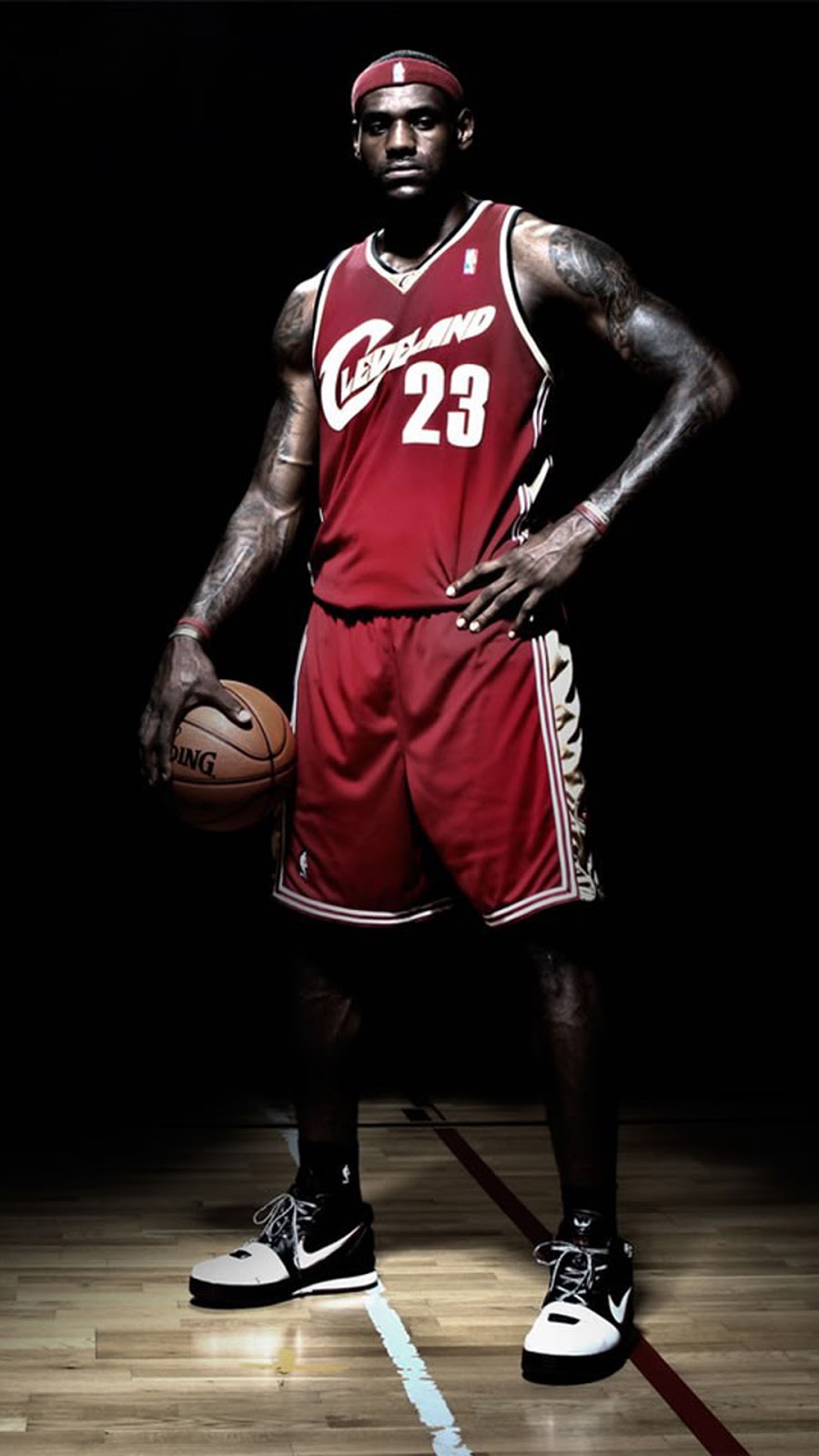
If you are looking to build the Prototype for the Ultimate Basketball Player, LeBron James would make a Great Template to start from. LeBron is lethal as a double threat on both ends of the floor. If you need someone to put on an onslaught from a Scoring standpoint, he can do that. If you need a pivotal playmaker, he can do that as well. If you need someone who can be a threat defensively, you have that as well. This team would have a very interesting dynamic with LeBron at Small Forward considering you have Magic Johnson, the Greatest Point Guard of all-time feeding you the ball along with Michael Jordan, the Most Dominant Scorer of all-time at the Two Guard. LeBron is also a Once in a Generation Player like everyone else in this Starting Lineup so he will make his presence known along with his teammates. When you consider his body of work and his consistency, LeBron James has officially taken Larry Bird's crown as the Greatest Small Forward Ever.
Power Forward: Tim Duncan
Seasons: 19
Championships: 5
Finals MVPs: 3
MVPs: 2
All-Star Appearances:
All-Star MVPs: 1
All-NBA 1st Teams: 10
All-NBA 2nd Teams: 3
All-NBA 3rd Teams: 2
All-Defensive 1st Teams: 8
All-Defensive 2nd Teams: 7
NBA All-Rookie Team (1998)
NBA Rookie of the Year (1998)
The Big Fundamental. The Quintessential Power Forward of his Era and All-Time. Tim Duncan modeled Basketball Technique at its finest. Duncan would bring great chemistry in a lineup with personalities larger than life. Tim would create great spacing in the Front Court as well as a Great Dynamic with the Greatest Center of All-Time. Duncan was not known for being flashy, but he was highly effective and efficient. He was a great weapon on both the Offensive and Defensive ends of the court.
If you wanted to build the Perfect Center in a Lab, this is how he would turn out. When talking about the Greatest Centers of All-Time, Kareem Abdul-Jabbar is a perfect storm. He is the ultimate combination of Offensive Dominance, Solid Defense, Championships, Great Individual Stats, and Achievements. Jabbar had the Greatest Offensive Weapon (Skyhook), he retired as the All-Time Leader in Blocks, he is STILL the All-Time Scoring Leader (38,387) and has the MOST MVP Awards (6). When you have that Deadly Combination in the Paint, that is the Ultimate exclamation point that anyone would want on their team. While there is a wide variety of Great Centers that you could choose from, Kareem has everything that I would want for my All-Time Starting Team.
There are always events or situations in history where we look back and wonder "What Could have been?". Whether it was a great team that could not win a championship ('90s Orlando Magic), or a great match that never happened (ex: Shawn Michaels vs The Rock). There are also dream matchups that never manifest (Hogan vs Flair at WrestleMania VIII, Austin vs. Hogan at WM X8). In this case, I would like to look at what would have been the ultimate dream series (pun intended) between the two best players of their respective era. In this case, I would like to examine what could have been the premiere Finals series between Michael Jordan's Chicago Bulls and Hakeem Olajuwon's Houston Rockets. If only Mike did not put the Basketball down to pickup the Baseball bat. We would have the best Finals series of that decade in my view.
People always like to run with this idea that the Chicago Bulls would have won eight straight championships if Michael never left for baseball. First and foremost, Michael Jordan is the greatest player to ever pick up a basketball. He is to Basketball what Hulk Hogan and Stone Cold Steve Austin are to Wrestling and what Jerry Rice is to Football. I just wanted to clear that point. However, I would like to take a quick flashback to the year 1984. There was a young man from the University of Houston by way of Lagos, Nigeria who was drafted two spots ahead of Michael as the 1st Overall Draft pick. His name was Akeem Olajuwon (later Hakeem). MJ was incredible in North Carolina, but Dream was very close in his own way as he carried the U of H on his back. For the record, I knew nothing about the University of Houston until I found out that Hakeem Olajuwon played there. Plain and simple, this man put that school on the map. Hakeem was not some nameless scrub player. He did not have to carry the regret of being the player that his team passed over Michael Jordan to draft (Sam Bowie). The Dream had a remarkable career in his own right.
In fact, I would like to fast forward to 1986. That season, Jordan was injured for most of that season. As we all know, Michael torched the 1986 Celtics Empire for a Playoff Record 63 points. Unfortunately, the Bulls were swept in that series. Meanwhile, Olajuwon led the Houston Rockets to the NBA Finals against that same Boston Celtics team led by NBA MVP Larry Bird. Boston would capture their 16th Title in that series. Remember, the Dream led his team to the Finals five years before Jordan would conquer Magic Johnson's Lakers for his first championship. What makes this fantasy series even more special is that Olajuwon was THE Dominant Center of his Era/Generation in a time where you had at least four other Hall of Fame (future Hall of Fame) Centers in their prime or entering their prime. You name the player, Hakeem has given him a lesson at some point. Out of that era, he was the most versatile. He had the quickness and handles that wing players envied, along with a presence that traditional pivotmen were not able to match.
Whenever this topic is brought up, everybody wants to put an asterisk next to Houston's two championships as if they meant nothing. At least Hakeem stepped to the plate to become a champion, instead of becoming another ringless statistic like Patrick Ewing, Charles Barkley or Karl Malone. None of them took advantage of that window of opportunity, and their legacies have suffered because of that. It is hard to argue against Michael going undefeated in the Finals (6-for-6). On his path to the Championship, Jordan went through some giants such as the Celtics led by Larry Bird, Kevin McHale, and Robert Parish, the Bad Boy Detroit Pistons as well as Magic's Showtime Lakers.
Jordan's first three-peat was his most statistically dominating run as the Bulls defeated the Lakers, Blazers and Suns (his numbers speak for themselves). However, there is one common denominator in each series. None of those teams had a dominant Center like Hakeem Olajuwon in Houston. The Dream would give Chicago matchup nightmares in the Finals. Chicago's defense would be faced with threats that they never had to face in the first or second three-peat. Kareem was retired by the time the Bulls played the Lakers. Hakeem's post moves and footwork would have Bill Cartwright and Horace Grant pretty much dumbfounded. The Sonics and Jazz did not have Centers that created major threats either. Next to Michael Jordan, I would say that Hakeem was the 2nd best player of the 90's. These two titans dominated in what is considered by many to be the "Golden Era" as it was a time where every team across the league seemed to be loaded with Hall of Fame talent.
On one hand, I won't say that the Bulls would have had a run of eight straight championships. The Rockets have proven that they can give Chicago matchup issues in the regular season. On the other hand, I will not say that Houston would have won two straight over Chicago. You could go with either season, and Houston would have walked away with at least one trophy. The Rockets are the one team that has a career winning record against Michael Jordan. From 91-93, Jordan went 1-4 against the Rockets.
Figuring out a defensive scheme against Olajuwon would have been much harder than creating a defensive scheme against Karl Malone or Charles Barkley.
Just like Jordan in 1988, Hakeem won both MVP and DPOY during the 1994 Season. However, Dream won Finals MVP in that same season where he picked up the other two awards. That 1994 team defeated Chicago's rival New York Knicks in seven games during their first championship run. New York was led by Hakeem's rival Patrick Ewing. For the 1995 campaign, Houston managed to win their second title as a 6th seed with under 50 wins (47-35). They were called "Road Warriors" for a reason as they never had home court advantage during their playoff run. Along the way, Houston defeated the No. 3 seed Utah Jazz (60-22), No. 2 seed Phoenix Suns (59-23) and the No. 1 seed San Antonio Spurs (62-20). Those teams featured very decorated players: Karl Malone and John Stockton (both 1st Team All-NBA), Charles Barkley (2nd Team All-NBA) and David Robinson (1st Team All-NBA, MVP). In the finals, they would squash a young Orlando Magic Team (57-25) led by Shaquille O'Neal (2nd Team All-NBA, Scoring Champion) and Penny Hardaway (1st Team All-NBA). Houston conquered the top teams and stars of the league during that two-year window. During the second run, the second biggest factor next to Hakeem was Clyde Drexler.
Clyde was acquired by The Rockets during a trade midway through the 1995 Season as the Blazers traded him in exchange for Otis Thorpe. Despite the rough start, Drexler was able to play a key role in Houston's second title chase. Clyde was looking to redeem his image after Michael Jordan demoralized him in the 1992 NBA Finals. If Houston plays Chicago, Drexler would be looking to seek revenge. Drexler's legacy was revived once he reunited with his former College Teammate Hakeem Olajuwon. Clyde needed Hakeem more than Hakeem needed Clyde. Drexler's window was closing to win a championship as he was in the twilight of his prime.
If I had to lean to any one of those Rockets teams to defeat Chicago, I might lean towards the 1995 Team slightly. Michael Jordan was the main player who demanded double teams, because of the damage that he can do on the offense. Scottie Pippen did a great job in Michael's absence, but he only averaged 16.7 ppg while Jordan was gone. That would not fly when you are trying to establish yourself as a leader away from His Airness. Scottie was not a player who screamed "Double Team". Meanwhile, Olajuwon and Drexler each demanded double teams as they could create problems in their own way.
As for the series outcome, Houston wins in a 7-game series as Olajuwon wins Finals MVP. It would have been great to see this happen. All we can do is fantasize about what could have been.
East:
Heat over Bulls (4-3)
Pacers over Knicks (4-2)
West:
Thunder over Grizzlies (4-3)
Spurs over Warriors (4-2)
East:
Heat vs. Bulls:
In Game 1, I was very impressed by Chicago. On the night where three of their best players were out (Rose, Deng, Hinrich), the Bulls regrouped around players such as Nate Robinson, Joakim Noah, Carlos Boozer, and others in spite of their injury problems. Meanwhile, Miami was fully healthy with their franchise star, MVP LeBron James. However, Chicago came off of a tough 7-game series with the Brooklyn Nets, while the Heat were rusty coming off of an 8-day layoff. What made the layoff rust even worse was the fact that LeBron was openly awarded the MVP trophy the night of the game in Miami. In the first half, LeBron played nothing like an MVP. The first half overall was grueling and low scoring, where both teams were tied at 37 by halftime. Side note: Maybe it was the shoes. Just kidding. The Bulls have constantly had the Heat's number this season. Chicago was the team that ended Miami's 27-game winning streak. (2nd longest in NBA History) Whenever the Bulls play the Heat, they always bring their A game, especially Nate Robinson. Game 1 was no different. Chicago pushed the ball up the court, and knocked down their shots. They knew how to frustrate Miami. Nate Robinson led the way with 27 points, 9 assists. Jimmy Butler stepped up with 21 points, 14 rebounds. Joakim Noah made an impact as well, with 13 points, and 11 rebounds. Meanwhile, LeBron led the way for the Heat as he finished with 24 points, 8 rebounds, and 7 assists. Dwyane Wade had 14 points. Everyone else on the Heat were involved, but not enough to get them over. Chris Bosh, Mario Chalmers and Ray Allen went cold. In the end, this will be an intriguing matchup.
Pacers vs. Knicks:
These first two games have been up and down. In Game 1, the Pacers blew the Knicks away in Madison Square Garden. In Game 2, the Knicks returned the favor. However, I see Indiana having the advantage because of their physicality, just like it was with the Hawks, and even with the Heat last year. If the Pacers perimeter defense can neutralize Carmelo and JR Smith, this will turn even more in their favor. Overall, the Pacers physical play and big man Roy Hibbert will be the deciding factor.
West:
Thunder vs. Grizzlies:
With fellow star Russell Westbrook out for the rest of the playoffs, Kevin Durant was able to take what little he had and multiply it for victory over Houston in the 1st Round. In Game 1, the Thunder defeated the Grizzlies at home, with Kevin Durant once again leading the troops. (35 points, 15 rebounds, 6 assists, 9/10 from the free throw line) Kevin Martin stepped up to the plate with 25 points, with Reggie Jackson bringing in 12 points. However, the Grizzlies made it even with Mike Conley leading Memphis with 26 points, 10 rebounds, and 9 assists. Marc Gasol scored 24 points, while Zach Randolph brought in 15 points. Kevin Durant dropped 36 points, 11 rebounds and 9 assists 11/12 from the foul line. However, he missed 2 crucial shots, and the rest of the Thunder fell short. Gasol and Randolph are two of the best big men today. If they carry their weight like they did against the Clippers, they could have a chance. However, Oklahoma City is still a greater threat than what the Clippers were. I see the Thunder pulling this out.
Spurs vs. Warriors:
Monday Night's opener was incredible. Stephen Curry has really been raising his game, and those around him. Curry was lights out again in Game 1, where he lit up the Spurs defense with 44 points and 11 assists. San Antonio had their back on the ropes by the first half. However, the Spurs had the right answer. This was a Point Guard battle. Tony Parker led the way with 28 points, 8 rebounds, and 8 assists. Danny Green dropped 22 points. Tim Duncan had a solid game with 19 points, and 11 rebounds. Rising star Kawhi Leonard gave 18 points, and 9 rebounds. Manu Ginobili also added 16 points, and 11 assists. San Antonio's experience, and chemistry will neutralize the youth and firepower of Golden State.
Now that we have gotten the point crystal clear about the dominance of the 80s/90s, it is time to show how players like Jordan would translate into today's game. The fact that Michael Jordan put up the insane numbers that he did (10 scoring titles, 6 finals mvp's, 5 league mvp's), in an era where players went through wars getting the crap kicked out of them with all of the grabbing, holding, wrapping around, etc, is the ultimate testament to his greatness. The very fact that Michael Jordan became the cream of the crop for shooting guards, with his numbers (8 seasons of 30 ppg, 5 w/32+ ppg, shooting 50%+ from the field) further adds to that greatness. These are all testaments to sustained dominance, the likes that we have never seen before, and we may never see for a long time. With all respect to LeBron, I am not talking about a streak of games. I am talking about over the span of an era, and career. Unfortunately, too many new school fans cannot comprehend the idea of a player like Michael being as versatile as he was, and being able to attack the rim against such force during that time. Like many others, I firmly believe that if Jordan were in his prime today, his numbers would be greatly enhanced by today's rules. Not just me, but others such as Phil Jackson, Clyde Drexler, Dominique Wilkins, Penny Hardaway, and others. Obviously Phil coached him in that era. Dominique, Drexler, and others played under the rules of that era, and can tell first hand the drastic difference between the game then and now. They obviously understand how the rules impacted perimeter players like themselves. In this article, I will go into further detail to show how the rules would further enhance their numbers as well.
Here, I will give you a timeline of the various rule changes since Jordan's 1998 retirement. Over time, the game was slowly, but rapidly becoming more of a perimeter player's game.
1999-00
In the backcourt, there is no contact with hands and forearms by defenders. In the frontcourt, there is no contact with hands and forearms by defenders except below the free throw line extended in which case the defender may only use his forearm. In the post, neither the offensive player nor the defender is allowed to dislodge or displace a player who has legally obtained a position. Defender may not use his forearm, shoulder, hip or hand to reroute or hold-up an offensive player going from point A to point B or one who is attempting to come around a legal screen set by another offensive player. Slowing or impeding the progress of the screener by grabbing, clutching, holding "chucking" or "wrapping up" is prohibited.
2000-01
No contact with either hands or forearms by defenders except in the frontcourt below the free throw line extended in which case the defender may use his forearm only
Neither the offensive player nor the defender will be allowed to dislodge or displace a player who has legally obtained a position.
Defender may not use his forearm, shoulder, hip or hand to reroute or hold-up an offensive player going from point A to point B or one who is attempting to come around a legal screen set by another offensive player.
Slowing or impeding the progress of the screener by grabbing, clutching, holding "chucking" or "wrapping up" is prohibited.
(I guess the repeat is to further endorse and remind everyone).
2001-02
A new defensive three-second rule will prohibit a defensive player from remaining in the lane for more than three consecutive seconds without closely guarding an offensive player.
2004-05
New rules were introduced to curtail hand-checking, clarify blocking fouls and call defensive three seconds to open up the game.
2006-07
On a clear-path-to-the-basket foul, the team that is fouled is awarded two free throw attempt and the ball on the sideline.
As you can see, as time went on, the NBA was deteriorating the impact of the post players in favor of the perimeter. Ironically, the rules began to shift during the Shaq/Duncan reign (last era of dominant big men). No longer could a player grab, hold, wrap around or check with the hand in the face. Forearms were prohibited. The 2004-2005 season is where things really came to a head, when they clearly wanted to "curtail hand-checking" to call defensive three seconds in favor of this one key purpose "to open up the game". Even though this is pretty explanatory, allow me to break it down even more: When they say to open up the game, it is to give perimeter players more space to score. It is no coincidence that Steve Nash went from a middle of the pack Point Guard, to suddenly a 2-time MVP, while shooting 50% from the field.
Here is Brooklyn Nets Star Joe Johnson on how the rule changes helped him, from an interview in the summer of 2010: "It benefits me," said Johnson, who was one of three Hawks players that season who averaged 20 or more ppg that season. (Mike Bibby & Jamal Crawford were the other two) Johnson continues: "It definitely changes the game because it gives every guy that extra step. If we could hand check now, the game would be totally different. If they could hand check back in the day, there are some guys that would have been even better than they were. It would have been nuts for some of the big-time scorers and perimeter players from the 1980's and 1990's. Can you imagine what Michael Jordan would have done in a league where you couldn't hand check."
That is the smoking gun evidence from a player of this era! Even he testifies about how the rule changes would further benefit not just him, but the top perimeter players from back then. If you won't take his word, I have other accounts.
Here are quotes from players and coaches from that time.
Phil Jackson on Michael Jordan today: "Michael would average 45 with these rules."
Former Bulls Assistant Coach Tex Winter (Architect of "Triangle Offense"): "Players today can get to the basket individually much easier."
Larry Brown: "The college game is much more physical than our game. I always tease Michael Jordan, if he played today, he'd average 50."
Now, time for the players:
From a radio interview with Clyde Drexler:
Question: In the current league where there is no hand checking and no ruff play, how much better would your numbers be?
Clyde Drexler: "Oh, tremendously better, from shooting percentage to points per game everything would be up, and our old teams would score a lot more points, and that is saying something because we could score a lot back then. I do think there should be an asterisk next to some of these scoring leaders, because it is much different trying to score with a forearm in your face. It is harder to score with that resistance. You had to turn your back on guys defending you back in the day with all the hand checking that was going on. For guys who penetrate these days, it's hunting season. Yes, now you can play (floating) zone, (legally), but teams rarely do."
Scottie Pippen in January 2006: "The defensive rules, the hand checking, the ability to make contact on a guy in certain areas...(have) all been taken away from the game. If Kobe could get 81, I think Michael could get 100 points in today's game."
Craig Hodges, another former Jordan teammate, now a Lakers shooting coach:
Question: If you could take one player in their prime, would you take Michael Jordan or Kobe?
Hodges: "M.J., all day. There's no comparison. M.J. could score 100 points in this era. You can't hand-check now. Imagine that trying to guard M.J. It would be crazy."
Dominique Wilkins was also addressed with this subject.
Question: Seeing that you played in one of the greatest eras in NBA history, what has changed the most in the NBA since your days as a player?
Dominique Wilkins: "The power forward position had the license to kick your butt and the game was very physical. I think the physical aspect of the game, some of it has been taken away with the rule changes."
Question 2: Do you think you could take them?
Wilkins: "I don't believe in comparisons, but I look at the era I played in. Like I said, when you have to play against a great player every night, that defines who you are if you can compete on that same level night in and night out. That tells you where your place is in the whole, I would say, history of the game. You put yourself in a very high spot."
Dominique on how he would play today:
Wilkins: "When you can compete on that level against the greatest players every single night, and when you can play just as good or better, that really defines who you are as a player. So if you're asking me what would I have done (today), well, put it this way, if you couldn't touch me (because of the rule changes), instead of averaging 25 or 30 (points), I'd probably average 40."
Scottie Pippen on MJ/Kobe:
Scottie Piippen: "I think you definitely have to give Michael a little bit of a nod in most areas of the game, whether it is passing or shooting. Kobe is truly a great shooter, but he is playing in a different era of the game. It's not as physical. He also has more freedom in going to the basket, which creates a more wide-open scoring opportunity for players like him in today's game. We've never seen the amount of players scoring 30, 40 or 50 points in a game. Ten years ago, if a player scored 50 points in a game, it would be major news all week."
Tim Grover, (who has trained Jordan, LeBron, and Kobe) was asked who would win a 1-on-1 battle with Jordan vs. either Kobe or LeBron:
Grover: "Oh, Michael. No question. From a physical and mental standpoint, he's the best I've ever seen. If he were playing now, with the way the refs call everything, and with all the padding these guys wear, he'd average 40 or 50 a night if he wanted."
NBA.com conducted an interview with Executive Vice President Stu Jackson about the impact of the hand checking rule changes back in 2004-05.
NBA.com: "Since the hand-checking rule was interpreted differently beginning in the 2004-05 season, the game has opened up. Players are penetrating and the floor is spread. As a result, scoring has risen every season. Was this anticipated back in 2004?
Jackson: "No. The scoring increase was not our goal. Our objective was to allow for more offensive freedom by not allowing defenders to hand-, forearm- or body-check ball handlers. By doing so, we encouraged more dribble penetration. As players penetrated more, it produced higher quality shots for the ball handler as well as shots for teammates on passes back out to perimeter. When NBA players get higher quality shots-having more time to shoot-they tend to make more of them."
NBA.com: "Shooting percentages have risen since 2004-05 regardless of location- at-the-rim shots, short-and deep-mid range and 3-pointers. Does this surprise you, especially the higher percentages from 3-point range?"
Jackson: "It doesn't. With the rule and interpretation changes, it has become more difficult for defenders to defend penetration, cover the entire floor on defensive rotations and recover to shooters. This has provided more time for shooters to ready themselves for quality shots. With more dribble penetration, ball handlers are getting more opportunities at the rim. Additionally, teams now realize the 3-point shot is a great competitive equalizer, so they are taking more; they have improved their skill level on threes and are making them at a higher rate."
Finally, it is time to for the man himself, Michael Jordan:
"The history book inspires them to be some of the best", said Jordan. "Rules have changed to help them. I could have averaged 50 points today."
Jordan also says due to the hand checking rule changes, triple digits would be reachable for him in today's game. "It's less physical and the rules have changed, obviously." says Jordan. "Based on these rules, if I had to play with my style of play, I'm pretty sure I would have fouled out or I would have been at the free throw line pretty often and I could have scored 100 points."
I decided to test that theory myself in video game form. Recently, I played NBA 2k12, and used Michael Jordan in Create A Legend Mode. During the season, MJ won MVP. (50 ppg, 6.4 rpg, 2.6 spg, 61% FG, 38% 3pt, 92% FT) This may seem like a game, but for me, it is also a symbol of art imitating life. Not only did MJ break his own scoring record (3,041) from 1987, but he also broke Wilt's 1962 scoring record (4,029). MJ finished with 4,045.
Now, let's take a look at Jordan's 1986-87 season:
Points: 3,041
Points Per Game: 37.1
FG%: 48%
FT%: 85%
Rebounds: 430
RPG: 5.2
Assists: 377
APG: 4.6
Steals: 236
SPG: 2.9
Blocks: 125
BPG: 1.5
Now, here is a more realistic view of what MJ would average in today's game. (61% was a bit of a stretch by the way, no matter how bad today's defense is)
MJ in the Modern NBA:
Points: 4,041
PPG: 50.5
FG%: 50.6% (51%)
FT%: 85%
Rebounds: 525
RPG: 6.5
Assists: 400
APG: 5.5
Steals: 265
SPG: 3.2
Blocks: 150
BPG: 1.9
With that said, I firmly believe that he would score at least 1,000 more points than that season with the modern rules. With his advantage in free throw shooting, he would be able to break Wilt's 1962 scoring record. Naturally, Wilt would have an advantage in shooting percentage from the field, because of his position. Chamberlain shot 50.6% (51%). The other stats are a bit miscellaneous, but I believe that Jordan's field goal percentage would increase because of how much easier it would be for him to score without resistance. If you look at Jordan's other seasons where he shot between 52-54% (88-92), those percentages would increase as well.
Here is a look at the difference in defense:
Jordan vs. Old School Defense:
Modern Era Defense:
The difference in contact is clearly obvious. If that doesn't cement it even more, here is something else that will blow you away.
Michael Jordan had 39 career 50+ point games. 22 of them came against Top 10 Defenses, 13 against Top 5 Defenses.
Here is a career timeline of Jordan's 50 point games:
1. 63 points vs. Boston Celtics (4/20/1986) (Playoff Career-high)
Defensive Rank: #1
2. 50 points vs. New York Knicks (11/1/1986)
Defensive Rank: #20
3. 53 points vs. Portland Trailblazers (1/8/1987)
Defensive Rank: #13
4. 58 points vs. New Jersey Nets (2/6/1987)
Defensive Rank: #18
5. 61 points vs. Detroit Pistons (3/4/1987)
Defensive Rank: #5 (DPOY: Dennis Rodman)
6. 56 points vs. Philadelphia 76ers (3/24/1987)
Defensive Rank: #12
7. 53 points vs. Indiana Pacers (4/12/1987)
Defensive Rank: #8
8. 50 points vs. Milwaukee Bucks (4/13/1987)
Defensive Rank: #4 (DPOY: Sidney Moncrief)
9. 61 points vs. Atlanta Hawks (4/16/1987)
Defensive Rank: #2
10. 52 points vs. Cleveland Cavaliers (12/17/1987)
Defensive Rank: #11
11. 52 points vs. Portland Trailblazers (2/26/1988)
Defensive Rank: #10
12. 59 points vs. Detroit Pistons (3/3/1988)
Defensive Rank: #2 (DPOY: Dennis Rodman)
13. 50 points vs. Boston Celtics (3/18/1988)
Defensive Rank: #17
14. 50 points vs. Cleveland Cavaliers (4/28/1988)
Defensive Rank: #5
15. 55 points vs. Cleveland Cavaliers (5/1/1988)
Defensive Rank: #5
16. 52 points vs. Boston Celtics (11/9/1988)
Defensive Rank: #20
17. 52 points vs. Philadelphia 76ers (11/16/1988)
Defensive Rank: #24
18. 52 points vs. Denver Nuggets (11/26/1988)
Defensive Rank: #8
19. 53 points vs. Phoenix Suns (1/21/1989)
Defensive Rank: #5
20. 50 points vs. Milwaukee Bucks (2/16/1989)
Defensive Rank: #6
21. 50 points vs. Cleveland Cavaliers (5/5/1989)
Defensive Rank: #2
22. 54 points vs. Cleveland Cavaliers (11/3/1989)
Defensive Rank: #9
23. 52 points vs. Orlando Magic (12/20/1989)
Defensive Rank: #27
24. 69 points vs. Cleveland Cavaliers (3/28/1990) (Career-high)
Defensive Rank: #9
25. 51 points vs. Washington Bullets (3/19/1992)
Defensive Rank: #12
26. 50 points vs. Denver Nuggets (3/24/1992)
Defensive Rank: #13 (DPOY: Dikembe Mutombo)
27. 56 points vs. Miami Heat (4/29/1992)
Defensive Rank: #25
28. 54 points vs. LA Lakers (11/20/1992)
Defensive Rank: #17
29. 57 points vs. Washington Bullets (12/23/1992)
Defensive Rank: #25
30. 64 points vs. Orlando Magic (1/16/1993)
Defensive Rank: #11
31. 52 points vs. Charlotte Hornets (3/12/1993)
Defensive Rank: #19
32. 54 points vs. New York Knicks (5/31/1993)
Defensive Rank: #1
33. 55 points vs. Phoenix Suns (6/16/1993)
Defensive Rank: #9
34. 55 points vs. New York Knicks (3/28/1995)
Defensive Rank: #1
35. 53 points vs. Detroit Pistons (3/7/1996)
Defensive Rank: #7
36. 50 points vs. Miami Heat (11/6/1996)
Defensive Rank: #1
37. 51 points vs. New York Knicks (1/21/1997)
Defensive Rank: #2
38. 55 points vs. Washington Bullets (4/30/1997)
Defensive Rank: #13
39. 51 points vs. Charlotte Hornets (12/29/2001)
Defensive Rank: #10
Here is a breakdown of this timeline:
Jordan had 34 games between 50-59 points. (27 during the regular season, 7 in the playoffs)
Jordan scored 60+ points 5 times. (4 during the regular season, 1 playoffs)
The fact that Michael scored a playoff record 63 points against the powerhouse 1986 Celtics, is beyond impressive. Boston not only had the 1st ranked Defense, but they went on to win the Championship that season as well. I am much more impressed with that game, than Kobe scoring 81 points against a bottom feeder Toronto Raptors team. (WORST defense in the league that season)
Jordan also had 4 50+ point games against teams with a Defensive Player of the Year:
61 points vs. Dennis Rodman (Detroit- 3/4/1987)
50 points vs. Sidney Moncrief (Milwaukee- 4/13/1987)
59 points vs. Dennis Rodman (Detroit- 3/3/1988)
50 points vs. Dikembe Mutombo (Denver- 3/24/1992)
Bonus:
Here are the players that won Defensive Player of the Year that Jordan scored 40+ points:
41 points vs. Los Angeles Lakers (11/28/1986)
(D.P.O.Y- Michael Cooper)
41 points vs. Milwaukee Bucks (12/12/1986)
(D.P.O.Y- Sidney Moncrief)
43 points vs. Houston Rockets (1/15/1987)
(D.P.O.Y- Hakeem Olajuwon)
44 points vs. Houston Rockets (3/16/1987)
(D.P.O.Y- Hakeem Olajuwon)
44 points vs. Houston Rockets (12/12/1987)
(D.P.O.Y- Hakeem Olajuwon)
42 points vs. Los Angeles Lakers (12/20/1988)
(D.P.O.Y- Michael Cooper)
46 points vs. Detroit Pistons (1989 ECF- Game 3)
(D.P.O.Y- Dennis Rodman)
44 points vs. San Antonio Spurs (2/3/1990)
(D.P.O.Y- David Robinson)
42 points vs. San Antonio Spurs (1/24/1993)
(D.P.O.Y- David Robinson)
40 points vs. Seattle Supersonics (1/13/1998)
(D.P.O.Y- Gary Payton)
Notice how 6 out of these 10 games came against Big Men (Centers) who won Defensive Player of the Year:
David Robinson ('92)
Hakeem Olajuwon ('93 & '94)
Kobe has had 25 50 point games in his career. Only 7 of them came against Top 10 Defenses.
Out of those games, Kobe has played 20 games with 50-59 points. (19 regular season, 1 playoffs)
Kobe also has 5 60+ point games (5 regular season, 0 playoffs)
Scoring in the Jordan Era (Old School Rules):
1988-89 Points Per Game Leaders:
1. Michael Jordan- 32.5
2. Karl Malone- 29.1
3. Dale Ellis- 27.5
4. Clyde Drexler- 27.2
5. Chris Mullin- 26.5
6. Alex English- 26.5
7. Dominique Wilkins- 26.2
8. Charles Barkley- 25.8
9. Tom Chambers- 25.7
10. Hakeem Olajuwon- 24.8
(Hakeem was the only player under 25 ppg)
1989-90 Points Per Game Leaders:
1. Michael Jordan- 33.6
2. Karl Malone- 31.0
3. Patrick Ewing- 28.6
4. Tom Chambers- 27.2
5. Dominique Wilkins- 26.7
6. Charles Barkley- 25.2
7. Chris Mullin- 25.1
8. Reggie Miller- 24.6
9. Hakeem Olajuwon- 24.3
10. David Robinson 24.3
1990-91 Points Per Game Leaders:
1. Michael Jordan- 31.5
2. Karl Malone- 29.0
3. Bernard King- 28.4
4. Charles Barkley- 27.6
5. Patrick Ewing- 26.6
6. Michael Adams- 26.5
7. Dominique Wilkins- 25.9
8. Chris Mullin- 25.7
9. David Robinson- 25.6
10. Mitch Richmond- 23.9
1991-92 Points Per Game Leaders:
1. Michael Jordan- 30.1
2. Karl Malone- 28.0
3. Chris Mullin- 25.6
4. Clyde Drexler- 25.0
5. Patrick Ewing- 24.0
1992-93 Points Per Game Leaders:
1. Michael Jordan- 32.6
2. Dominique Wilkins- 29.9
3. Karl Malone- 27.0
4. Hakeem Olajuwon- 26.1
5. Charles Barkley- 25.6
6. Patrick Ewing- 24.2
1993-94 Points Per Game Leaders:
1. David Robinson- 29.8
2. Shaquille O'Neal- 29.3
3. Hakeem Olajuwon- 27.3
4. Dominique Wilkins- 26.0
5. Karl Malone- 25.2
6. Patrick Ewing- 24.5
1994-95 Points Per Game Leaders:
1. Shaquille O'Neal- 29.3
2. Hakeem Olajuwon- 27.8
3. David Robinson- 27.6
4. Karl Malone- 26.7
5. Jamal Mashburn- 24.1
(The league's scoring was ruled by Big Men when during Jordan's 1st retirement)
1995-96:
1. Michael Jordan- 30.4
2. Hakeem Olajuwon- 26.9
3. Shaquille O'Neal- 26.6
4. Karl Malone- 25.7
5. David Robinson- 25.0
1997-98:
1. Michael Jordan- 28.7
2. Shaquille O'Neal- 28.3
3. Karl Malone- 27.0
Now, a look at the Modern NBA:
2003-04 Point Per Game Leaders (Pre-Rules Changes):
1. Tracy McGrady- 28.0
2. Peja Stojakovic- 24.2
3. Kevin Garnett- 24.2
4. Kobe Bryant- 24.0
(Anyone notice how low the scoring was during this season? Does anyone also notice where Kobe is on the list? Immediately, the NBA changed the rules to speed up the pace of the scoring, and to open the floor.)
2004-05 Scoring Leaders- (The floodgates opened for perimeter players with the rule changes):
1. Allen Iverson- 30.7
2. Kobe Bryant- 27.6
3. LeBron James- 27.2
4. Dirk Nowitzki- 26.1
5. Amare Stoudemire- 26.0
6. Tracy McGrady- 25.7
7. Gilbert Arenas- 25.5
8. Vince Carter- 24.5
9. Dwyane Wade- 24.1
2005-06:
1. Kobe Bryant- 35.4
2. Allen Iverson- 33.0
3. LeBron James- 31.4
4. Gilbert Arenas- 29.3
5. Dwyane Wade- 27.2
6. Paul Pierce- 26.8
7. Dirk Nowitzki- 26.6
8. Carmelo Anthony- 26.5
9. Michael Redd- 25.4
10. Ray Allen- 25.1
11. Elton Brand- 24.7
12. Vince Carter- 24.2
(This was the same season where Kobe scored the notoriously overrated 81 points against the Toronto Raptors, a below sub-par team. Overall, this was the WORST season for perimeter defense, because of how many players averaged 24.0 ppg or higher. 11 out of those 12 play on the perimeter. Nowitzki is a hybrid PF that plays outside.)
Wilkins (Modern Era):
Points: 2,700
Points Per Game: 34.7
FG%: 51%
FT%: 84%
(These are mere projections. The Big Men would have a field day under these rules.)
The amount of perimeter players that led in scoring since 2004-05 is alarming! This is the direct example of the extinction of the interior scorers like Shaq, Hakeem, Robinson, and others.
In Conclusion, Michael Jordan will always be the ultimate measuring stick for perimeter players to be measured by. The facts speak for themselves. Players in Jordan's era were still very impressive, in spite of the physical resistance during that time. Michael not only overcame the best perimeter players, but also the best interior players when he got to the basket under very stiff, and intense competition. Michael Jordan reigns supreme in ANY ERA!
Case Closed!
(Special Thanks to Bruce Blitz, Basketball-Reference, and NBA.com)
As we celebrate All-Star Weekend, it is only appropriate that we also celebrate another major milestone: NBA Royalty Michael Jordan turns 50! Jordan certainly created many great moments during the All-Star Weekend (87-88 Slam Dunk Battles with Dominique, 40 points in '88 ASG in Chicago, etc) What else is there to be said about Michael Jordan that has not been said? He is the ultimate prototype of a total package player. Jordan was a jack of all-trades, and master of all in a number of categories:
Basketball IQ
Scoring
Defense
Playmaking
Leadership
Team Play
Competitive Drive
Consistency
Athleticism
Agility
Innovation
Individual Brilliance
Clutch Play
Ultimate Regular Season/Playoff Performer
Jordan's first flash of brilliance took place at the University of North Carolina, under Coach Dean Smith. People assume that Jordan first learned team basketball under Phil Jackson, but that is far from the truth. This is the place where Jordan ultimately blended within the team concept, because his numbers in college tell the story (17.7/5.0/1.8 FG%-54, 3pt%-45, FT%-75). In his freshman year (1981-82), Jordan helped lead the Tar Heels to a National Title, with his signature game winning shot over Patrick Ewing & the Georgetown Hoyas. Here are Jordan's accomplishments from his great NCAA career
1982 NCAA Champion
1982-83 NCAA AP All-American 1st Team
1983-84 NCAA AP All-American 1st Team
1983-84 AP Player of the Year
1983-84 NCAA John Wooden Award
1983-84 Naismith Men's College Player of the Year Award
Jordan achieved this while being in a toned down system. After his fantastic junior season, Jordan would go on to take his game to the pros, where he was drafted 3rd Overall by the Chicago Bulls in the 1984 NBA Draft. As a rookie, Michael immediately set the league on fire, averaging 28.2 ppg, 6.5 rpg, 5.9 apg, and 2.4 spg, while shooting 51% from the floor. This production not only earned Michael Rookie of the Year, but also a place as the starter for the Eastern Conference All-Stars, All-Rookie 1st Team, and All-NBA 2nd Team. Jordan also led the league in Total Points that season. (2,313) He also finished 6th place in MVP Voting. Jordan's momentum was temporarily put on hold the following season (1985-86), because of foot injury, which limited him to only 18 games. However, the playoffs were only a sign of things to come from Michael in the future. In the first round of the 1986 Playoffs against the Celtics, MJ unleashed a playoff record 63 points on the future champion Boston Celtics, who had the #1 Defense that season. (By the way, this Celtics team is widely considered to be there very best, and that speaks even more volumes about Michael's greatness) With that game, MJ put the league on further notice, that he was next in line after Magic & Larry. That fire from the playoffs extended into the next season. In 1986-87, Jordan went on a scoring rampage. That season, he averaged a career-high in points (3,041), and scoring average (37.1), snatching his first of 10 future scoring titles. Michael became the first player since Wilt Chamberlain ('61, '62, '63) to score at least 3,000 points, while averaging at least 37 ppg. ('60, '61, '62, '63). That season, Jordan also had a 9-game streak of 40 points or more:
41- Nov. 28, 1986 @ L.A. Lakers
40- Nov. 29, 1986 @ Golden State
40- Dec. 2, 1986 @ Seattle
45- Dec. 3, 1986 @ Utah
43- Dec. 5, 1986 @ Phoenix
43- Dec. 6, 1986 @ San Antonio
40- Dec. 9, 1986 @ Denver
41- Dec. 10, 1986 @ Atlanta
41- Dec. 12, 1986 @ Milwaukee
That season, Michael would go on to have at least 37 games of 40 or more points. What is even more astonishing is the fact that Michael NEVER had a game with 81 points, but yet he STILL scored over 3,000 points that season. He also earned his 3rd straight All-Star appearance (1987 Slam Dunk Champion), along with his first All-NBA 1st Team appearance. This was such a breakout season, that Jordan finished 2nd in MVP Voting, only to Magic Johnson. The Lakers also had Michael Cooper as their DPOY, but Jordan still found a way to drop 41 on him. This was truly a benchmark season, because this was the OFFICIAL start of Michael Jordan's Prime. (1987-1993) Michael also became the first player in NBA history to record 200 steals (236), and 100 blocks (125). Unfortunately, he was never given credit for his defense that year.
Here is a look at some of the other 40+ point games MJ had back in 1987:
Jordan's first 50-point game VS. Knicks at MSG:
Michael Jordan's 53 pts. vs. Clyde Drexler's Blazers:
MJ drops another 53 vs. Pacers (70% FG): (Long before LeBron)
MJ vs. Dominque (61 points vs. Hawks):
MJ drops 44 on Akeem's Olajuwon's Houston Rockets
Michael delivers 61 on Detroit Pistons (Bad Boys): 5th Ranked Defense
In 1987-88, Michael would leave a mark even bigger than the one he left the previous season. That season, he captured his 2nd straight scoring title (35.0 ppg), while leading the league in steals for the first time (3.2). He also recorded at least 200 steals, and 100 blocks for the second consecutive season. (259 steals, 131 blocks) Jordan made his 2nd straight All-NBA 1st Team, and his first All-Defensive 1st Team. During All-Star Weekend, Michael engaged in the greatest Slam Dunk battle of all-time Vs. Dominique Wilkins. Jordan won his 2nd Straight Dunk Contest in his Battleground of Chicago, while also winning ASG MVP the following night. With his incredible season, Jordan won his 1st of 5 NBA MVP Awards, where he beat out Magic Johnson and Larry Bird in another strong race. He also won Defensive Player of the Year. However, Michael's success was short-lived, because the Bulls would run into a brick wall named "The Bad Boy Pistons" during the Eastern Conference Semis, 4-1. In 1988-89, Jordan was forced to take on even more of a utility role, filling in at Point Guard for an injured John Paxson. Michael was able to display another dimension to his game as an all-around player. That season, he won his 3rd straight scoring title (32.5 ppg), while averaging career-highs in both rebounds, and assists (8.0 rpg, 8.0 apg). Jordan also had 7 straight games with at least a Triple-Double. Today's fans are so fascinated with LeBron's all-around game, that they tend to forget about the versatility of MJ. That season was also most notable for the game against the Cavs in the playoffs, where Jordan hits "The Shot" over Craig Ehlo, saving Chicago's postseason. The Bulls would go on to play the Detroit Pistons in the Eastern Conference Finals for the first time, ultimately falling to them 4-2. During this time, Pistons Coach Chuck Daly devised a set of defensive rules specifically for Jordan called "The Jordan Rules". This was instituted right after Jordan's 59 point game against them on April 3, 1988.
Here is that very game:
Michael Jordan 59 points vs. Pistons (4/3/88)
The system was designed to double and triple-team Michael every time that he had the ball in his hands. The Pistons knew that Michael's teammates were not a threat. However, things would change in Chicago's favor. The Bulls hired Phil Jackson as head coach, along with Tex Winter as assistant coach. Jackson's first move was to implement the "Triangle Offense". Under this new system, everyone was occupied and involved. Initially, Jordan didn't understand, because he thought Phil was trying to take the ball away from him. However, the system was built to move the ball around for everyone else, so that Jordan would not get swarmed so easily with double-teams. In this Offense, Michael also sacrificed his ball-in hand game to help Scottie Pippen develop as more of a ball-handler. Not only did Scottie improve, but so did others like Horace Grant, Paxson and so on. Not much changed in Michael's production. In 1989-90, Jordan had a season very similar to the previous one. That season, he averaged 33.6 ppg (1st), 7 rpg, and 6 apg, shooting 54% from the floor. Jordan also led the league in steals for the second time in his career. With the new Triangle Offense, Detroit's "Jordan Rules" became less effective. In the postseason, the Bulls made their second straight trip to the ECF vs. Detroit. This time, The Bulls took The Pistons to their limit. Although Chicago would fall 4-3, they found what it ultimately took to defeat their blood rivals. The Bulls regrouped for the following season. In 1990-91, Michael earned his 2nd MVP Award (31.5/6.0/5.5), while leading the Bulls to a 61-21 record. (1st in Eastern Conference) Finally, the pieces fell together in the proper places for the Bulls. In the playoffs, Chicago swept the Knicks off the court (3-0), demolished Philadelphia (4-1), and murdered the Isiah & Bad Boy Era in a sweep. (4-0) The Bulls would make their 1st Finals Appearance in Franchise history against the Los Angeles Lakers. (Team of the '80s) Michael would finally have the chance to prove himself on the biggest stage, against the best player from the previous decade, Mr. Earvin Magic Johnson. Magic was the king of the mountain during the '80s, being the leader/co-leader of the Lakers leading them to 5 Championship. He was the consummate team leader, who made everyone around him better. During this series, Jordan dismantled the Lakers, and matched Magic in playmaking.
1991 NBA Finals (Michael vs. Magic):
Total Points:
Jordan: 156
Magic: 93
Game-High:
Jordan: 36
Magic: 22
PPG:
Jordan: 31.2
Magic: 18.6
Field Goal Percentage:
Jordan: 55%
Magic: 43%
3-Point Percentage:
Jordan: 50%
Magic: 29%
Free-Throw Percentage:
Jordan: 85%
Magic: 95%
Rebounds:
Jordan: 33
Magic: 40
RPG:
Jordan: 6.6
Magic: 8.0
Assists:
Jordan: 37
Magic: 62
APG:
Jordan: 11.4
Magic: 12.4
Steals:
Jordan: 14
Magic: 6
SPG:
Jordan: 2.8
Magic: 1.2
Blocks:
Jordan: 7
Magic: 0
BPG:
Jordan: 1.4
Michael AVERAGED 11 Assists, IN THE FINALS! Come back to me when LeBron does that! With this outstanding performance, Michael not only won his first ring, but also his 1st Finals MVP. In this series, Jordan snatched the torch from Magic, and dethroned him as the King of the NBA Castle. This was the official changing of the guard, as Michael proved that even a scoring champion can win an NBA Championship. The NBA landscape changed even more from this moment. The thing that made this even more significant, is the fact Jordan won his first title, by conquering Magic's Lakers. That adds even greater value to his first championship run.
In 1991-92, Michael Jordan won his second straight MVP Award (30.1/6.4/6.1), while leading the Bulls to a 67-15 record. (franchise best at the time) Chicago's record improved, in large part because of the emergence of Scottie Pippen, along with B.J. Armstrong, & co. However, the road to the playoffs became even tougher for the Bulls. After sweeping the Miami Heat (3-0), the Bulls faced a very strong Knicks team in a seven-game series that had its fair share of controversy. Chicago emerged (4-3), and advanced to defeat the Cleveland Cavaliers in the ECF. (4-2) In the NBA Finals, the Chicago Bulls would face a powerhouse Portland Trailblazers Squad. Michael would face yet another NBA Superstar. This time, it was Clyde "The Glide" Drexler. During the season, Drexler finished 2nd place in MVP Voting behind Jordan. This caused the media to draw numerous comparisons between the two, because they played the same position, similar size, and playing style. The Finals was billed as "Jordan vs. Drexler", and the series did not disappoint. This was the ultimate way for Michael to make the distinct separation between himself and Clyde, as he emerged victorious over his contemporary.
1992 NBA Finals (Michael "Air" Jordan vs. Clyde "The Glide" Drexler):
Total Points:
Jordan: 215
Drexler: 149
Game-High:
Jordan: 46
Drexler: 32
PPG:
Jordan: 35.8
Drexler: 24.8
Field Goal Percentage:
Jordan: 52%
Drexler: 40%
3-Point Percentage:
Jordan: 42%
Drexler: 15%
Free-Throw Percentage:
Jordan: 89%
Drexler: 89%
Rebounds:
Jordan: 29
Drexler: 47
RPG:
Jordan: 4.8
Drexler: 7.8
Assists:
Jordan: 39
Drexler: 32
APG:
Jordan: 6.5
Drexler: 5.3
Steals:
Jordan: 10
Drexler: 8
SPG:
Jordan: 1.7
Drexler: 1.3
Blocks:
Jordan: 2
Drexler: 6
BPG:
Jordan: 0.3
Drexler: 1.0
The highlight of this series was Jordan setting a then-record 6 three pointers in one game. (35 points in one half) Michael was rewarded his second straight NBA Finals MVP Award. During the summer, Michael also won his 2nd Olympic Gold Medal, as a member of the 1992 Dream Team. 1992 was a brilliant year for Michael Jordan. He achieved a Triple-Crown, (NBA MVP, Finals MVP, Olympic Gold Medal) becoming the first player in NBA history to achieve this feat. Jordan's explosion in popularity expanded the league's fan market. He took the game Magic & Larry saved, and brought it to even greater heights, which no one thought could be seen. Larry Bird & Magic Johnson raised the league's popularity & revenue from a national standpoint. Jordan made it even more acceptable from an international standpoint, as an American player. Ratings flew even higher, and the brands of other players received greater exposure as well. (Barkley, Karl Malone, David Robinson, Drexler, and others) The 1992-93 Season got off to a slow start for the Bulls, because of the lack of rest for Jordan & Pippen after the Olympics. Chicago finished the season with a record of 55-27. In spite of the early hurdle, Jordan still played at the highest level in the NBA. (32.6/6.7/5.5) MJ captured his 7th straight scoring title (tying Wilt Chamberlain), while leading the league in steals for the 3rd time. (2.8 spg) However, Jordan finished 3rd in MVP Voting, behind Defensive Player of the Year Hakeem Olajuwon (2nd), and Charles Barkley (1st). The media felt that they needed to promote another star as the MVP. They chose Barkley, because of his production, with a better team. (Phoenix Suns: 62-20) This only fueled Michael's competitive fire even more, to show who the REAL MVP was. After two straight sweeps (3-0 vs. Atlanta, 4-0 vs. Cleveland), Chicago would go on to face Phoenix, led by Charles Barkley.
1993 NBA Finals (Michael Jordan vs. Charles Barkley):
Total Points:
Jordan: 246
Barkley: 164
Game-High:
Jordan: 55
Barkley: 42
PPG:
Jordan: 41.0
Barkley: 27.3
Field Goal Percentage:
Jordan: 51%
Barkley: 47%
3-Point Percentage:
Jordan: 40%
Barkley: 25%
Free-Throw Percentage:
Jordan: 69%
Barkley: 75%
Rebounds:
Jordan: 51
Barkley: 78
RPG:
Jordan: 8.5
Barkley: 13.0
Assists:
Jordan: 38
Barkley: 33
APG:
Jordan: 6.3
Barkley: 5.5
Steals:
Jordan: 10
Barkley: 7
SPG:
Jordan: 1.7
Barkley: 1.2
Blocks:
Jordan: 4
Barkley: 3
BPG:
Jordan: 0.7
Barkley: 0.5
Jordan went on an absolute rampage, torching Phoenix for an NBA Finals record in scoring (41.0 ppg), which earned him his 3rd straight Finals MVP Award. Michael carried a tremendous amount of weight during this first 3-peat. This is weight that even Shaq had not carried. This first Bulls teams had Michael's DNA all over it. Jordan's first run (84-93) was beyond legendary. It was straight ICONIC! This was Michael at his apex, because he clearly mastered EVERYTHING during this time. (Physically, Athletically, Statistically, etc) He had the perfect combination of top speed, full strength, agility, all rolled into one. Jordan finally put the icing on his cake, with his team achievements. (championships) Even during this time, Michael was widely considered to be the greatest of all-time, by the likes of Magic Johnson, and others. Then, at the age of 30, he decided to walk away to play baseball, following the death of his father. For years, there has been speculation about this. I firmly believe that he left, because he wanted to pay tribute to his Dad, by playing baseball. (something he wanted him to do) Plus, the psychological damage was too strong after something that devastating. Unfortunately, too many new school fans want to bash him for leaving, in their agenda to praise Kobe for playing 17 years, without a break. They want to use this as an excuse to say Kobe is tougher. Now, I will take the time to address this nonsense: Michael achieved MUCH MORE, against tougher competition than Kobe & co. WITHOUT being stopped by an injury. Michael played through pain, so that was not an issue for him. It would make absolutely no sense for Jordan to be the greatest ever, but have a physical problem playing 10+ seasons. It was purely personal. When Michael retired in 1993, his body of work was much more impressive. He achieved MORE before baseball, than what Kobe, & LeBron have achieved in their entire careers. (20k + points, 7 scoring titles, 3 League MVP's, 3 Finals MVP's, in 9 seasons) He was still active, and working hard even in baseball.
In the middle-to-end of the 1994-95 season, Jordan made a MAJOR announcement with two words: "I'm Back!". MJ returned in a very large way as well. In his first game back, the Bulls took on the Knicks in Madison Square Garden. Michael wore his number from baseball (45), and delivered a classic 55-point game in a win against New York. This will always be remembered as the "Double-Nickel" game. Chicago would go to the ECF, where they were swept by the Orlando Magic. (Led by the NBA's new blood, Shaquille O'Neal & Penny Hardaway) Nick Anderson made a comment after the series, saying "Jordan was not the same", because he was out of basketball shape. In hindsight, I agree, because Jordan lost at least a slight step from before, because his body had become bulkier since he came back. Initially, Jordan was still not in basketball shape, and it showed during the 1995 ECF vs. Orlando. (Magic swept Bulls, 4-0)
The Chicago Bulls regrouped for the 1996-96 season, better than ever as a team. In his first full season, Michael Jordan recaptured the NBA scoring title for the 8th time (30.4/6.6/4.3), breaking Wilt Chamberlain's record for most scoring titles. Michael also led the revamped Bulls team to an historic 72-10 record. (best in NBA History) For this fantastic return, Michael was named the NBA MVP for the 4th time. In his All-Star Game return, he was also named ASG MVP. With newly acquired Tony Kukoc, former Pistons rival Dennis Rodman (San Antonio), Ron Harper (Clippers), and perennial sidekick Scottie Pippen, Chicago picked up right where they left off from when MJ first retired. The Bulls stomped out perennial whipping boy Miami (3-0 1st round), along with New York (4-1), before going to the Eastern Conference Finals to take care of unfinished business from the previous year. Remembering the embarrassing way their season ended, Chicago turned the tables, by sweeping Orlando, 4-0. This was their way of letting the young guns like Shaq know "We're back!". In the Finals, the Bulls would face a defensive force in the Western Conference, the Seattle Supersonics, who were led by "The Glove" Gary Payton. Payton was named the 1995-96 Defensive Player of the Year, while leading the league in steals. (2.9 spg) Along with premier PF "The Reign Man" Shawn Kemp, & co., the Sonics were 1st in the West (64-18). It was the Beast from the East (Chicago) vs. the Best from the West (Seattle). This series was clearly a defensive struggle to say the least. Both teams were powerhouses on defense. The contributions of Rodman, and Kukoc were vital in this series. This was clearly not Jordan's finest performance in the NBA Finals. (27.3/5.3/4.2) However, because he was the leader of the team, he won his 4th Finals MVP Award. Michael joined Willis Reed, as the second player in NBA history to win All-Star Game, Regular Season, and Finals MVP in the same season. The 1996-97 season was not much different from before. The Chicago Bulls finished the season 69-13 (tied w/1972 Lakers), with Jordan winning his 9th scoring title. (29.6/5.9/4.3) Clearly, Jordan was the best player in the league, with the best team! However, once again the media gets tired of naming MJ the MVP just like in '93. This time, they give the award to Karl Malone. After sweeping the Bullets in the 1st round (3-0), Chicago would overcome New York in another 7-game series (4-3). For the first time ever, the Bulls would face the Miami Heat (led by Alonzo Mourning & Tim Hardaway), in the Eastern Conference Finals. However, Chicago made short work of them, putting out the Heat, 4-1. Jordan would get his revenge in the Finals, as the Bulls took on the Utah Jazz in the NBA Finals. The signature game for the series, was the "Flu Game". This was an example of how Michael had to rely on his heart, determination, and will to win like never before. Jordan returned to form in the Finals (32.3/7.0/6.0), while leading the Bulls to their 5th title. MJ was named Finals MVP for the 5th time, while the Mailman could not deliver. 1997-98 would be Jordan's farewell as a Chicago Bull. This season was a great way to go out for him, too. Michael won his 10th scoring title (28.7/5.8/3.5), along with his 5th MVP Award. During this same time, the media started building Kobe Bryant to compare him with MJ. Jordan would silence the critics in the All-Star Game, by winning the game's MVP Award. In the playoffs, Chicago would go on to dethrone the New Jersey Nets (1st round, 3-0), and Charlotte Hornets (4-1, 2nd round), before a grueling series with the Pacers. Michael's decline was on full display during the series, but the Bulls prevailed (4-3) because of the supporting cast. The Bulls and Jazz would have a rematch in the Finals. The signature moment of the series, was Michael's iconic game-winning shot over Bryon Russell, after stealing the ball from Karl Malone. This was the ULTIMATE storybook ending to a career. No other way to go out. For years, younger players and fans dream about that shot, and fantasize about taking that dramatic game-winner. When the series was over, Jordan was named Finals MVP for the 6th time (33.5/4.0/2.3), while leading the Chicago Bulls to their 6th championship. The supporting cast for the second three-peat was extremely crucial, because they covered up Jordan's deficiencies during that time. Michael was declining, not just athletically, but it also showed up in his production. He was less efficient, averaged fewer points, steals, etc, and shot a lower field-goal percentage. That is a FACT! With that being said, the team from 96-98, covered up those flaws in his game.
Michael decided to give a final encore, when he returned to play for the Washington Wizards. Although he was more than a shell of his former self, Michael still showed signs of dominance against the premier players at the time: Paul Pierce, Kobe Bryant, Kevin Garnett, Tracy McGrady, Vince Carter, to name a few. In his return, Michael sparked a new interest in the Wizards. Attendance soared through the roof, with Jordan in a Wizard uniform. Michael also made the All-Star team in both seasons with Washington. In 2001-02 at age 39, Michael finished 13th in MVP Voting.
Michael Jordan was the closest thing to perfection on the basketball court. He was the greatest combination of athleticism with fundamentals. It is hard to find a great, talented athlete who understands, and uses technique. Many talented athletes just coast off of their natural abilities. Michael was the player who knew how to execute both equally. When his athleticism and speed diminished with age, he still had the IQ, and fundamentals to fall back on.
The legacy of Michael Jordan is unlike any other before, or after. For years, the media has constantly searched, and still searches for a "Like Mike" player. They will look for any form of flash, and charisma to match with MJ. Each player that has been compared to him has fallen under the pressure & burden: Penny Hardaway, Grant Hill, Vince Carter, Tracy McGrady, were all destroyed by the injury virus. Kobe has gone the farthest, because of how he has ripped Jordan's style 100%, and smart people see through it. Even he has felt the pressure, and it has hindered his legacy as well. If it weren't for playing with a wealthy franchise (Lakers), he would fall in line with everyone else. LeBron James has decided to carve out his own identity, so he avoids it. (Plus, he changed his number) Although Dwyane Wade has been a member of 2 championship teams, injuries have plagued him as well. None of these players achievements, and level of play meet or exceed the enormous Jordan standard in any way. (Not even Kobe)
Michael's ability to raise his game is unmatched. His body of work speaks for itself. With that said, here are his accomplishments: