My latest reports on the world of sports. Welcome to Vaughn's World Sports Network. Here, you will receive nothing but pure, absolute, unbiased facts and opinions on the world of sports. I was inspired to create this, because of my undying passion for sports, and love of history. For those who desire a healthy combination of history with modern facts, this is the place for you. Follow me on Twitter: @301kingvaughnjr
Showing posts with label los angeles lakers. Show all posts
Showing posts with label los angeles lakers. Show all posts
January 26, 2020 will forever be a day that you will remember where you were when you received the painful news. This is the day that we lost not only a Basketball Icon, but a Cultural Icon. I had just gotten out of Church and took a nap when I got the call about his death. When my sister told me about it, I thought it was one of those terrible Internet hoaxes where people make up news about someone's death. I thought the Internet made up a sick joke about Kobe being dead so that he could come back and say "I'm still here!". Sadly, that never happened as I checked Google to confirm the truth. Come to find out, this was the sad reality as multiple reports from TMZ, ABC News and others showed up as my results. Then, I went to Social Media (Instagram, Twitter, etc) to find my World crashing down. The most painful words that I could read were true (Kobe Bean Bryant, dead at the age of 41. 1978-2020). There have been deaths that hit very hard before (Michael Jackson, Prince, Macho Man Randy Savage, Nipsey Hussle to name a few) but NONE like this. Here was a death that hit me harder than a hit from Thor's Hammer, Mjolnir. Kobe's Career has spanned 20 years. TWENTY YEARS!! That has been the span of most of my life. His Career spans different stages of my life. From Elementary School, Middle School, High School and Adulthood. When talking about someone who is a Generational Hero, Kobe definitely fits that mold. Kobe was drafted in 1996, when I was 7 years old. I had just moved from Washington, DC to Lanham, MD and started going to Catherine T. Reed Elementary. His debut ran parallel with my debut at a new School in a new County. Kobe's beginnings did not get off to a rocket start, but rather a rocky start. He was not the brightest star coming out of that legendary 1996 draft, instead it was Allen Iverson. However, Kobe worked through his rookie learning curve and showed flashes of what would make him great later on. Even though his numbers did not immediately show it, Kobe drew early comparisons to his predecessor, His Airness Michael Jordan. The parallels were so strong that Kobe was voted as a Starter for the West in the 1998 All-Star Game, only his SECOND season. This was a testament of the great potential that Kobe would soon fulfill as he held his own against Jordan to show how hungry he was to reach that level of greatness. Obviously, Jordan himself as well as the world were all highly impressed. The impact of this would be felt the following year as Bryant was officially inserted into the Lakers starting lineup. After the bitter humiliation of a sweep at the hands of the Spurs, the Lakers needed a much needed change in leadership and scenery. The 1999-2000 season was the breaking of a new day in Los Angeles. The Lakers fired Del Harris and hired legendary Coach Phil Jackson as the Lakers moved into the Staples Center to start a new journey. The change was evident as the Lakers dominant presence was felt throughout the season. With Shaq as the MVP and Kobe as a rising star in the sidekick role, the Lakers marched through the season with a 67-15 record on their way to their first NBA Championship in 12 seasons. Kobe had his greatest impact in the WCF Game 7 when he delivered the Game-winning alleyoop to Shaq to secure the win over the Blazers to make it to the Finals. In the Finals, Kobe's 26 points and 10 rebounds were another sign of his evident breakout into being a bigger star. That impact would lead into the following 2000-2001 season as Bryant would play a much larger role. That season, he averaged at that time, a career-high 28.5 ppg, 5.9 rpg and 5.0 apg, which placed him even closer to Shaq as O'Neal averaged 28.7 ppg. Even though the Lakers finished the season 56-26, they rose their level of play higher than ever in the playoffs with an incredible 15-1 record. At this point, not only was Kobe closing the gap with Shaq, but he was also closing the gap with rival and league MVP Allen Iverson. Their history goes back to the '96 Draft as Iverson was drafted as 1st Overall while Bryant was the 13th Overall pick. This and the MVP award would be the much needed fuel that Kobe needed for his unquenchable competitive fire as he locked his eyes on Iverson as his next target. To add even more fuel, AI became a star in Kobe's hometown which escalated things. Fast forward to the 2001 Finals and the Lakers would destroy the 76ers in a "Gentlemen's sweep", winning their 2nd straight title 4-1. Shaq was Finals MVP once again, but Kobe zeroed in on Iverson as his defensive assignment. Bryant would continue to have the last laugh as he dominated Iverson and the East in the 2002 All-Star Game with 31 points, 6 rebounds and 6 assists. Allen had no answer for the Black Mamba on that night.
The Lakers would continue their reign of dominance into the playoffs. After defeating the Kings in a gruesome 7 Game Series, the Lakers would obliterate the New Jersey Nets in a 4-game sweep. By this point, Bryant established himself even more as Michael Jordan's heir apparent as he cemented himself as the premiere Shooting Guard in the NBA. For years, Shaq and Kobe were called the Batman and Robin of the NBA. After the three-peat, Bryant transitioned from Robin to Nightwing as he made his first of 11 All-NBA 1st Team selections. This was also the season where Kobe got rid of the Fro and went with the short cut that he has had for the rest of his career. I even got my haircut just like his, to the point where my Mom said for years that I favored him. To hear your Mom tell you that you resemble your favorite Basketball star can be a huge boost. In 2002-2003, the Lakers would notice a shift in leadership as Kobe became the focal point of the Lakers offense. That season, he led the league in total points for the first time out of four different seasons with a total of 2,461. Bryant also led the league in field goals made with 868 on the way to averaging 30 ppg for the first time in his career. However, the Lakers fell short of winning their fourth straight championship at the hands of the San Antonio Spurs. The Summer of 2003 would begin a LONG Season for Kobe and would change his image in ways never seen before. Kobe was dealing with a sexual assault allegation that would cause him to miss much of the 2003-2004 Season as the Lakers added future Hall of Famers, Karl Malone and Gary Payton. The turmoil between Kobe and Shaq would reach its breaking point this season. Even though the Lakers made it to the Finals, the Pistons would conquer this Superteam 4-1. Shaq's time in Los Angeles would come to an end as he was traded to the Miami Heat. As a Lakers fan, this was the end of an era but I knew that it was inevitable. In a post-Shaq era, Kobe would undergo a transformation with his image and his game. He even got a tattoo as a sign that he would take on more of an edge as a player. This would also be a time where Bryant would go through a maturation phase as a man as well. During this phase, he also changed his number (more on that later). This coincided with my time in High School as I was making my own adjustments physically and socially. Just like Kobe, I was going through my own growing pains in an uncertain time. Kobe had the platform that he had been waiting for his whole career and he carried that team the best that he knew how to with what little that he had. However, life after Shaq was not very easy in that stage of his career. However, the highlights would be when Bryant led the league in scoring (points, ppg) for the first time in his career with an average of 35.4 ppg in 2006. The signature game of that season was when Kobe scored 81 points as the Lakers defeated the Raptors. Bryant also had a game against the Mavericks where he scored 62 points in 3 quarters. Kobe's brilliance was on full display as he became the centerpiece of the team. After that 2006 Season, Kobe would continue his identity change as he changed his number from 8 to 24. This symbolized not only that he wanted to win more than Jordan, but 8x3=24. That means that Kobe wanted to be 3 times the player that he was before, as it also meant to me that he was paying tribute to winning three straight rings with number 8. Kobe was turning over a new leaf. The biggest takeaway from this was also how determined Kobe was to surpass Shaq on the rings list after he saw Diesel win a ring in Miami with his new Tag-Team partner, Dwyane Wade. For me, it was like watching Andy exchange Woody for Buzz Lightyear. We also saw the return of the Zen Master Phil Jackson back on the Lakers sidelines.
Kobe wanted to prove to Shaq and the rest of the world that they should NEVER count him out. This is what fed the Black Mamba even more. Knowing that Shaq's best years were behind him, I knew that Kobe would surpass him when all was said and done because he had much more in the tank. The Black Mamba's first season with number 24 was 2006-2007, when he averaged 31.6 ppg to secure his last scoring title. New number, same beast. Unfortunately, that did not translate into team success as there were talks of a possible trade. Little did we know that the only trade that would happen would be Kwame Brown going to Memphis in exchange for Paul Gasol. The Lakers would also draft Andrew Bynum while picking up some other key pieces to build a championship contender. In 2007-2008, we would witness Kobe's first and only MVP Season as he averaged 28.3 ppg, 6.3 rpg, 5.4 apg en route to winning this much deserved Award while the Lakers were on the mission for another trophy. However, the Boston Celtics were finally resurrected after free agent Hall of Famers Kevin Garnett and Ray Allen joined Paul Pierce to form a three-headed green monster. Ultimately, this rivalry was destined to be reborn as the Lakers and Celtics collided in another Finals battle for the first time in 21 years (Lakers won in 1987). However, as a Lakers fan I knew that Boston had too much firepower and momentum to let this slide through their fingers. The Celtics would defeat the Lakers 4-2 in the Finals with Paul Pierce winning Finals MVP. After that painful loss, Kobe and the Lakers went back to the drawing board to regroup. This proved to be a very interesting and pivotal time. As Shaq was rapidly declining, Kboe was shaping his legacy to cement himself among Basketball Immortals while also racing to move past his former teammate in the rings Department. Kobe would win back to back Championships in 2009 & 2010 as the Alpha Dog leader that he worked so hard to become. Ironically, Kobe won his fourth ring in '09 by destroying Shaq's original squad, the Orlando Magic 4-1. The Black Mamba would get the last laugh on Shaq Diesel as well as the Celtics by winning his fifth and final ring by defeating Boston in 2010. Bryant would also win back to back Finals MVPs in those series. From that point, there would be no question that Kobe became the 2nd Greatest Shooting Guard in NBA History right next to his predecessor, Michael Jordan. That fifth championship unquestionably placed Kobe in the Pantheon of Greatness, making him one of the illustrious Top 10 Players to ever play the sport. Shaq even joined the Celtics to ring chase, but fell short. After winning his fifth ring and the Lakers 16th Championship, Kobe never made it back to that stage. However, he still played at the highest level possible even through injuries while still making All-Star Games (winning his last ASG MVP in 2011). Along the way, Kobe finally surpassed his hero MJ in Career Total Points in 2013.
Bryant enjoyed the greatest final regular season game that anybody could ever have when he scored 60 points to defeat the Utah Jazz in 2016. Kobe enjoyed the honor of having both number 8 and 24 retired by the Lakers. Now, whenever someone turns 24 they say that they are entering their "Kobe year". Dave Chappelle even had a skit where he was shooting something in the trash and said "Kobe". Even Undertaker did the same thing in his "Last Ride" Documentary. These are signs that you have transcended into popular culture and have grown beyond the sport. Life outside of Basketball was just heating up for Kobe as he won an Oscar for his Movie "Dear Basketball". It was his love letter to a Sport that he loved and gave so much to as it gave so much back to him. He even made the cover of NBA 2k17 for the Legend Edition. Now, here is where we tragically come full circle to the year that rocked my World as a Basketball fan. The tributes for Kobe were flooding left and right in many ways, from t-shirts, signs, etc. The Hall of Fame Class of 2020 has become the strongest collectively that I have ever seen with Kobe, KG and Tim Duncan as the headliners. Now, NBA 2k21 has paid tribute with an exclusive Mamba Edition in honor of Basketball's National Treasure. Kobe's legacy is unparalleled because of his decorated career and impact. Mamba Mentality has become part of our lexicon because it represents the idea of working hard and diligently to become the very best version of ourselves. Kobe worked in ways behind the scenes to give back to the Community of Los Angeles after being their Champion and Superhero on the court for 20 years. He was also an advocate for Women's Basketball while supporting the WNBA. His foundation even donated $1 Million to the National Museum of African American History and Culture. This made me even MORE of his fan. Kobe's imprint is too large to be overlooked or replaced. I think LA Sparks Power Forward/ESPN Analyst Chiney Ogwumike said it best when she said, "Kobe was the biggest ally that we ever had for us 80's and 90's babies who grew up watching and idolizing his game, he was everything. That perfect combination of loyal to his city, winning multiple championships, fierce competitor and most important, human." I couldn't have said it any better. Mamba Out!
With the NBA Finals behind us, I would like to present my All-Time Starting Lineup. Recently, CBS Sports also released their list of the 50 Greatest Players of all-time. In order for this team to be where they need to be, these players need to be the best versions of themselves. I will have mine coming soon, but for now, here are my Starting Five:
The Quintessential Point Guard. Magic Johnson is the standard that all Point Guards are measured by. At 6'9", Magic was a walking mismatch with his size, athleticism, and ball-handling skills to drive to the hoop or dish out a no-look pass. Magic opened up the world of scoring opportunities for his teammates. His IQ was at Genius Level. If you need someone to control the pace and tempo of the game, Magic is the Point Guard and Leader that you need.
Shooting Guard: Michael Jordan
Seasons: 15
Championships: 6
Finals MVPs: 6
MVPs: 5
All-Star Appearances: 14
All-Star MVPs: 3
Defensive Player of the Year: 1
All-NBA 1st Team: 10
All-NBA 2nd Team: 1
All-Defensive 1st Team: 9
All-Rookie Team: 1985
Rookie of the Year: 1985
NBA Scoring Titles: 10
Who else would you choose as your Starting Two Guard? The Greatest Basketball Player that the world has ever seen. Michael Jordan's main assignments would be his greatest strengths: Scoring and Defending. That is the scariest thing to think about considering who he is surrounded by. This team needs players that can change the pace of the game, and Michael can do that in the blink of an eye.
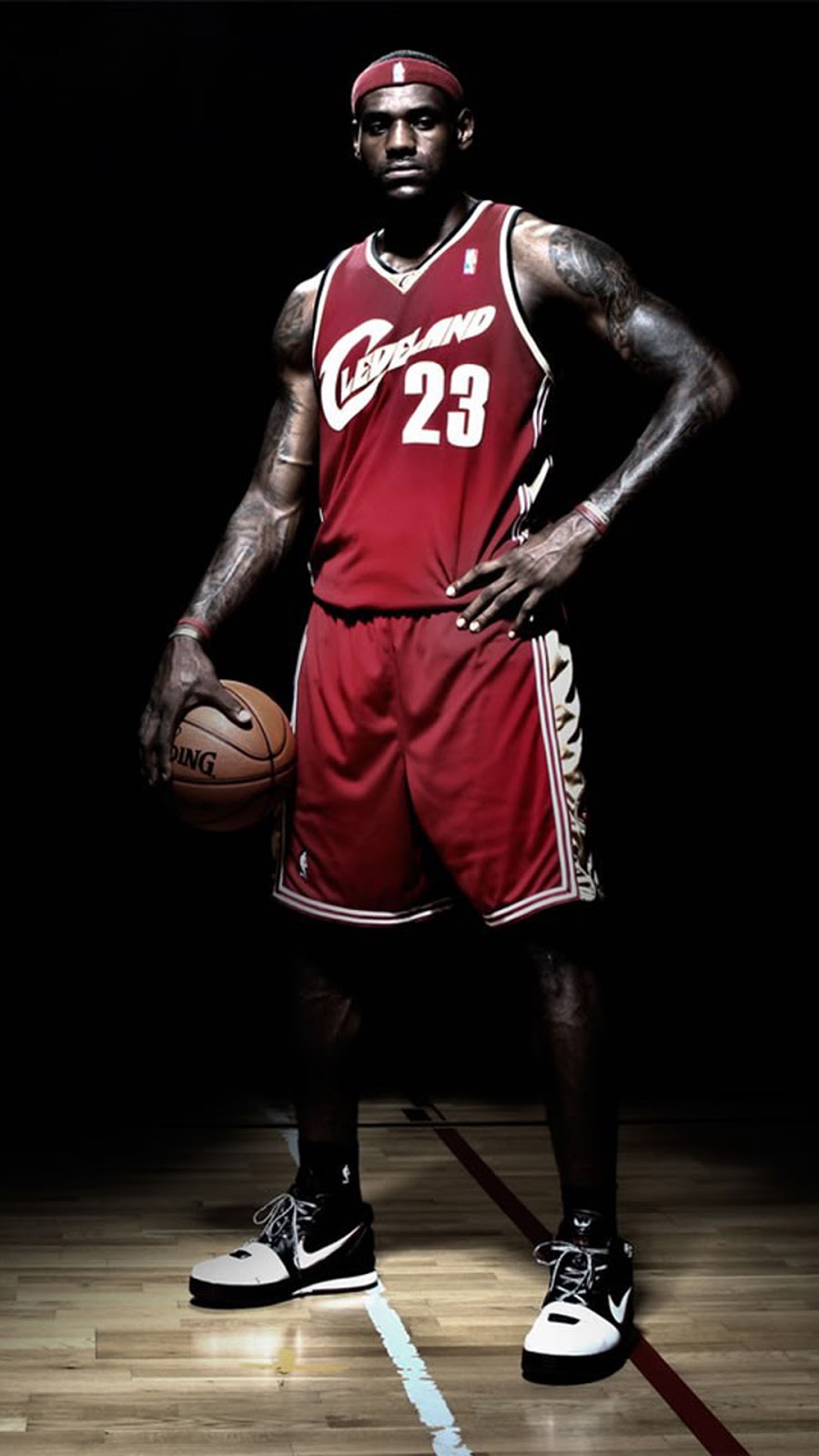
If you are looking to build the Prototype for the Ultimate Basketball Player, LeBron James would make a Great Template to start from. LeBron is lethal as a double threat on both ends of the floor. If you need someone to put on an onslaught from a Scoring standpoint, he can do that. If you need a pivotal playmaker, he can do that as well. If you need someone who can be a threat defensively, you have that as well. This team would have a very interesting dynamic with LeBron at Small Forward considering you have Magic Johnson, the Greatest Point Guard of all-time feeding you the ball along with Michael Jordan, the Most Dominant Scorer of all-time at the Two Guard. LeBron is also a Once in a Generation Player like everyone else in this Starting Lineup so he will make his presence known along with his teammates. When you consider his body of work and his consistency, LeBron James has officially taken Larry Bird's crown as the Greatest Small Forward Ever.
Power Forward: Tim Duncan
Seasons: 19
Championships: 5
Finals MVPs: 3
MVPs: 2
All-Star Appearances:
All-Star MVPs: 1
All-NBA 1st Teams: 10
All-NBA 2nd Teams: 3
All-NBA 3rd Teams: 2
All-Defensive 1st Teams: 8
All-Defensive 2nd Teams: 7
NBA All-Rookie Team (1998)
NBA Rookie of the Year (1998)
The Big Fundamental. The Quintessential Power Forward of his Era and All-Time. Tim Duncan modeled Basketball Technique at its finest. Duncan would bring great chemistry in a lineup with personalities larger than life. Tim would create great spacing in the Front Court as well as a Great Dynamic with the Greatest Center of All-Time. Duncan was not known for being flashy, but he was highly effective and efficient. He was a great weapon on both the Offensive and Defensive ends of the court.
If you wanted to build the Perfect Center in a Lab, this is how he would turn out. When talking about the Greatest Centers of All-Time, Kareem Abdul-Jabbar is a perfect storm. He is the ultimate combination of Offensive Dominance, Solid Defense, Championships, Great Individual Stats, and Achievements. Jabbar had the Greatest Offensive Weapon (Skyhook), he retired as the All-Time Leader in Blocks, he is STILL the All-Time Scoring Leader (38,387) and has the MOST MVP Awards (6). When you have that Deadly Combination in the Paint, that is the Ultimate exclamation point that anyone would want on their team. While there is a wide variety of Great Centers that you could choose from, Kareem has everything that I would want for my All-Time Starting Team.
Today, I would like to take the time to explore NBA History and analyze each decade to see who was the Greatest Player of each time frame. I will break down the time period that each player was at their most dominant. Players are seen by their fans all across the world as Emperors and Kings when they dominate. It will be like a "Game of Thrones" kind of approach so to speak. So please join me if you will on this journey through time.
I- 1946-54: King George of Minneapolis
Challengers: Bob Cousy, Dolph Schayes
During the Genesis of the NBA Monarchy, King George of Minneapolis ruled the Basketball Kingdom with sheer force as he laid waste to his competition. Mikan was the first Emperor of Basketball as he lead his Lakers of Minneapolis to 5 NBA Championships. King George may not have looked intimidating, but he struck fear into the hearts of those that would stand in his way.
1954-56: Transitional Period
As King Mikan would relinquish the throne in 1954, the Basketball Kingdom would go through a transitional phase. The likes of Bob Pettit, Bob Cousy, Dolph Schayes and others would have moments where it seemed like they would be the successor. However,
II- 1956-67: Emperor William of Boston
Challengers: Wilt Chamberlain, Bob Pettit, Elgin Baylor, Jerry West, Oscar Robertson
In the Summer of 1956, Emperor William the Conqueror entered the Basketball world and revolutionized Defense in a way that was never seen before or seen since as his Emerald Kingdom of Boston known as the Celtics would build a Wall of Defense around the NBA Crown for the Entire Decade of the 1960's. The Celtic Kingdom led by Elder Council Arnold the Red, Russell would elevate a race of people that were once seen as unfit to rule the Basketball world. King William would break many barriers during his reign by winning 11 Championships with 8 straight in between. He would also make history as the first Player/Coach. Russell would also win 5 MVP Awards while conquering fellow Giant Wilt The Warrior. William is the only King/General to never fall in a 7-game do or die battle.
III- 1964-72: King Wilt The Warrior
Challengers: Bill Russell, Willis Reed, Jerry West, Lew Alcindor, Oscar Robertson
As Emperor Russell ruled the NBA with an Iron Fist, there was another Giant that had his own throne as he pillaged opponents with Brute Strength and Force. King Wilt the Warrior was unlike anything that Russell and others had ever seen. Wilt broke ground as the first dominant 7-foot Giant with monster like athleticism and power. They knew that he was coming, but could not stop him. From the moment young Wilt arrived on the landscape in 1959-60, he dominated and destroyed his adversaries by winning both the MVP and Rookie of the Year in the same season. King Wilt would continue to leave a trail of bodies in his wake when he averaged 50.4 PPG, along with an unprecedented 100 point game as his Warriors would defeat the Yorkshires of New York on the 2nd of March of 1962. However, King Wilt's only weakness was that he lacked a consistent army that he could assemble to capture the Basketball Crown. For the first 7 Seasons, King Wilt was seen as the best Individual Player, but it wasn't until 1967 where he put the Basketball Kingdom on notice by showing that he can win with the best team around him. That season, King Wilt would win the first of 3 consecutive MVP Awards as his army of 76ers carried the Spirit of '76 to victory by winning his first NBA Championship. On his road to victory, King Wilt finally defeated his arch-nemesis Emperor William Russell as the Sixers eviscerated the Celts and their Emerald Kingdom.
1969-70: Second Transition
By this time, the NBA Kingdom was going through another transitional period. Emperor William Russell relinquished his throne after winning his final war against the Lakers of Los Angeles led by King Wilt and Jerry of the West. In between this time, there would come another Giant that would reign across the Basketball World, Alcindor the Wise (later known as Kareem). Young Lew would dominate in his first season as he would win Rookie of the Year, nearly shades of King Wilt a decade earlier. However, neither of them could claim the throne as King Wilt battled injuries and Alcindor faced inexperience. At this time, the Yorkshires of New York would claim supremacy as Willis the Unbreakable would defeat the Lakers of Los Angeles in seven games. The Celts would also be taken over by Sir John Havlicek.
IV-1970-81: Alcindor/Kareem The Wise King.
Challengers: Willis Reed & Walt Frazier, John Havlicek & Dave Cowens, Julius Erving, Wes Unseld and Elvin Hayes, Bill Walton
In an Era of a new Basketball Renaissance, the Basketball Universe witnessed a new exploration as players would explore more colorful worlds. Meanwhile, in the NBA Kingdom, the stoic discipline of Alcindor the wise would win out. In 1970-71, Alcindor would gain a new ally in legendary soldier Oscar the Great as he would lead the Bucks of the Native Milwaukee to an NBA Championship while winning Finals MVP. That season, he would also win his first Scoring Crown and first of a remarkable 6 MVP Awards. Shortly afterwards, Alcindor would change his name to Kareem after converting to the Muslim Religion. Even with a new name, Kareem was still the same Captain that would overthrow opponents one Sky Hook at a time. During his reign of dominance in Milwaukee, Kareem would win another Scoring Title along with two more MVP Crowns. Soon, things would begin to crumble in the Land of Milwaukee. Oscar the Great would retire, and Kareem the Wise would soon need to migrate for cultural reasons. As things in Milwaukee would decline, Kareem the Wise would move to the Western Town of Los Angeles where he would continue his dominance despite a struggling army around him.
V- 1971-77: Julius The Doctor
Challengers: George Gervin, George McGinnis, Artis Gilmore, Dan Issel, Moses Malone, Mel Daniels, Connie Hawkins, David Thompson
As Kareem the Wise dominated with Discipline, there was a completely different world in the Basketball Universe that was discovered. This world was filled by many colors, mainly Red, White and Blue. This animated world was ruled by Julius the Doctor, King of the far away colorful land of the ABA. Julius ruled this world with his royal Scepter and his Red, White and Blue robe. This was a land of creativity, freedom and expression as Julius became an innovator within the Basketball Universe. Even as Kareem struggled Julius The Doctor prospered in the Land of the ABA, as he lead the Nets of Yorkshire to two ABA Crowns. King Julius would then take his talents to the Holy Land of Basketball known as Philadelphia as he would join the Sixers of 76. However, Julius the Doctor would show signs of vulnerability as his army would fall to the likes of the Blazers of Portland.
1981-84: Third Transition/Dawn of the Golden Age
After a long and prosperous reign, Kareem the Wise while not yet ready to relinquish power under too great of an attack to hold the keys to the Kingdom of his own. Meanwhile, two young princes would come across the horizon to take the Basketball Universe by storm with their arrival in 1979. One prince was Earvin the Magician and the other was Larry the Legendary. Young Prince Earvin would travel from the land of Spartans to join Great King Kareem with the Lakers in the City of Angels to rejuvenate a once proud Kingdom. Larry the Legendary traveled from the farmlands to join the Celts of the Emerald Kingdom of Boston to continue his rivalry with Earvin, the one they called "Magic". There was also a Man-child of promise named Moses deep in the heart of Texas that would dominate the Basketball Landscape before joining the Basketball Holy Land of Philadelphia (known as the City of Brotherly Love). Moses would help Julius The Doctor lead the Sixers of Philadelphia to the Promise Land of Hoopdom.
VI- 1981-87: Larry the Legendary
Challengers: Magic Johnson, Kareem Abdul-Jabbar, Julius Erving, Moses Malone
Upon his arrival in 1979-80, Larry the Legendary would make his presence known in the Emerald Kingdom as he took the doormant Celts from an abysmal 29 wins to 61 wins, earning Rookie of the Year Honors. The young Warrior would give an encore the next season as he would lead the Celts of Boston to another NBA Championship in 1981 as they would defeat the Rockets of Houston led by Moses the Man-Child. In 1984, Larry the Legendary would cement himself as the Supreme Ruler of the Basketball Kingdom by winning his first of three straight MVP Awards. He would close that campaign by conquering arch nemesis Earvin the Magician and the Lakers of Los Angeles. The Celts of Boston would rule the East with a variety of long and short range attacks as Larry's star continued to grow brighter. No matter the challenger, the Mighty Ruler of the Emerald Kingdom would lead his troops to victory. His greatest soldiers were Sir Kevin and Robert The Chief.
VII- 1982-91: Earvin The Magician
Challengers: Larry Bird, Julius Erving, Moses Malone, Isiah Thomas, Michael Jordan, Hakeem Olajuwon
As Larry the Legendary ruled the East, Prince Earvin the Magician ruled the Western World with the Lakers of Los Angeles with Kareem the Wise King. Young Earvin used a variety of attacks and tricks that would captivate the fans and terrify the opponents. As Kareem fell to injury in the 1980 Finals, Prince Earvin would lead the troops to victory over Julius the Doctor and the 76ers. In the 1982 rematch, the Lakers of Los Angeles would cement their place on the Western Throne as Earvin the Magician would conquer the 76ers of Philadelphia once again in the Finals. The Sixers would gain their revenge with the addition of Moses the Man Child in 1983. Prince Earvin was truly a Wizard with the Basketball, with his genius and creativity on the Hardwood. His battles with Larry the Legendary were Epic as they dethroned the Emerald Kingdom of the Celts twice, in 1985 and finally in 1987. After vanquishing Larry the Legend once and for all, Earvin the Magician was the Undisputed King of Hoopdom. Hiding behind the charismatic smile was a competitive fire that would destroy you if you gave him the chance. When the sun set on the Golden Decade of the 80's, the Lakers were the Great Western Dynasty and the Celts were the Emerald Kingdom once again. During this reign, other young future princes would arrive onto the Basketball Kingdom in 1984. One of them was a Prince from Nigeria with a Dream, and another would shake up the World of Hoopdom with his gift of Flight.
1989-91: Fourth Transition/Barbaric Attack
With the Sun setting on the reign of the great Princes of the East and West, an Army of Barbaric Invaders would arrive from deep in the Mid Western Land called the Motor City. This army was more cruel and ruthless than anyone that has come before or since. A vicious, blood thirsty group with savage names like Zeke, Lamb, Spider, Worm, Microwave and Joe (not all names were evil). These Motor City Barbarians would destroy the Emerald Kingdom of Boston while destroying the Lakers Great Western Dynasty en route to planting their Red, White and Blue flag on top of the Basketball Mountain. The Motor City Barbarians would rule the throne at they would hold up the inevitable on coming Air Assault from a futuristic Jedi like Warrior that no one could have ever seen come. Make sure to look out for Part II of our journey through history.
Recently, I came across the "ESPN 30 for 30" Documentary of the Orlando Magic from the mid-90's. Appropriately, that Magic team is known as the "Lost Dynasty" because they were the best team of that era to not win a championship. It was a fun and exciting time to be an NBA fan in general, and that squad personified it. They were a cultural phenomenon with the style of their uniforms. Next to Michael Jordan, Penny and Shaq were the most marketable stars in the league at this time. Shaq and Penny were fan favorites in the NBA Jam video games. Penny had his alter-ego Lil' Penny (voiced by Chris Rock). The Magic had all of the pieces in place to take the place of the Jordan-led Bulls as the next NBA Juggernaut. The tag-team of Shaquille O'Neal and Anfernee "Penny" Hardaway were extremely promising. Penny was a 6'7" Point Guard that was labeled as Magic Johnson 2.0. People thought that he could even surpass Magic in some ways. Yes, Penny was that good. On the other hand, you have Shaq, who was a 7'1" Demolition Machine. O'Neal was poised to become the Greatest Center of All-Time as he was heavily compared to the likes of Wilt Chamberlain and Kareem Abdul-Jabbar. Shaq would go on to become the closest thing to Wilt in the Modern Era, so all was not lost. Since Shaq's retirement, there has not been a Center that has come remotely close to achieving what he has achieved as players of his mold have become extinct. Today's fans may only see him as an out of shape commentator joking with Charles Barkley on TNT, but Shaq was a menace in his younger days. When you are looking to build the typical basketball team, you would start with the Center and a Point Guard. Shaq and Penny fit those requirements perfectly. Orlando traded Chris Webber on draft day for Penny to create that nucleus. This team was the biggest threat for his Airness heading into the future, as they were aiming for Chicago's throne. They had all of the tools to be the 90's Hip-Hop version of Showtime. Then, you add supporting pieces around them such as Dennis Scott, Brian Shaw, Horace Grant and Nick Anderson that you could count on to get the job done. Horace provided the championship experience that they needed, as he won the first three championships being the third wheel on the aforementioned Bulls team.
Magic's Lakers and Bird's Celtics dominated and defined the 1980's. Jordan's Bulls defined the 1990's. The Shaq & Kobe Era Lakers did that in the early 2000's, along with Duncan's Spurs. Orlando fans will always live with the painful idea about what Shaq & Penny could have done for the Magic in the late 90's heading into the new millennium. The Magic had youth and a very strong upside in their favor. Shaq was one of the top two scoring leaders and a top 3 MVP Candidate in Jordan's absence. They conquered the East, as Shaq pretty much-made players like Patrick Ewing and Alonzo Mourning his whipping boys. The Magic went through teams like the Knicks, Hornets, and the Pacers on their journey. Their shining moment came when they defeated the Chicago Bulls, who were already established as an all-time great dynasty from winning their first three titles before Michael went to baseball. In fairness, Jordan was still shaking off his rust as he was still not in the proper shape for Basketball. Unfortunately, they were also filled with immaturity. They lacked the experience and mental toughness to handle the mantle that was theirs to take. Orlando hit a brick wall in the NBA Finals, as Shaq was humbled by Hakeem Olajuwon's veteran leadership and All-World Post Moves. On top of that, Clyde Drexler & co, surprised rising star Penny Hardaway and the rest of his cast of characters as the Houston Rockets swept the Magic in the Finals. To make matters even worse, Nick Anderson bombed from the free throw line as he missed all four free throws. Anderson was not Rick Barry or Larry Bird from the free throw line, but he was passable at 71%. Suddenly, Nick transformed into Shaq when he stepped up to the line as his misses were another crack in the team's armor. Anderson fell apart psychologically and never recovered. In 1996, Orlando went 60-22 as they were right after the history-making 72-10 Chicago Bulls Powerhouse. Penny was breaking out even more into a star, as both him and Shaq would make the 1996 Dream Team in the Summer. Sadly, everything came crashing down in the 1996 Eastern Conference Finals. The Bulls came back with a strong vengeance, as they assassinated the team that was destined as "The Team of The Future". The Magic were beaten mercilessly, as Michael and Scottie trapped Penny on each and every side. Meanwhile, Dennis Rodman rendered Shaq as ineffective. The promise that Orlando once had was incinerated as Chicago would win three more championships. The same Bulls team that was considered a thing of the past would cement their place as the Kings of that Decade. Michael Jordan would further cement his case as the Greatest Player of All-Time.
The internal conflict would tear the team apart, as their Franchise Star would leave for Hollywood and establish his place among the great champions in NBA History with a new dynamic perimeter player named Kobe Bryant. They would become what Shaq and Penny should have become had things fallen into place. Shaq would become one of the top players of the 2000's, as he would lead the Lakers to 3-Straight Championships. Shaq's run in the Finals was comparable to Michael Jordan's first three-peat years. O'Neal was clearly a magnet to championship success, as he made any perimeter player around him better (Penny, Kobe, Wade). Shaq became the Shawn Michaels to Penny's Marty Jannetty. He is, in fact, the most destructive force on a Basketball Court that this generation has seen. On the other side of the coin, the Orlando Magic would quickly fall on their face. In the span of one season, the Magic went from being in the Conference Finals to not making the playoffs. Penny was given a larger load to carry because of the potential that he had. He was the flavor of the month. However, that flavor left a bad taste in everyone's mouth as Penny's body slowly started to break down. Hardaway would join the Phoenix Suns by 1999. He would show flashes of who he was, but was never the same player as a result of injuries. O'Neal and Hardaway would cross paths in the playoffs, as Shaq's Lakers destroyed Phoenix 4-1. Penny would look at Shaq and Kobe's duo as a reflection of what he and Shaq once shared, as well as what they could have shared.
With that being said, this begs the ultimate question: What if the Orlando Magic stayed together? The Magic were already second place in the Eastern Conference behind Chicago. Penny was coming off of his best season. Shaq was taking the throne as the Top Center in the league, as Olajuwon, Ewing and Robinson would soon fade not long after that. However, Orlando Management told Shaq that he was not worth $100 million. Yet, players like Alonzo Mourning and Juwan Howard were gettting paid that much (Zo/$105 million, Juwan/$101 million respectively). Shaq may have had his issues controlling his ego, but he was well worth that kind of money. In all due respect to Zo and Howard, but they were not even in the same category as Shaq as players. They were not even in the same library as Shaq, let alone in the same book as him. Shaq was drawing worthy comparisons to Kareem, Wilt, and Russell at the time. The NBA showed how much they invested in Shaq by naming him one of the 50 Greatest Players!! Although it was a premature move at the time, Shaq fulfilled that potential and more as he became one of the consensus Top 10 Players of all-time. With that said, Shaq was shortchanged as the team offered him $80 million instead. The way that they showed their "appreciation" or lack thereof was to underpay him. On the other hand, Jerry West offered Shaq a much greater deal that he richly deserved as the Lakers offered Diesel $120 million. The rest is history. Orlando's championships went out West. Let's say that Orlando swallowed their pride and paid Shaq what he deserved. Then, they could bring in the right role players to take the places of Dennis Scott and Nick Anderson. As long as Penny stays healthy, he could have had the storied career that Kobe Bryant has instead of becoming the urban legend of our generation like Connie Hawkins and Len Bias were to previous generations. If things continued to go well, they could have also added Tracy McGrady to the mix (somebody would have to give up the number 1 for Orlando). As long as the right personnel moves were in place, Orlando could have made their mark as one of the perennial dynasties in NBA lore. Even if they snatched at least two or three, that would be fine. Instead of joining the ranks of the greatest dynasties, this Magic team joined the ranks of the 80's Rockets, 2000's Blazers and 2000's Kings as teams that had what it took, but shot themselves in the foot. They were a walking championship waiting to happen. Once again, "What if?".
An NBA Legend has announced his retirement. Now, Kobe Bryant is on his farewell tour after 20 storied NBA Seasons with the Los Angeles Lakers. Bryant has been one of the most polarizing and influential stars in NBA History. On one side, you have those who love and adore him for his brilliance on the court along with his many accolades (5 rings, 2 Finals MVP's, etc). On another side, there are those who revile him like a classic wrestling villain such as Ric Flair for a number of reasons. There are fans that don't like his imitations of MJ (another story), his selfishness, his scandal from Colorado and how he was the main reason for Shaquille O'Neal being forced out of LA. Then, you have those in the middle who look for a fine line to draw between his greatness as a player and his frosty attitude.
No matter what, Kobe Bryant was a player made for the spotlight as he has created a fan base that is similar to a cult like following. Although Kobe is heavily criticized for his direct imitation of His Airness, he has also carved his very own unique place among NBA History. From the time that he first became a starter for the Lakers in 1998-99, Kobe has evolved tremendously into a more complete all-around player. As we all know, Shaq was Batman in Hollywood for the Lakers while Kobe was Robin. Eventually, Kobe transformed into Nightwing. Just like Dick Grayson, Kobe turned on the Leader of the Dynamic Duo. As we know, the rest is history. Bryant went through his share of turmoil in those three years without Shaq before the Lakers poached Pau Gasol out of Memphis as Bryant desperately needed a new Big Man to take some of the weight off of him. Bryant would later win two more championships, but this time as the leader of the pack. Even though Shaq was the leading cause of most of Kobe's championships, Bryant has transformed into a true alpha dog star in his own right. Many have argued that Kobe should have more than 1 MVP Award. Even Shaq himself believes that Kobe should have more MVP's along with himself. Instead, Steve Nash has two, but that's none of my business.
Kobe is currently third all-time in Career Total Points, as he is the only player to ever play 20 Seasons for one NBA Franchise. Kareem spent his first 6 Seasons in Milwaukee before playing 14 Seasons in the Lakers Purple and Gold. Bryant holds many team records from points, minutes, games, steals, etc. Bryant's hand prints are all over the teams record books. His longevity is remarkable along with his fearlessness and competitive will to win. His resume, track record and persona have all kept him among the elite for many years. Over the course of his career, Kobe has practically reinvented himself. When you talk about legends that defined their generation and transcend history, Kobe's name is in that discussion. Next to Tim Duncan and Shaquille O'Neal, Kobe Bryant is one of the superstar players that shaped the 2000's Decade of NBA Basketball.
When I think of the Legacy of Kobe Bryant, I think of someone who graduated from being the sidekick to a megastar. I think of someone that has added layers to his game and has become a chameleon in the NBA. On the other hand, I also think of someone who has let his ego get the best of him and his team many times, especially near the end. Someone who was too caught up in himself to the point that he ran off another Alpha Dog Player that was the Key to their initial success. Still, I have to respect his commitment to excellence and wanting to be the best competitor that he could be. The Legacy of Kobe Bryant is that of a very Complex Genius. Complex, but still regarded as a Genius nonetheless. Despite his flaws, nobody can take away Kobe's legacy and what he has meant to the Game of Basketball.
East:
Heat over Bucks (4-0)
Celtics over Knicks (4-2)
Bulls over Nets (4-2)
Pacers over Hawks (4-1)
West:
Thunder over Rockets (4-0)
Spurs over Lakers (4-0)
Clippers over Grizzlies (4-3)
Nuggets over Warriors (4-2)
East:
Heat vs. Bucks:
Miami will skate through the first round through Milwaukee. The Bucks stops with the Heat.
Celtics vs. Knicks:
Even though Carmelo won the scoring title, I believe that Boston's defense will neutrailize New York's ballstopping. The Knicks live by outside shooting, and during the playoffs, teams that live by that more often than not will die by that. Even with Rondo out, Boston will find a way to rally and regroup.
Bulls vs. Nets:
Tough series for me to call, but I see Chicago finding a way to regroup after that humiliating loss in Game 1. Even with their franchise player (Derrick Rose) out for such a long time, the Bulls have proven that they can be a down and dirty team that will fight even harder with their back against the wall. Noah has been battling injuries, while Deng, Hinrich and Gibson fell flat in Game 1. Boozer led with 25, while Nate Robinson came off the bench with 17, along with Marco Belinelli had 13. The Starters have to raise their game to give Chicago a stronger chance. Meanwhile, the Nets had six players in double-figures: Deron Williams (22), Brook Lopez (21), Joe Johnson (16), Gerald Wallace (14), Former Bull C.J. Watson (14), and Andre Blatche (12). If Chicago's nucleus can pull their own weight, this will be the blue-collar matchup that will be right in their favor.
Pacers vs. Hawks:
Indiana's nucleus of Danny Granger, Paul George, Roy Hibbert, David West, George Hill, and Tyler Hansborough will be too much for the Hawks to handle. The Pacers have been a more proven playoff team for the past two years. In 2011, they were a tougher matchup for the Bulls than the Hawks were. In 2012, they put Miami against the wall in the Eastern Conference Semifinals. The Pacers are too physical for the Hawks to overcome.
West:
Thunder vs. Rockets:
This will be a very interesting matchup, with former Sixth Man James Harden facing his former team as a star for the Houston Rockets. This storyline will be the focus of the series. In the season opener, Harden made his own statement versus the Thunder, with a career-high 46 points in Houston's only win against Oklahoma City during the season. The Duo of Harden and Jeremy Lin have led the Rockets to the 8th Seed in the West. Meanwhile, Oklahoma City will zero in on James Harden, after Harden hit a wall in the Finals against the Heat, costing them the series. James Harden has averaged 25.9 ppg in his first season as a starter. Meanwhile, the Thunder have not missed a beat with new addition Kevin Martin (the very player they traded Harden for). Kevin Durant led the team in Scoring (28.1 ppg- 2nd in NBA), with Russell Westbrook finishing 2nd on the team in Scoring (23.2 ppg). Kevin Martin sacrificed his scoring, with 14.0 ppg, while Serge Ibaka put in 13.2 ppg. The games themselves will be pretty tough, but Oklahoma
Spurs vs. Lakers:
Both teams have been battling health issues. Clearly, the Lakers lost their franchise player for the next 6-9 months. However, San Antonio has proven to be a more effective and devastating team, when both are healthy. The Lakers have greatly underperformed all season long, with the team that they have assembled. (Kobe, Dwight, Nash, Pau Gasol, Artest) San Antonio's chemistry and Basketball IQ will exploit that massive weakness. However, I see the Lakers pulling out at least 1, as they will find a way to move the ball around more without Kobe. The Spurs will pick them apart with their superior ball movement, defense, and other strategies.
Clippers vs. Grizzlies:
I see this series being more of the same from last year's series. In Game 1, the Clippers had their way with Memphis (112-91), with Chris Paul leading the way with 23 points, Eric Bledsoe with 15, Chauncey Billups with 14, Caron Butler and Jamal Crawford both with 13, and Blake Griffin and Matt Barnes both with 10. Memphis has the advantage inside (Zach Randolph, Marc Gasol), but the Clippers perimeter will find a way to neutralize them.
Nuggets vs. Warriors:
This will be a battle of two great small ball teams. Led by 3-point marksman Stephen Curry along with the likes of David Lee, Klay Thompson and co. Golden State will be a very intriguing matchup for Denver. However, the Nuggets have a more well-rounded team in my view. Denver has a very dangerous combination of guards (Ty Lawson, Andre Miller) star wingman (Andre Iguodala), along with an interior presence (Javale McGee). The Nuggets can not only run the table on fastbreaks, but can dominate inside as well. As I have said about the Knicks, teams that live too much by the three will die by it in the playoffs. I see this happening with the Nuggets using their size to take great advantage as well.
This week, I would like to wish a Happy 66th Birthday to NBA Icon and Legend, Kareem Abdul-Jabbar. Formerly known as Lewis Alcindor, Kareem was a force in basketball ever since playing on the Playgrounds of Rucker Park as well as being the star at Power Memorial High School. While at Power Memorial, Lew Alcindor led his team to a 27-game winning streak en route to the 1963 Catholic High School Athletic Association (CHSAA) Championship. The streak continued into the following season as Alcindor led Power Memorial to an undefeated record while winning their 2nd Consecutive CHSAA Championship in 1964. Power Memorial's amazing streak ended at 71 games at the hands of Dematha High School, 46-43. During Alcindor's High School Career, Power Memorial went 96-6. The Undefeated 1963-64 team was named "The #1 High School Team of the Century" by National Sports Writers, while being inducted into the CHSAA Hall of Fame still being recognized as "The #1 High School Team of the Century". Overall, Power Memorial won three New York City Catholic High School Championships, with Alcindor being the key. Lew Alcindor would transfer his success over to UCLA, joining the freshmen team in 1965-66. In his freshman season, UCLA was ranked 1st in the preseason. However, during the season opener on November 27, 1965, Lew Alcindor led the freshman to a victory over the varsity team, 75-60. Alcindor scored 31 points while grabbing 21 rebounds during that winning effort. Alcindor would go on to play a total of four seasons with the Bruins (1966-69), under Hall of Fame Coach John Wooden. During his tenure, Alcindor led UCLA to a record of 88-2 in a three year run (1967-69). Lew Alcindor dominated the College Basketball landscape like no other player before or since. He rewrote the record books. UCLA will forever be "The House that Lew built". During his stellar college career, Alcindor received the following accolades:
Lew Alcindor at UCLA:
3-time NCAA Champion (1967-69)
3-time NCAA Tournament Most Outstanding Player (1967-69)
3-time College National Player of the Year (1967-69)
Led UCLA to 88-2 Record (1967-69)
3-time 1st Team All-American (1967-69)
USBWA College Player of the Year (1967, 1968)
1st ever Naismith College Player of the Year (1969)
3-time Helms Foundation Player of the Year (1967-69)
UCLA #33 retired
As a UCLA Bruin, Alcindor was a game changer in many ways. In 1967, dunking was banned from college basketball, because of his dominance of the shot. It would not return to college until 1976. On January 20, 1968, Lew Alcindor and the UCLA Bruins faced Elvin Hayes and the Houston Cougars in what would be known as the "Game of the Century". The Game was a history maker in large part, because it was the first ever nationally televised regular-season basketball game in NCAA History. The Game was held live at the Houston Astrodome in front of 52,693 fans. Big E dominated the game with 39 points, 15 rebounds, while Alcindor was limited to 15 points, because of the scratch on his left cornea (which caused him to later wear goggles). Houston defeat UCLA, 71-69. However, Alcindor would avenge that loss in the 1968 NCAA Men's Division I Basketball Tournament, as UCLA annihilated Houston 101-69 in the semifinals. A healthy Alcindor scored 19 points with 18 rebounds. The Bruins would go on to win their 2nd straight National Championship.
UCLA Records:
Highest career scoring average: 26.4
Most career field goals: 943 (tied w/Don MacLean)
Most points in a season: 870 (1967)
Highest season scoring average: 29.0 (1967)
Most field goals in a season: 346 (1967)
Most free throw attempts in a season: 274 (1967)
Most points in a single game: 61
Most field goals in a single game: 26 (vs. Washington State, 2/25/1967)
Of course, Alcindor would go on to become the 1st Overall Pick of the 1969 NBA Draft by the Milwaukee Bucks. Lew Alcindor's arrival came at the perfect time, following the departure of Bill Russell. Automatically, Alcindor would be linked to Wilt Chamberlain as his future successor, as Wilt was 33 years old. During the 1969-70 season, Alcindor's dominance led the Bucks to a 29-game improvement from the previous season. That season, Milwaukee went from 27-55, to 56-26 leading them to second place in the Eastern Conference. His impact was immediate, as he ranked 2nd in scoring (28.8 ppg) and 3rd in rebounding (14.5 rpg), on 51% shooting from the field. while unanimously winning the NBA Rookie of the Year. Alcindor was also named to his first of a record 19 All-Star Games. Things only improved for Milwaukee, as they acquired Hall of Fame Point Guard "Big O" Oscar Robertson from the Cincinnati Royals. During the 1970-71 campaign, Alcindor would lead the Milwaukee Bucks to a 66 win season (20 game win streak), with Oscar Robertson by his side. That season, Alcindor won his first scoring title (31.7 ppg), along with 16.0 rpg, on 57% shooting. which also earned him his 1st out of a record 6 NBA Most Valuable Player Awards. In the playoffs, the Bucks went 12-2, while sweeping the Baltimore Bullets (4-0) to win their first championship in franchise history. During the Finals, Lew Alcindor was named NBA Finals MVP (27.0/18.5/2.8). After the Finals, Alcindor officially changed his name to Kareem Abdul-Jabbar. His production didn't hurt however. In 1971-72, Kareem won his second straight MVP Award, while leading the NBA in scoring for the second time. Kareem averaged a career-high 34.8 ppg, while averaging 16.6 rpg, and 4.6 apg on 57% FG. That season, Jabbar also led the Bucks in ending the Lakers 33-game winning streak. In 1972-73, Kareem recorded his third straight season of 30 ppg or higher (30.2) with 16.1 rpg, and 5.0 apg on 55% FG. (Personally, I believe Kareem was the real MVP that season) In 1973-74, Kareem won his third MVP Award in five seasons while averaging 27.0/14.5/4.8 on 54% FG shooting. This was also the first season that Blocks/Steals were recorded as Kareem averaged 3.5 bpg. That season, Jabbar led the Bucks back to the NBA Finals, where they would fall short to the Boston Celtics in seven games. However, Kareem was terrific (32.6/12.1/5.4). The following season (1974-75) would be Kareem's last in Milwaukee. That season, he averaged 30.0/14.0/4.1 as he led the league in blocks. (3.3 bpg)
Lew Alcindor's 1971 MVP Season w/Milwaukee Bucks:
Kareem would later depart to Los Angeles to play for the Lakers, the team that he spent 14 of his 20 seasons with. Therefore, this is the team he has been the most famous for. As a Laker, Kareem did not miss a beat. In his first season (1975-76), Kareem averaged 27.7 ppg on 53% shooting, while leading the NBA in Rebounding (16.9 rpg- career- high), and Blocks. (4.1 bpg- career high) Therefore, it was no surprise that Kareem won MVP in his first season as a Laker. In 1976-77, Jabbar also led the league in Field Goal Percentage (58%- career high), while averaging 26.2/13.3/3.9.3.2. Kareem's production earned him his fifth MVP (second straight with the Lakers). Kareem missed his only All-Star game because of an injury that season. However, he picked things back up the following season. In 1978-79, Kareem averaged 23.8/12.8/5.4 with a league best 4.0 bpg. In 1979-80, Kareem won his sixth and final MVP Award (24.8/10.8/4.5/3.4) Kareem led the NBA in Blocks for the fourth time (3.4 bpg), while also shooting a career-high 60% from the field. With Rookie Sensation Earvin "Magic" Johnson, Kareem and the Lakers were rejuvenated making their first Finals appearance since 1973. That season, the Lakers went 60-22. Kareem was phenomenal in the playoffs, averaging 31.9 ppg, 12.1 rpg, 3.1 apg, and 3.9 bpg. Kareem had his best Finals performance as the Lakers defeated the Philadelphia 76ers in six games. (33.4/13.6/4.6/3.2) Kareem also had a field goal percentage of 54%, while shooting an incredible 80% from the free throw line. However, that amazing production was overshadowed when Kareem went down with an injury during Game 5. Kareem was ROBBED of the Finals MVP Award, when Magic Johnson caught lighting in a bottle in Game 6, where he recorded 42 points, 15 rebounds, 7 assists. It was an incredible game, but Kareem was the REAL MVP of that series. This was clearly an example of the media cherry picking to snub the best player (Kareem), because they did not like his personality. Instead, they wanted to award their personal favorite (Magic) even though Kareem was more established, proven and had a Legendary series. Personality aside, Kareem carried more weight for that team and was the True Leader, regardless of his character flaws. When analyzing and awarding athletes, I throw personality issues out of the window and focus on what they do in the games. That is how it should be. As much as I respect Magic Johnson, that Finals MVP will always be tainted in my book. Not to cry over spilled milk, but I just had to vent for a moment. Kareem was the "Leader" on his first of 5 Championships as a Laker. In 1980-81, the Lakers suffered a Sophomore slump, with a Magic Johnson injury and lack of team chemistry. Both issues came to bite them in the playoffs, as they were upset by the Rockets in the 1st Round. In the 1982 Finals, Magic truly made the emergence of being an equal Co-Leader. That series, he averaged, 16/10/8, winning the 2nd Finals MVP. During this time, Kareem's production would take a decline, because of his age. Having an incredible squad with the likes of Magic Johnson, James Worthy and others took the load off of Kareem's shoulders, while covering his weaknesses from age. On April 5th 1984, Kareem Abdul-Jabbar surpassed Wilt Chamberlain to become the All-Time Leading Scorer in NBA History (A record he still holds to this day).
Here is where Kareem breaks Wilt's Career Scoring Record:
(4/5/1984)
After two consecutive losses in the Finals (1983 to Sixers, 1984 to Celtics), the Lakers redeemed themselves. While going 62-20, the Lakers returned to the NBA Mountain. This season was historic because of a number of things: The Lakers won their first championship over the Celtics in the history of their rivalry. Kareem became the oldest player to win Finals MVP. (25.7/9.0/5.2) After an upset by the Rockets in the 1986 WCF, Kareem handed the scoring load over to Magic Johnson. As a result, the Lakers won back-to-back Championships (1987, 1988) becoming the first team to do that since the Celtics. (1968-69) Kareem would finally retire after the 1989 season. During the time of his retirement, Kareem Abdul-Jabbar was the NBA's All-Time Leader in points scored, all-star games, games played, minutes played, field goals made, field goals attempted, blocked shots, defensive rebounds and personal fouls. Kareem was widely considered the Greatest Player in NBA History, before the Dominance of Michael Jordan. Kareem's body of work speaks for itself, and you could still make a strong argument today.As I have always said, if you include what he did in High School (Power Memorial) along with College (UCLA), Kareem Abdul-Jabbar is the most accomplished player in the History of Basketball on all levels, including the Pros.
There are still those today that consider him the greatest, like his peer Julius Erving:
As the Master of the Sky Hook, Kareem was able to pile honor after honor, while terrorizing opponents. Here are his achievements:
Kareem Abdul-Jabbar (20 NBA Seasons):
19x NBA All-Star (1970-77, 1979-89) (Most in NBA History)
6x NBA Most Valuable Player (1971, 1972, 1974, 1976, 1977, 1980)
Second Place for MVP once (1973)
Third Place twice ('70, '81)
Top Five 15 times ('70-'81, '84-'86)
Top Ten 17 times ('70-'86)
2x Scoring Champion (1971, 1972)
4 Seasons of 30+ ppg
1 Season of 32+ ppg
Rebounding Champion (1976)
4x Blocks Leader (1975, 1976, 1979, 1980)
6x NBA Champion (1971, 1980, 1982, 1985, 1987, 1988)
2x NBA Finals MVP (1971, 1985)
10x All-NBA 1st Team (1971-'74, '76-'77, 1980-'81, '84, '86)
5x All-NBA 2nd Team (1970, 1978-'79, '83, '85)
5x All-Defensive 1st Team (1974-'75, 1979-'81)
6x All-Defensive 2nd Team (1970-'71, 1976-'78, 1984)
Ever since the explosion of Michael Jordan, any and everyone at Shooting Guard has to be compared to him. Unfortunately, many of those players do not even get past Lakers Legend Jerry West. (Mr. Clutch, The Logo) Obviously, the modern era player that is compared to Jordan the most is Kobe Bryant. However, even he does not surpass West, because of the lack of consistency throughout his career. Jerry West was the original standard for Shooting Guards BEFORE Michael Jordan. His body of work is evidence as to why. More often then not, Jerry West bailed his team out of games. Kobe's teams bailed HIM out, but he gets much of the credit. This project is to further educate younger fans on the career of Jerry West. I have come across fans who only remember Jerry West with Wilt Chamberlain, when he did more passing and only associate him as a Point Guard. However, Jerry West was a Hall of Fame player BEFORE playing with Wilt. With this comparison, you will see how Jerry West was a more efficient scorer, shooter, more versatile, and rose his level of play when needed.
Jerry West:
vs.
Kobe Bryant:
All-Rookie 1st Team:
Jerry West: Yes
Kobe Bryant: No
All-Star Selections:
Jerry West: 14
Kobe Bryant: 15
All-NBA 1st Teams:
Jerry West: 10
Kobe Bryant: 10
All-Defensive 1st Teams:
Jerry West: 4
Kobe Bryant: 9
MVP Awards:
Jerry West: 0
Kobe Bryant: 1
Career Games:
Jerry West: 932
Kobe Bryant: 1,225
Regular Season (Career):
Jerry West: 27.0 ppg, 5.8 rpg, 6.7 apg, 47.4% FG, 81.4% FT
Kobe Bryant: 25.5 ppg, 5.3 rpg, 4.7 apg, 45.4% FG, 83.8% FT
Scoring Titles:
Jerry West: 1
Kobe Bryant: 2
Steals and Blocks were not recorded until Jerry West's final season in 1973-74. If so, it would be a much different story in that aspect. If West played with the 3-point line, he would have had a field day.
The NBA didn't finally add All-Defensive Team Selections until the 1968-69 season. If they acknowledged them earlier, Jerry West would have won many more because of how disciplined he was as a defender.
Seasons with 30 ppg or higher:
Jerry West: 4
Kobe Bryant: 2
Seasons with 32 ppg or higher:
Jerry West: 0
Kobe Bryant: 1
Seasons over 50% shooting:
Jerry West: 1
Kobe Bryant 0
Seasons over 48% shooting:
Jerry West: 5
Kobe Bryant: 0
Seasons under 48% shooting:
Jerry West: 9
Kobe Bryant: 16
Seasons over 47% shooting:
Jerry West: 9
Kobe Bryant: 0
Seasons under 47% shooting:
Jerry West: 5
Kobe Bryant: 16
Career Player Efficiency Rating (Regular Season):
Jerry West: 22.9
Kobe Bryant: 23.5
Career Win Shares (Regular Season):
Jerry West: 162.6
Kobe Bryant: 171.7
Career Offensive Win Shares (Regular Season):
Jerry West: 124.6
Kobe Bryant: 122.9
Career Defensive Win Shares (Regular Season):
Jerry West: 37.9
Kobe Bryant: 48.8
Career Win Shares Per 48 Minutes (Regular Season):
Jerry West: .213
Kobe Bryant: .184
*Bonus (Olympic Gold Medals):
Jerry West: 1
Kobe Bryant: 2
All-Star Game MVP's:
Jerry West: 1
Kobe Bryant: 4
As you can see, Jerry West was clearly a more productive player than Kobe across the board, except for free throw percentage. Jerry averaged more points, rebounds, assists and shot a higher field goal percentage than Kobe. When Kobe broke the Lakers franchise scoring record held by Jerry West (25,192), he did it while playing many more games than West along with more minutes. In other words, he missed many more shots along the way, while Jerry set the record in less than 1,000 games (932). This was clearly a cover up by the media. As I have said countless times, Jerry West lacked the MVP Awards because he played in the same era as the Greatest Giants of all-time (Wilt Chamberlain and Bill Russell), who captured 9 out the 10 MVP's during that decade. Kareem would later come and win 3 during the end of Jerry's career.
*I firmly believe that he was robbed of at least 1-2 MVP's between 1969 and 1970.
If you thought that I would stop there, I am just warming up. Now, time for the playoffs.
Playoffs (Career):
Jerry West: 29.1 ppg, 5.6 rpg, 6.3 apg, 46.9% FG, 80.5% FT
Kobe Bryant: 25.6 ppg, 5.1 rpg, 4.7 apg, 44.8% FG, 81.6% FT
Career Player Efficiency Rating (Playoffs):
Jerry West: 23.1
Kobe Bryant: 22.4
Career Win Shares (Playoffs):
Jerry West: 26.7
Kobe Bryant: 28.3
Career Offensive Win Shares (Playoffs):
Jerry West: 21.3
Kobe Bryant: 21.0
Career Defensive Win Shares (Playoffs):
Jerry West: 5.4
Kobe Bryant: 7.3
Career Win Shares Per 48 Minutes (Playoffs):
Jerry West: .203
Kobe Bryant: .157
NBA Playoff runs over 50% shooting:
Jerry West: 3
Kobe Bryant: 0
Playoff runs over 48% shooting:
Jerry West: 5
Kobe Bryant: 1
Playoff runs under 50% shooting:
Jerry West: 9
Kobe Bryant: 15 (entire career)
Playoff runs under 48% shooting:
Jerry West: 7
Kobe Bryant: 14
Playoff runs under 46% shooting:
Jerry West: 4
Kobe Bryant: 11
Playoff runs under 44% shooting:
Jerry West: 2
Kobe Bryant: 7
Playoff runs over 30 ppg:
Jerry West: 7
Kobe Bryant: 4
Playoff runs over 32 ppg:
Jerry West: 2
Kobe Bryant: 2
Playoff runs over 34 ppg:
Jerry West: 2
Kobe Bryant: 0
In 1964-65, Jerry West averaged 40.6 ppg in the playoffs. He also had a series vs. The Bullets where he set the record for highest scoring average in a playoff series. (46.0)
Now, let's get ready for the Biggest Stage (The NBA Finals):
Finals Appearances:
Jerry West: 9
Kobe Bryant: 7
Finals MVP Awards:
Jerry West: 1 out of 9 tries
Kobe Bryant: 2 out of 7 tries
This is the major factor, and in the case with most fans the only factor that they take into account when they compare Kobe Bryant with Jerry West. Instead of saying Kobe was a member of 5 championship teams in 7 finals appearances (3 sidekick, 2 leader), they just simply give him blanket credit for all 5 (He has 5 rings). Meanwhile, people downgrade Jerry West, because of his lack of TEAM success (1 championship in 9 tries). Little do people really understand the fact that for most of his career, the Lakers were a top heavy team with a two-man combo (West and Baylor). Unfortunately for West, here is a list of circumstances that HURT his team:
1. The Boston Celtics Dynasty (led by Bill Russell, coached by Red Auerbach)
2. The Lakers did not have an answer for Russell at Center for most of that time
3. Elgin Baylor's volume shooting.
4. They also lost twice to the Knicks
For the most part, Jerry West and his Lakers teams went up against more stacked teams. Meanwhile Kobe Bryant was on the opposite side of that situation, because the teams that he played on were more stacked than the opposing teams. It blows my mind to listen to people say that Jerry West constantly had powerhouse teams. If you REALLY want to look at other stacked Lakers teams outside of Shaq & Kobe, check out Magic & Kareem's Lakers. Wilt Chamberlain came later in Jerry's career. ('68-'73) Kobe played with Shaq for half of his career. ('96-'04) Throughout that time, and even later with Gasol, the Lakers were stronger than their opponents.
Now, let's look at their production in the Finals:
*The 2002 Finals series was an anomaly for a player like Kobe, because the series was a 4-0 sweep. If the series went longer, his FG% would have dropped.
More often than not, Jerry West raised his level of play with less around him while Kobe has often lowered his level of play with MORE help around him. Jerry West played better in losing efforts than Kobe did in winning efforts. (Example: 1969 NBA Finals vs. Boston) You would never find anything about Jerry West being outplayed by the likes of an Austin Croshere like Kobe did in the 2000 NBA Finals for example. Kobe also deliberately shot his team out of the 2004 Finals vs Detroit, because he was tired of playing the sidekick role to Shaquille O'Neal.
Kobe's 40.5% FG in the 2010 NBA Finals has been considered the WORST Field Goal Percentage for a Finals MVP in NBA History! However, Pau Gasol and the refs bailed him out during that series, especially where he shot an abysmal 6-24 in Game 7. That night, he dodged the biggest silver bullet of his career. Meanwhile, Jerry West recorded a Triple-Double in Game 7 of the 1969 NBA Finals, while his team fell apart against Boston. Jerry West's production in that series earned him the NBA Finals MVP Award. He became the first and only player to win on a losing team.
Personally, I believe that if you put Jerry West in Kobe's place for those first 3 championships, he could have helped out Shaq much more. At best, I say they win at least 5-6 championships, with Shaq staying as a Laker to the end. Players like West and Magic will always be respected for how they accepted their role to improve the team. They did not step outside of the system for their own personal agenda. Kobe has built his legacy out of that.
Kobe has been historically infamous for destroying team chemistry. NEVER EVER forget the way that Kobe put Shaq's personal business out in the open, to deflect criticism of his own. Not only that, but Kobe ultimately forced the hand of Lakers management to run SHAQ OUT OF L.A.! As a result, the media now holds him in higher regard than Shaq, and have blacklisted Shaq's run as a Laker. (Look no further than ESPN)
"Bryant told Jackson that O'Neal's presence on the team would affect his decision to stay with the Lakers, adding, "I'm tired of being a sidekick".
Translation: "Either he goes, or I go".
Jerry West has virtually been the best player on his team, at least until his last 2-3 seasons with the Lakers. Kobe did not become the best player, until the 2004-05 season. During that season, the Lakers missed the playoffs for the first time ever in Kobe's career. Who's fault was it for running off the franchise player, which caused the Lakers to bring in the likes of Smush Parker and Kwame Brown? You guessed it, Kobe. It wasn't until Kobe's trade demand where the Lakers restructured around him to keep him there for two more titles.
Kobe could not avoid the silver bullet for long. The same $90 million dollar roster that Kobe won Finals MVP with twice (2009 & 2010), is the same roster that got swept off the court and smoked by the 2011 Dallas Mavericks. Everyone wanted to blame players like Pau Gasol, when instead Kobe should have taken the fall.
Kobe's legacy as a leader is taking an even bigger hit with the implosion of this current Lakers team with Dwight Howard, Steve Nash, Pau Gasol and Ron Artest. Nash and Howard's numbers are being hindered playing next to Kobe. That is NOT the true sign of a leader, when you handicap the abilities of other marquee players. Kobe has NEVER made anyone around him better.
When Jerry West had the likes of Wilt Chamberlain, Elgin Baylor and Gail Goodrich, he dialed back his scoring. In fact, Gail Goodrich was the leading scorer (25.9 ppg) when the Lakers won the Finals in 1972. It could have easily been West, but he knew that in order to succeed with that team, he had to sacrifice his stats to make Gail Goodrich better. This is why West was the co-leader with Wilt.
I also notice those same Jerry West skeptics say that "Jerry West was too little", or "He would be on the bench in today's game". They also say that "Jerry West wouldn't survive in the 80s/90s era of perimeter players, because of his size". They want to degrade West, because he was a "small, white guy". Well, Larry Bird turned out great in that era in spite of his athletic disadvantages in the strongest era of all-time. In fact, Larry Bird CONQUERED his era, as a "white guy", out playing the best black players of any era. Last time I checked, he was no more athletic than Jerry West, just 5-6" taller and 35-45 pounds heavier. West is actually between 6'3"-6'4".
In fact, if you send Kobe back in time to the 1960s, where he doesn't have Michael Jordan's influence as an advantage, he would not thrive the way that he does now. He would have fewer players to emulate, with practically next to none, outside of Jerry, Oscar and Elgin. Instead, he would have to play AGAINST those guys on a night-in, night-out basis.
Conclusion:
Jerry West was an innovator, while Kobe Bryant is an imitator. What Jerry West did for his era, and NBA history is remarkable. West did not have the benefits of the Modern Game, with the Anti-Aging Supplements, Weight Training, and Nutrition. Jerry West also did not have the opportunity to have other great players to come before him to pattern himself after. Basically, he had no other choice but to be original. Jerry West was a more productive, and consistent player in all stages. (Regular Season, Playoffs, Finals) The facts are staring you right in the face, with no lie. Kobe only has the advantage in longevity, team accomplishments, and volume achievements such as career total points. His style of play was much more conducive to team basketball, no matter the lack of championships on his side. No matter how many fans, analysts and ex-players prop up Kobe, West will always leave a greater mark on the game. Before Michael Jordan and Larry Bird, Jerry West was the ultimate clutch player.