Showing posts with label skyhook. Show all posts

Friday, September 21, 2018

All-Time NBA Team

With the NBA Finals behind us, I would like to present my All-Time Starting Lineup. Recently, CBS Sports also released their list of the 50 Greatest Players of all-time. In order for this team to be where they need to be, these players need to be the best versions of themselves. I will have mine coming soon, but for now, here are my Starting Five:


Point Guard: Earvin "Magic" Johnson
Seasons: 13
Championships: 5
Finals MVPs: 3
MVPs: 3
All-Star MVPs: 2
All-Star Appearances: 12
All-NBA 1st Team: 9
All-NBA 2nd Team: 1
Assists Leader: 4 times

The Quintessential Point Guard. Magic Johnson is the standard that all Point Guards are measured by. At 6'9", Magic was a walking mismatch with his size, athleticism, and ball-handling skills to drive to the hoop or dish out a no-look pass. Magic opened up the world of scoring opportunities for his teammates. His IQ was at Genius Level. If you need someone to control the pace and tempo of the game, Magic is the Point Guard and Leader that you need.


Shooting Guard: Michael Jordan
Seasons: 15
Championships: 6
Finals MVPs: 6
MVPs: 5
All-Star Appearances: 14
All-Star MVPs: 3
Defensive Player of the Year: 1
All-NBA 1st Team: 10
All-NBA 2nd Team: 1
All-Defensive 1st Team: 9
All-Rookie Team: 1985
Rookie of the Year: 1985
NBA Scoring Titles: 10


Who else would you choose as your Starting Two Guard? The Greatest Basketball Player that the world has ever seen. Michael Jordan's main assignments would be his greatest strengths: Scoring and Defending. That is the scariest thing to think about considering who he is surrounded by. This team needs players that can change the pace of the game, and Michael can do that in the blink of an eye. 
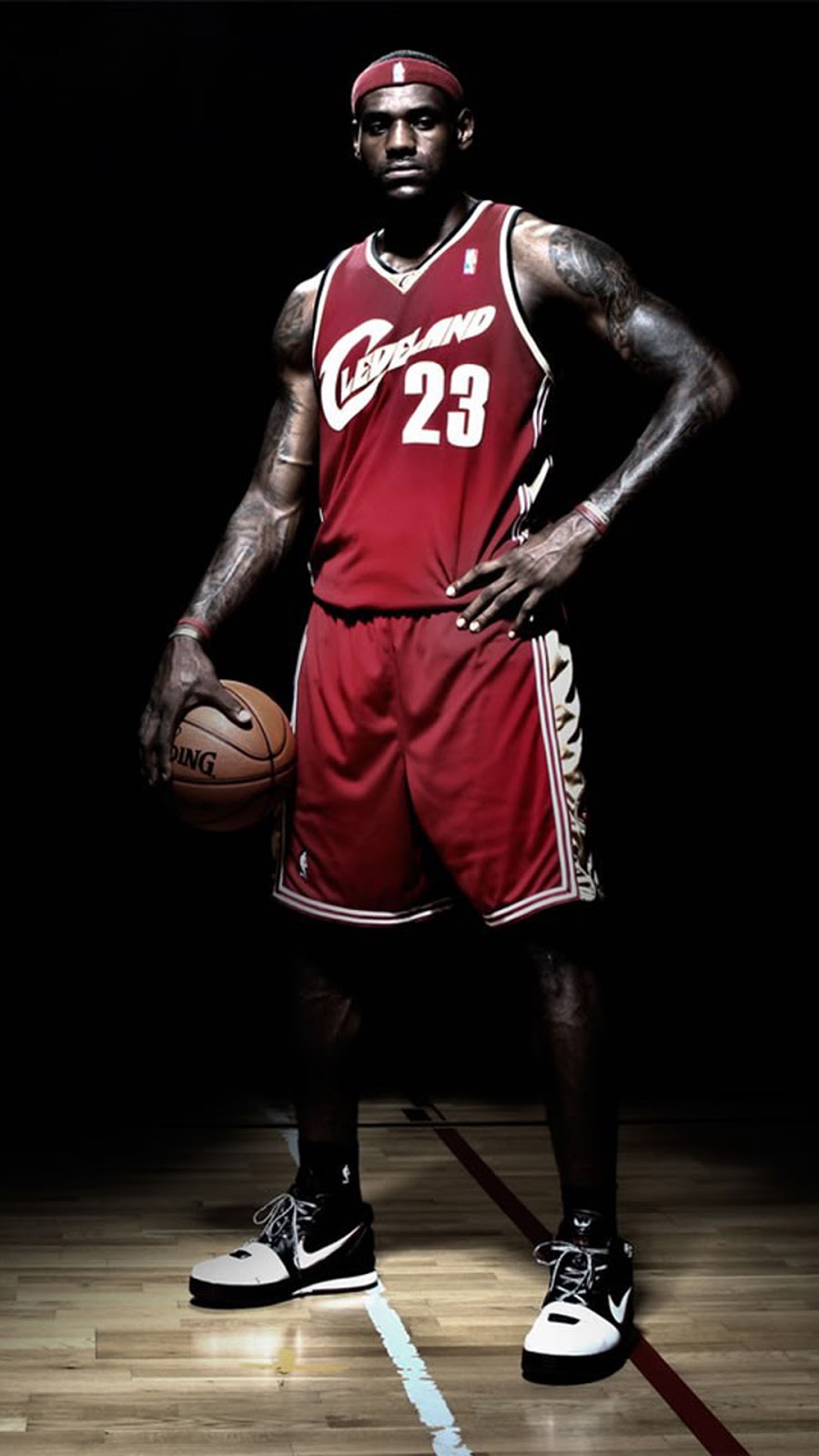


Small Forward: LeBron James
Seasons: 15
Championships: 3
Finals MVPs: 3
MVPs: 4
All-Star Appearances: 14
All-Star MVPs: 3
All-NBA 1st Teams: 12
All-NBA 2nd Teams: 2
All-Defensive 1st Teams: 5
All-Defensive 2nd Teams: 1
All-Rookie Team: 2004
Rookie of the Year: 2004
Scoring Titles: 1

If you are looking to build the Prototype for the Ultimate Basketball Player, LeBron James would make a Great Template to start from. LeBron is lethal as a double threat on both ends of the floor. If you need someone to put on an onslaught from a Scoring standpoint, he can do that. If you need a pivotal playmaker, he can do that as well. If you need someone who can be a threat defensively, you have that as well. This team would have a very interesting dynamic with LeBron at Small Forward considering you have Magic Johnson, the Greatest Point Guard of all-time feeding you the ball along with Michael Jordan, the Most Dominant Scorer of all-time at the Two Guard. LeBron is also a Once in a Generation Player like everyone else in this Starting Lineup so he will make his presence known along with his teammates. When you consider his body of work and his consistency, LeBron James has officially taken Larry Bird's crown as the Greatest Small Forward Ever. 


Power Forward: Tim Duncan
Seasons: 19
Championships: 5
Finals MVPs: 3
MVPs: 2
All-Star Appearances:
All-Star MVPs: 1
All-NBA 1st Teams: 10
All-NBA 2nd Teams: 3
All-NBA 3rd Teams: 2
All-Defensive 1st Teams: 8
All-Defensive 2nd Teams: 7
NBA All-Rookie Team (1998)
NBA Rookie of the Year (1998)

The Big Fundamental. The Quintessential Power Forward of his Era and All-Time. Tim Duncan modeled Basketball Technique at its finest. Duncan would bring great chemistry in a lineup with personalities larger than life. Tim would create great spacing in the Front Court as well as a Great Dynamic with the Greatest Center of All-Time. Duncan was not known for being flashy, but he was highly effective and efficient. He was a great weapon on both the Offensive and Defensive ends of the court. 


Center: Kareem Abdul-Jabbar
Seasons: 20
Championships: 6
Finals MVPs: 2
MVPs: 6
All-Star Appearances: 19
All-NBA 1st Teams: 10
All-NBA 2nd Teams:5
All-Defensive 1st Teams: 5
All-Defensive 2nd Teams: 6
All-Rookie Team: 1970
Rookie of the Year: 1970
Scoring Titles: 2

If you wanted to build the Perfect Center in a Lab, this is how he would turn out. When talking about the Greatest Centers of All-Time, Kareem Abdul-Jabbar is a perfect storm. He is the ultimate combination of Offensive Dominance, Solid Defense, Championships, Great Individual Stats, and Achievements. Jabbar had the Greatest Offensive Weapon (Skyhook), he retired as the All-Time Leader in Blocks, he is STILL the All-Time Scoring Leader (38,387) and has the MOST MVP Awards (6). When you have that Deadly Combination in the Paint, that is the Ultimate exclamation point that anyone would want on their team. While there is a wide variety of Great Centers that you could choose from, Kareem has everything that I would want for my All-Time Starting Team.


Wednesday, April 17, 2013

Capt. Kareem Birthday Tribute


Captain Kar33m:


This week, I would like to wish a Happy 66th Birthday to NBA Icon and Legend, Kareem Abdul-Jabbar. Formerly known as Lewis Alcindor, Kareem was a force in basketball ever since playing on the Playgrounds of Rucker Park as well as being the star at Power Memorial High School. While at Power Memorial, Lew Alcindor led his team to a 27-game winning streak en route to the 1963 Catholic High School Athletic Association (CHSAA) Championship. The streak continued into the following season as Alcindor led Power Memorial to an undefeated record while winning their 2nd Consecutive CHSAA Championship in 1964. Power Memorial's amazing streak ended at 71 games at the hands of Dematha High School, 46-43. During Alcindor's High School Career, Power Memorial went 96-6. The Undefeated 1963-64 team was named "The #1 High School Team of the Century" by National Sports Writers, while being inducted into the CHSAA Hall of Fame still being recognized as "The #1 High School Team of the Century". Overall, Power Memorial won three New York City Catholic High School Championships, with Alcindor being the key. Lew Alcindor would transfer his success over to UCLA, joining the freshmen team in 1965-66. In his freshman season, UCLA was ranked 1st in the preseason. However, during the season opener on November 27, 1965, Lew Alcindor led the freshman to a victory over the varsity team, 75-60. Alcindor scored 31 points while grabbing 21 rebounds during that winning effort. Alcindor would go on to play a total of four seasons with the Bruins (1966-69), under Hall of Fame Coach John Wooden. During his tenure, Alcindor led UCLA to a record of 88-2 in a three year run (1967-69). Lew Alcindor dominated the College Basketball landscape like no other player before or since. He rewrote the record books. UCLA will forever be "The House that Lew built". During his stellar college career, Alcindor received the following accolades:

Lew Alcindor at UCLA: 


  • 3-time NCAA Champion (1967-69)
  • 3-time NCAA Tournament Most Outstanding Player (1967-69)
  • 3-time College National Player of the Year (1967-69)
  • Led UCLA to 88-2 Record (1967-69)
  • 3-time 1st Team All-American (1967-69)
  • USBWA College Player of the Year (1967, 1968)
  • 1st ever Naismith College Player of the Year (1969)
  • 3-time Helms Foundation Player of the Year (1967-69)
  • UCLA #33 retired
As a UCLA Bruin, Alcindor was a game changer in many ways. In 1967, dunking was banned from college basketball, because of his dominance of the shot. It would not return to college until 1976. On January 20, 1968, Lew Alcindor and the UCLA Bruins faced Elvin Hayes and the Houston Cougars in what would be known as the "Game of the Century". The Game was a history maker in large part, because it was the first ever nationally televised regular-season basketball game in NCAA History. The Game was held live at the Houston Astrodome in front of 52,693 fans. Big E dominated the game with 39 points, 15 rebounds, while Alcindor was limited to 15 points, because of the scratch on his left cornea (which caused him to later wear goggles). Houston defeat UCLA, 71-69. However, Alcindor would avenge that loss in the 1968 NCAA Men's Division I Basketball Tournament, as UCLA annihilated Houston 101-69 in the semifinals. A healthy Alcindor scored 19 points with 18 rebounds. The Bruins would go on to win their 2nd straight National Championship. 

UCLA Records:
  • Highest career scoring average: 26.4
  • Most career field goals: 943 (tied w/Don MacLean)
  • Most points in a season: 870 (1967)
  • Highest season scoring average: 29.0 (1967)
  • Most field goals in a season: 346 (1967)
  • Most free throw attempts in a season: 274 (1967)
  • Most points in a single game: 61
  • Most field goals in a single game: 26 (vs. Washington State, 2/25/1967)
Of course, Alcindor would go on to become the 1st Overall Pick of the 1969 NBA Draft by the Milwaukee Bucks. Lew Alcindor's arrival came at the perfect time, following the departure of Bill Russell. Automatically, Alcindor would be linked to Wilt Chamberlain as his future successor, as Wilt was 33 years old. During the 1969-70 season, Alcindor's dominance led the Bucks to a 29-game improvement from the previous season. That season, Milwaukee went from 27-55, to 56-26 leading them to second place in the Eastern Conference. His impact was immediate, as he ranked 2nd in scoring (28.8 ppg) and 3rd in rebounding (14.5 rpg), on 51% shooting from the field. while unanimously winning the NBA Rookie of the Year. Alcindor was also named to his first of a record 19 All-Star Games. Things only improved for Milwaukee, as they acquired Hall of Fame Point Guard "Big O" Oscar Robertson from the Cincinnati Royals. During the 1970-71 campaign, Alcindor would lead the Milwaukee Bucks to a 66 win season (20 game win streak), with Oscar Robertson by his side. That season, Alcindor won his first scoring title (31.7 ppg), along with 16.0 rpg, on 57% shooting. which also earned him his 1st out of a record 6 NBA Most Valuable Player Awards. In the playoffs, the Bucks went 12-2, while sweeping the Baltimore Bullets (4-0) to win their first championship in franchise history. During the Finals, Lew Alcindor was named NBA Finals MVP (27.0/18.5/2.8). After the Finals, Alcindor officially changed his name to Kareem Abdul-Jabbar. His production didn't hurt however. In 1971-72, Kareem won his second straight MVP Award, while leading the NBA in scoring for the second time. Kareem averaged a career-high 34.8 ppg, while averaging 16.6 rpg, and 4.6 apg on 57% FG. That season, Jabbar also led the Bucks in ending the Lakers 33-game winning streak. In 1972-73, Kareem recorded his third straight season of 30 ppg or higher (30.2) with 16.1 rpg, and 5.0 apg on 55% FG. (Personally, I believe Kareem was the real MVP that season) In 1973-74, Kareem won his third MVP Award in five seasons while averaging 27.0/14.5/4.8 on 54% FG shooting. This was also the first season that Blocks/Steals were recorded as Kareem averaged 3.5 bpg. That season, Jabbar led the Bucks back to the NBA Finals, where they would fall short to the Boston Celtics in seven games. However, Kareem was terrific (32.6/12.1/5.4). The following season (1974-75) would be Kareem's last in Milwaukee. That season, he averaged 30.0/14.0/4.1 as he led the league in blocks. (3.3 bpg)
                                                       
Lew Alcindor's 1971 MVP Season w/Milwaukee Bucks:


Kareem would later depart to Los Angeles to play for the Lakers, the team that he spent 14 of his 20 seasons with. Therefore, this is the team he has been the most famous for. As a Laker, Kareem did not miss a beat. In his first season (1975-76), Kareem averaged 27.7 ppg on 53% shooting, while leading the NBA in Rebounding (16.9 rpg- career- high), and Blocks. (4.1 bpg- career high) Therefore, it was no surprise that Kareem won MVP in his first season as a Laker.  In 1976-77, Jabbar also led the league in Field Goal Percentage (58%- career high), while averaging 26.2/13.3/3.9.3.2. Kareem's production earned him his fifth MVP (second straight with the Lakers). Kareem missed his only All-Star game because of an injury that season. However, he picked things back up the following season. In 1978-79, Kareem averaged 23.8/12.8/5.4 with a league best 4.0 bpg. In 1979-80, Kareem won his sixth and final MVP Award (24.8/10.8/4.5/3.4) Kareem led the NBA in Blocks for the fourth time (3.4 bpg), while also shooting a career-high 60% from the field. With Rookie Sensation Earvin "Magic" Johnson, Kareem and the Lakers were rejuvenated making their first Finals appearance since 1973. That season, the Lakers went 60-22. Kareem was phenomenal in the playoffs, averaging 31.9 ppg, 12.1 rpg, 3.1 apg, and 3.9 bpg. Kareem had his best Finals performance as the Lakers defeated the Philadelphia 76ers in six games. (33.4/13.6/4.6/3.2) Kareem also had a field goal percentage of 54%, while shooting an incredible 80% from the free throw line. However, that amazing production was overshadowed when Kareem went down with an injury during Game 5. Kareem was ROBBED of the Finals MVP Award, when Magic Johnson caught lighting in a bottle in Game 6, where he recorded 42 points, 15 rebounds, 7 assists. It was an incredible game, but Kareem was the REAL MVP of that series. This was clearly an example of the media cherry picking to snub the best player (Kareem), because they did not like his personality. Instead, they wanted to award their personal favorite (Magic) even though Kareem was more established, proven and had a Legendary series. Personality aside, Kareem carried more weight for that team and was the True Leader, regardless of his character flaws. When analyzing and awarding athletes, I throw personality issues out of the window and focus on what they do in the games. That is how it should be. As much as I respect Magic Johnson, that Finals MVP will always be tainted in my book. Not to cry over spilled milk, but I just had to vent for a moment. Kareem was the "Leader" on his first of 5 Championships as a Laker. In 1980-81, the Lakers suffered a Sophomore slump, with a Magic Johnson injury and lack of team chemistry. Both issues came to bite them in the playoffs, as they were upset by the Rockets in the 1st Round. In the 1982 Finals, Magic truly made the emergence of being an equal Co-Leader. That series, he averaged, 16/10/8, winning the 2nd Finals MVP. During this time, Kareem's production would take a decline, because of his age. Having an incredible squad with the likes of Magic Johnson, James Worthy and others took the load off of Kareem's shoulders, while covering his weaknesses from age. On April 5th 1984, Kareem Abdul-Jabbar surpassed Wilt Chamberlain to become the All-Time Leading Scorer in NBA History (A record he still holds to this day).


                                       Here is where Kareem breaks Wilt's Career Scoring Record:
                                                                      (4/5/1984)


After two consecutive losses in the Finals (1983 to Sixers, 1984 to Celtics), the Lakers redeemed themselves. While going 62-20, the Lakers returned to the NBA Mountain. This season was historic because of a number of things: The Lakers won their first championship over the Celtics in the history of their rivalry. Kareem became the oldest player to win Finals MVP. (25.7/9.0/5.2) After an upset by the Rockets in the 1986 WCF, Kareem handed the scoring load over to Magic Johnson. As a result, the Lakers won back-to-back Championships (1987, 1988) becoming the first team to do that since the Celtics. (1968-69) Kareem would finally retire after the 1989 season. During the time of his retirement, Kareem Abdul-Jabbar was the NBA's All-Time Leader in points scored, all-star games, games played, minutes played, field goals made, field goals attempted, blocked shots, defensive rebounds and personal fouls. Kareem was widely considered the Greatest Player in NBA History, before the Dominance of Michael Jordan. Kareem's body of work speaks for itself, and you could still make a strong argument today.As I have always said, if you include what he did in High School (Power Memorial) along with College (UCLA), Kareem Abdul-Jabbar is the most accomplished player in the History of Basketball on all levels, including the Pros.

                                There are still those today that consider him the greatest, like his peer Julius Erving:


As the Master of the Sky Hook, Kareem was able to pile honor after honor, while terrorizing opponents. Here are his achievements:

Kareem Abdul-Jabbar (20 NBA Seasons):

  • 19x NBA All-Star (1970-77, 1979-89) (Most in NBA History)
  • 6x NBA Most Valuable Player (1971, 1972, 1974, 1976, 1977, 1980)
  • Second Place for MVP once (1973)
  • Third Place twice ('70, '81)
  • Top Five 15 times ('70-'81, '84-'86)
  • Top Ten 17 times ('70-'86)
  • 2x Scoring Champion (1971, 1972)
  • 4 Seasons of 30+ ppg
  • 1 Season of 32+ ppg
  • Rebounding Champion (1976)
  • 4x Blocks Leader (1975, 1976, 1979, 1980)
  • 6x NBA Champion (1971, 1980, 1982, 1985, 1987, 1988)
  • 2x NBA Finals MVP (1971, 1985)
  • 10x All-NBA 1st Team (1971-'74, '76-'77, 1980-'81, '84, '86)
  • 5x All-NBA 2nd Team (1970, 1978-'79, '83, '85)
  • 5x All-Defensive 1st Team (1974-'75, 1979-'81)
  • 6x All-Defensive 2nd Team (1970-'71, 1976-'78, 1984)
  • NBA All-Rookie 1st Team (1970)
  • NBA Rookie of the Year (1970)
  • 38,387 Total Points (1st in NBA History)
  • 17,440 Total Rebounds (3rd in NBA History)
  • 3,189 Total Blocks (3rd in NBA History)
  • Minutes Played (57,446)
  • Field Goals Made (15,837)
  • Field Goals Attempted (28,307)
  • Regular Season: 24.6 PPG, 11.2 RPG, 3.6 APG, 2.6 BPG, 56% FG, 72% FT
  • Playoffs: 24.3 PPG, 10.5 RPG, 3.2 APG, 2.4 BPG, 53% FG, 74% FT